


 Deutsch
 English
 Español
 Français
 Nederlands
 Português


 Share
Share




Critical Minerals Export Controls: How China's Bans Reshape Global Tech Supply Chains
In December 2024, China implemented sweeping export controls on three critical minerals—gallium, germanium, and antimony—creating immediate supply chain pressures for semiconductor and renewable energy sectors worldwide. These strategic materials, essential for advanced technologies from military systems to electric vehicles, have become the latest battleground in the escalating US-China tech war, forcing nations to accelerate diversification efforts and rethink technological sovereignty in the AI and clean energy era.
What Are Critical Minerals and Why Do They Matter?
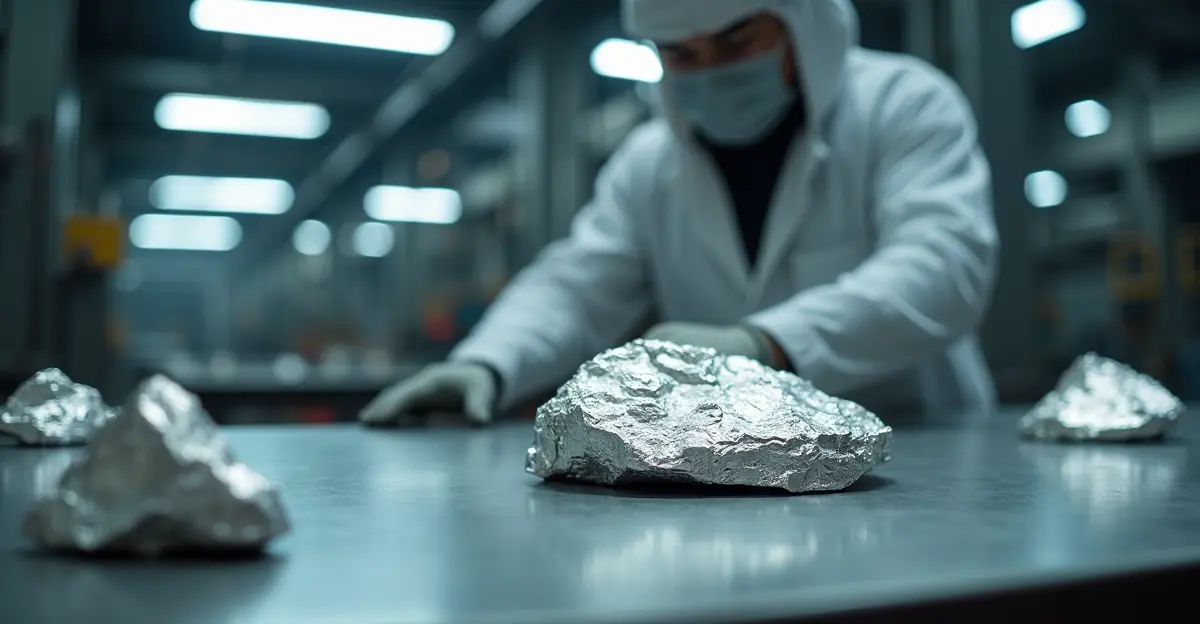
Critical minerals are naturally occurring, non-fuel mineral resources essential to economic and national security, with supply chains vulnerable to disruption. Gallium, germanium, and antimony represent a particularly strategic subset. Gallium arsenide is crucial for high-frequency semiconductors used in 5G networks and defense radar systems. Germanium serves as a substrate for infrared optics and fiber-optic cables, while antimony provides flame retardancy for electronics and strengthens lead-acid batteries. China's dominance in these markets is staggering: controlling 94% of global gallium production, 83% of germanium supply, and 48% of antimony output according to industry analyses.
The Geopolitical Calculus Behind China's Export Controls
China's December 2024 export restrictions represent a calculated response to U.S. semiconductor export controls implemented earlier that year. "This is strategic retaliation with precision targeting," explains Dr. Li Wei, a geopolitical analyst at the Atlantic Council. "By restricting materials essential to America's defense and tech sectors, Beijing demonstrates it can inflict economic pain while advancing its own industrial policy objectives." The U.S. Geological Survey estimates a complete ban on gallium and germanium could result in a $3.4 billion loss in U.S. GDP, highlighting the economic security implications.
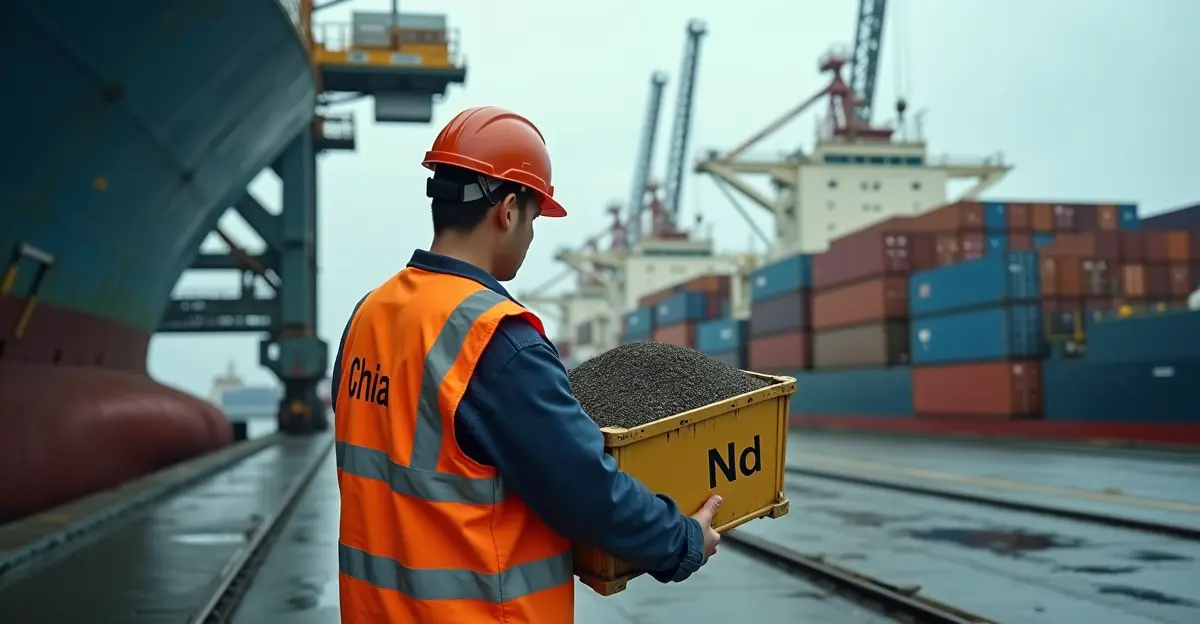
The timing coincides with broader tensions over Taiwan's semiconductor industry and competition in artificial intelligence development. China's move follows a pattern of using mineral dominance as geopolitical leverage, similar to its 2010 rare earth export restrictions against Japan during territorial disputes.
Immediate Impacts on Global Technology Supply Chains
Semiconductor Manufacturing Disruptions
The semiconductor industry faces immediate challenges as gallium nitride (GaN) and gallium arsenide (GaAs) are essential for power electronics, RF components, and optoelectronics. Major chipmakers in the U.S., Europe, and South Korea have reported supply chain assessments showing 3-6 month vulnerabilities. CNBC reports that China suspended the ban in November 2025 until November 2026, but exports now require licensing with military end-user restrictions remaining.
Renewable Energy and EV Sector Pressures
Antimony's role in lead-acid batteries for grid storage and germanium's use in solar panels create ripple effects across clean energy transitions. The International Energy Agency's Global Critical Minerals Outlook 2025 warns that such disruptions could delay renewable energy deployment timelines by 12-18 months in affected regions.
Defense and Aerospace Vulnerabilities
Military applications face particular scrutiny, with gallium-based semiconductors essential for radar, electronic warfare systems, and missile guidance. The U.S. Department of Defense has accelerated stockpiling initiatives while exploring alternative material technologies.
Global Response: Diversification and Technological Sovereignty
Nations are pursuing three primary strategies to reduce dependency:
- Supply Chain Diversification: Australia, Canada, and Brazil are expanding mining operations for critical minerals. The U.S. has signed agreements with Australia for gallium processing and with Canada for germanium extraction.
- Domestic Production Acceleration: The European Union's Net-Zero Industry Act aims for 40% domestic manufacturing of net-zero technologies by 2030, while the U.S. Defense Production Act has been invoked to boost critical mineral processing.
- Material Substitution and Recycling: Research into alternative materials and advanced recycling technologies has received increased funding, with the EU allocating €3.2 billion for circular economy initiatives.
Long-Term Implications for Global Power Dynamics
The critical minerals confrontation represents a fundamental shift in how nations approach technological sovereignty. "We're witnessing the weaponization of supply chains," notes Maria Chen, senior fellow at the Center for Strategic and International Studies. "The era of globalized, efficiency-first production is giving way to resilience-focused, security-driven industrial policy."
This realignment has several profound implications:
- Bifurcation of Tech Ecosystems: Separate supply chains are emerging for Western and Chinese technology spheres, increasing costs but reducing interdependency risks.
- Accelerated Innovation Cycles: Material scarcity drives research into alternatives, potentially accelerating next-generation technologies like silicon carbide semiconductors.
- Strategic Stockpiling Renaissance: National reserves of critical minerals are expanding, reminiscent of Cold War-era strategic material policies.
Expert Perspectives on the Future Landscape
Industry leaders express cautious optimism about long-term adaptation. "The current disruption creates painful short-term adjustments but necessary long-term resilience," says James Robertson, CEO of Advanced Materials Consortium. "We're seeing unprecedented collaboration between governments and private sector to build redundant supply chains."
However, environmental concerns accompany the diversification push. New mining projects face scrutiny over ecological impacts and indigenous rights, creating tension between security objectives and sustainability commitments.
Frequently Asked Questions
What minerals did China restrict in December 2024?
China implemented export controls on gallium, germanium, and antimony—three critical minerals essential for semiconductors, defense systems, and renewable energy technologies.
How long will the export restrictions last?
China suspended the ban in November 2025 until November 27, 2026, though exports now require licensing and military end-user restrictions remain in effect.
Which industries are most affected by these controls?
Semiconductor manufacturing, defense/aerospace, renewable energy (particularly solar and grid storage), and electric vehicle production face the most immediate disruptions.
What are countries doing to reduce dependency on Chinese critical minerals?
Nations are pursuing supply chain diversification (Australia, Canada), accelerating domestic production (EU Net-Zero Industry Act), and investing in material substitution and recycling technologies.
How does this affect the global clean energy transition?
Analysts estimate potential delays of 12-18 months for renewable energy deployment in affected regions, though accelerated diversification efforts may ultimately strengthen long-term supply security.
Conclusion: A New Era of Strategic Competition
China's critical minerals export controls mark a pivotal moment in global economic statecraft, transforming supply chains from economic considerations into instruments of geopolitical power. As nations scramble to secure alternative sources and rebuild domestic capabilities, the fundamental architecture of global technology production is being rewritten. The coming years will determine whether this fragmentation leads to greater resilience or simply different vulnerabilities in an increasingly multipolar world where technological sovereignty becomes the ultimate strategic advantage.




Follow Discussion