


 Deutsch
 English
 Español
 Français
 Nederlands
 Português


 Share
Share




The Critical Minerals Processing Gap: How Australia's Raw Material Dominance Fails to Translate into Strategic Advantage
Australia controls significant reserves of critical minerals essential for defense technologies, renewable energy systems, and semiconductor manufacturing, yet faces a strategic paradox: despite possessing 43 of the 55 US-designated critical minerals, the nation exports raw materials to China for processing rather than developing domestic value chains. This processing gap creates asymmetric dependencies that undermine Western supply chain resilience, particularly as China maintains 90% control over global critical mineral processing capacity. Recent Chinese export controls on rare earth elements have exposed these vulnerabilities, prompting Australia's $8.5-billion framework with the United States to create alternative supply chains amid growing strategic competition.
What is the Critical Minerals Processing Gap?
The critical minerals processing gap refers to the disparity between a nation's mineral extraction capabilities and its downstream processing infrastructure. While Australia mines and exports raw critical minerals like lithium, rare earth elements, cobalt, and nickel, it lacks the refining, separation, and manufacturing facilities to transform these materials into high-value products. This gap means Australia captures only a fraction of the economic value from its mineral wealth while ceding strategic control to processing nations like China. The global semiconductor supply chain exemplifies this vulnerability, where raw materials from multiple nations converge in Chinese processing facilities before distribution worldwide.
Australia's Mineral Wealth vs. Processing Deficit
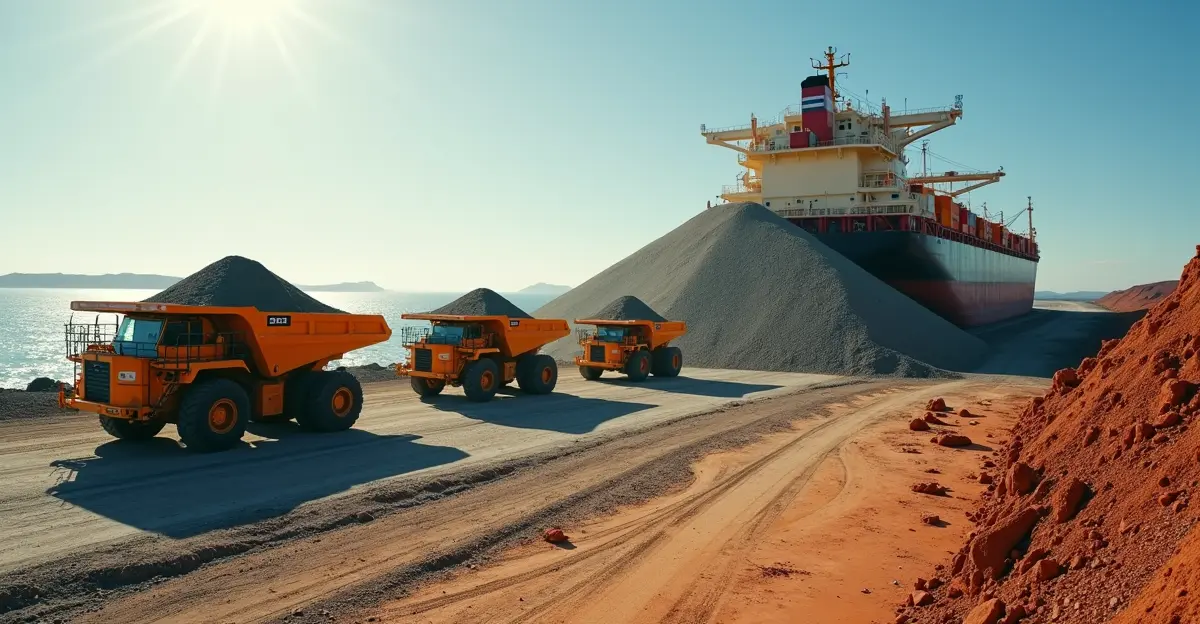
Australia possesses one of the world's richest endowments of critical minerals, with significant reserves of lithium (world's largest producer), rare earth elements, cobalt, and nickel. The nation's mining sector extracts these materials through major operations like the Greenbushes lithium mine in Western Australia and Mt Weld rare earth deposit. However, according to the Australian Critical Minerals Prospectus 2026, China processes 70-80% of global rare earth separation despite producing only 60% of raw materials. This imbalance creates what experts call the "resource curse of the 21st century"—abundant raw materials without corresponding industrial capacity.
China's Processing Dominance
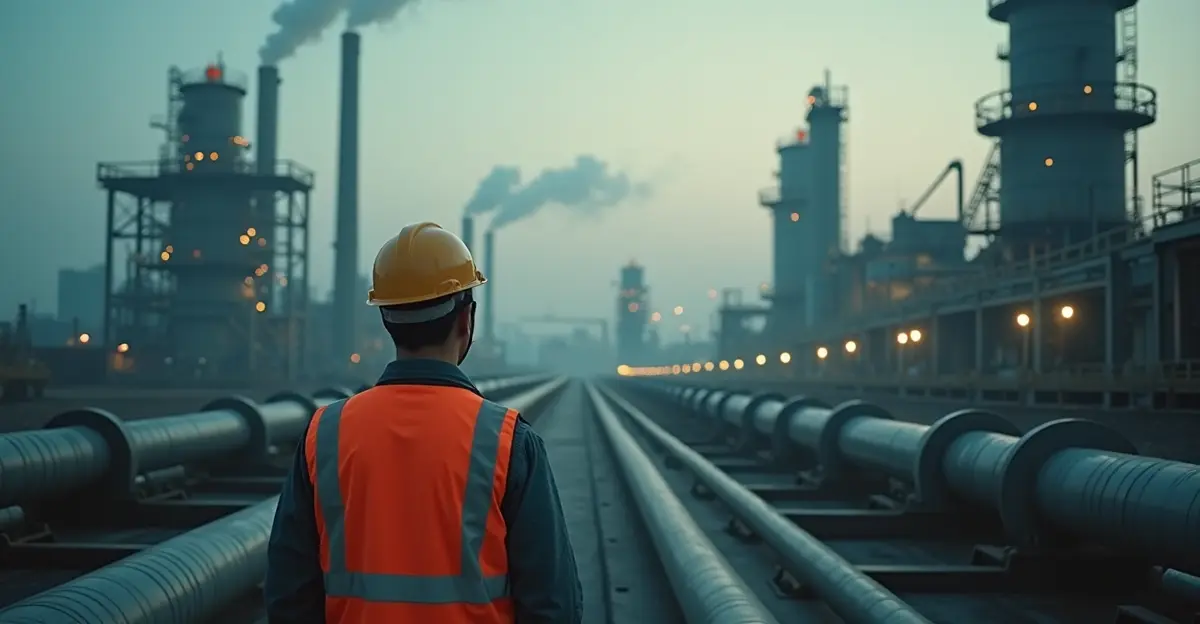
China's control over critical mineral processing results from decades of strategic state intervention. According to the Atlantic Council report, China controls over half of global mining production and 90% of separation and refining capacity through coordinated policies involving price controls, environmental regulations, and research institutions. This dominance gives Beijing significant geopolitical leverage, as demonstrated by its 2025 export restrictions on seven rare earth elements essential for electric vehicles, fighter jets, and advanced technologies. The US-China technology competition has intensified these vulnerabilities, with the US importing 75% of its rare earths from China despite Australia's mineral reserves.
The $8.5-Billion US-Australia Framework
In response to these vulnerabilities, the United States and Australia established an $8.5 billion critical minerals partnership in September 2024, formalized through the October 2025 framework agreement. This comprehensive initiative moves beyond traditional stockpiling to create integrated financing systems covering the entire mineral value chain from extraction through recycling. Key provisions include:
- Mobilizing at least $1 billion in financing for projects in both countries within six months
- Establishing a Critical Minerals Supply Security Response Group
- Streamlining permitting processes for mining and processing facilities
- Developing price mechanisms to protect against non-market policies
- Creating a Mining, Minerals and Metals Investment Ministerial within 180 days
The partnership focuses on priority materials including rare earth elements, lithium, cobalt, and nickel, addressing vulnerabilities where 60-90% of certain minerals are concentrated in specific regions.
Domestic Processing Infrastructure Challenges
Despite the ambitious framework, Australia faces significant challenges in developing domestic processing capabilities. The nation's processing deficit stems from several factors:
- Technological gaps: China has a 30-year head start in specialized processing technology and infrastructure investment
- Environmental compliance costs: Processing facilities face stringent environmental regulations that increase operational expenses
- Capital intensity: Building processing plants requires billions in investment with long payback periods
- Workforce limitations: Australia lacks sufficient skilled workers in advanced mineral processing
Current domestic projects include Iluka Resources' $1.1 billion rare earths processing facility scheduled for 2026 opening, Arafura Rare Earths' Nolans Project, and Lynas Rare Earths' processing expansion. However, experts estimate it could take a decade for Australia to develop processing capabilities comparable to China's current capacity.
Geopolitical and Security Implications
The processing gap creates significant geopolitical risks for Australia and its allies. China's ability to restrict critical mineral exports gives Beijing leverage in international disputes, as demonstrated during the 2010 and 2025 export restrictions to Japan. For defense technologies, this dependency threatens weapons systems manufacturing, with rare earth elements essential for precision-guided munitions, radar systems, and fighter jets. The renewable energy transition also faces risks, as wind turbines, electric vehicle batteries, and solar panels all require processed critical minerals. "Australia's mineral wealth without processing capacity is like having oil reserves without refineries—it leaves us strategically exposed," noted a senior defense analyst speaking anonymously.
Economic Impact and Value Chain Analysis
The economic consequences of Australia's processing gap are substantial. While raw mineral exports generate revenue, the nation misses out on the higher-value stages of the supply chain. For example:
| Stage | Value Added | Current Status |
|---|---|---|
| Mining & Extraction | 10-20% of final value | Australia dominant |
| Processing & Refining | 30-40% of final value | China controls 90% |
| Manufacturing & Assembly | 40-50% of final value | Limited Australian capacity |
This value chain disparity means Australia captures only a fraction of the economic benefits from its mineral resources. The Future Made in Australia initiative aims to address this through strategic stockpiling and production incentives, but faces implementation challenges amid competing economic priorities.
Expert Perspectives on Strategic Solutions
Industry experts emphasize several pathways to bridge Australia's processing gap. According to the Fortune analysis, successful strategies must include:
- Accelerated investment in processing technology research and development
- Public-private partnerships to share capital risks
- Workforce development programs for advanced manufacturing skills
- Strategic stockpiling to provide demand certainty for investors
- International partnerships beyond the US framework
Australia's complementary $1.2 billion Critical Minerals Strategic Reserve supports an estimated $13 billion project pipeline across mining, processing, and recycling sectors, but requires sustained political commitment to achieve meaningful results.
Frequently Asked Questions
What percentage of critical mineral processing does China control?
China controls approximately 90% of global rare earth element processing and 70-80% of separation capacity, despite producing only 60% of raw materials. This dominance extends to lithium, cobalt, and nickel processing, though to slightly lesser degrees.
How long will it take Australia to develop comparable processing capacity?
Experts estimate it could take 5-10 years for Australia to develop processing capabilities comparable to China's current capacity, given the technological gaps, capital requirements, and workforce development needed.
What are the main obstacles to Australia building domestic processing facilities?
Key obstacles include technological gaps (China's 30-year head start), environmental compliance costs, capital intensity of processing plants, workforce limitations, and competition from established Chinese facilities with economies of scale.
How does the processing gap affect Australia's strategic position?
The processing gap undermines Australia's strategic autonomy by creating dependencies on China for essential defense and energy technologies. It limits economic benefits from mineral resources and reduces leverage in international relations.
What is the US-Australia $8.5 billion framework expected to achieve?
The framework aims to create resilient, diversified supply chains through coordinated investment, streamlined permitting, financing mechanisms, and technology cooperation. It represents a fundamental shift from stockpiling to integrated value chain development.
Conclusion: Navigating Strategic Vulnerabilities
Australia's critical minerals processing gap represents both a strategic vulnerability and economic opportunity. While the nation's mineral wealth provides a foundation for supply chain diversification, bridging the processing deficit requires sustained investment, technological development, and international cooperation. The US-Australia framework offers a promising pathway, but its success depends on implementation speed, private sector engagement, and navigating the complex geopolitics of mineral supply chains. As strategic competition intensifies, Australia's ability to transform raw material dominance into processing capability will determine its position in the emerging critical minerals landscape.
Sources
White House Framework Agreement (October 2025), Australian Critical Minerals Prospectus (February 2026), Atlantic Council Report on China's Rare Earth Dominance, Fortune Analysis (March 2026), BBC News on Chinese Export Controls (2025), Discovery Alert Strategic Analysis (2026)




Follow Discussion