


 Deutsch
 English
 Español
 Français
 Nederlands
 Português


 Share
Share




Iran Uranium Extraction: Rubio's Complex Military Operation Explained
U.S. Secretary of State Marco Rubio's recent statement that 'people are going to have to go and get it' regarding Iran's stockpile of highly enriched uranium has sparked intense debate about the feasibility of a military extraction operation. With Iran estimated to possess approximately 400 kilograms of 60% enriched uranium—enough for about ten nuclear weapons—the potential mission would rank among the most complex special operations in modern military history, according to analysis by The Economist and defense experts.
What is Iran's Uranium Stockpile?
Iran currently maintains a significant stockpile of highly enriched uranium (HEU) despite previous claims by former President Donald Trump that the Iranian nuclear program was 'destroyed.' According to International Atomic Energy Agency (IAEA) Director General Rafael Grossi, Iran possesses approximately 400 kilograms of uranium enriched to 60% purity, stored primarily in underground tunnels at the Isfahan nuclear facility. Additional material is believed to be located at the Natanz and Fordow facilities, with the latter buried deep beneath a mountain. This stockpile represents a critical national security concern, as it could be further enriched to weapons-grade levels (90% purity) within weeks, potentially providing material for up to ten nuclear weapons.
The Military Extraction Challenge
Logistical Nightmares
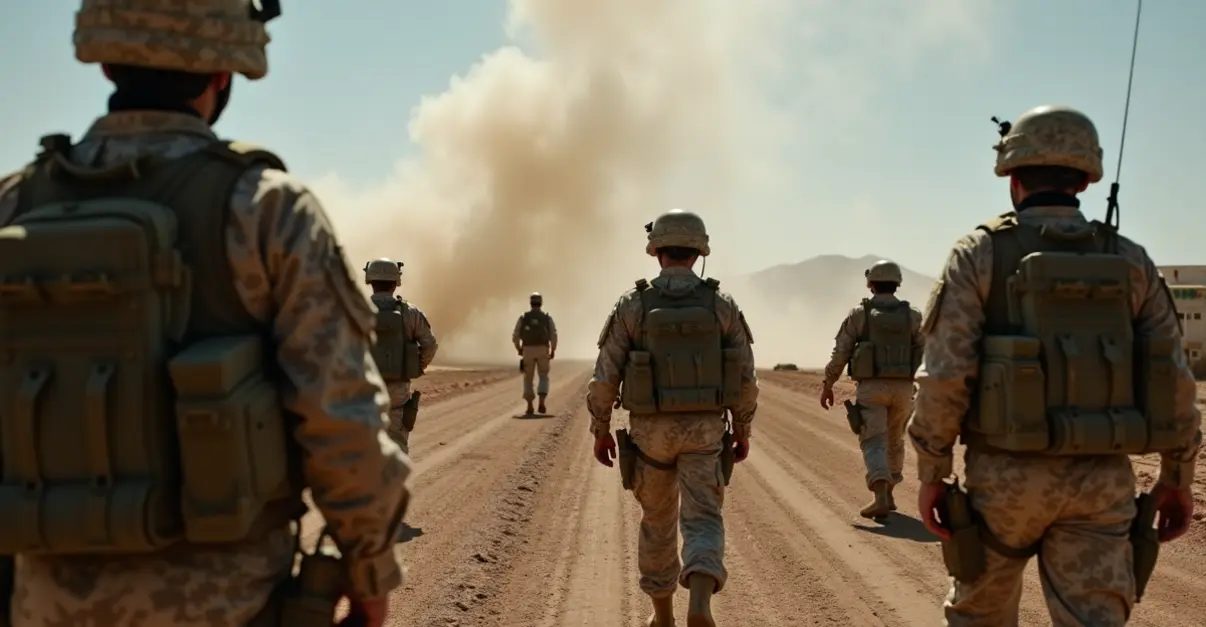
The proposed operation to extract Iran's uranium faces unprecedented logistical challenges. According to military analysts, the mission would require:
- Long-range helicopters capable of penetrating deep into Iranian territory
- In-flight refueling capabilities for extended operations
- Specialized teams like Delta Force or SEAL Team Six to navigate underground tunnels
- Construction of improvised landing strips for extraction
- Heavy machinery parachuted into hostile territory
- Continuous air support and reconnaissance
The operation would need to occur after preliminary bombing campaigns to disable Iranian military defenses around target sites, creating a narrow window for ground forces to complete their mission. Similar to the 2011 Osama bin Laden raid, this operation would require precise intelligence and flawless execution, but on a much larger scale.
Three Theoretical Options
Military planners have identified three potential approaches to dealing with the uranium stockpile:
| Option | Method | Risks |
|---|---|---|
| 1. On-site Destruction | Destroy uranium at location | Release of toxic hydrogen fluoride, contamination |
| 2. Downblending | Reduce enrichment level | Requires specialized equipment, leaves nuclear material |
| 3. Extraction & Transport | Remove uranium in cylinders | Risk of explosions, toxic reactions during transport |
Each option presents significant challenges, with extraction and transport being the most complex but potentially most effective for preventing future nuclear weapons development. The North Korean nuclear program has faced similar international scrutiny, though with different geopolitical dynamics.
Political and Strategic Implications
Secretary Rubio's comments reflect a growing frustration with diplomatic approaches to Iran's nuclear program. In a March 2026 press briefing, Rubio emphasized that 'the timing was critical because intelligence indicated Iran would automatically retaliate against U.S. forces if attacked by Israel.' This suggests the U.S. is considering preemptive action to prevent what officials view as an inevitable confrontation.
'People are going to have to go and get it,' Rubio stated, highlighting the administration's belief that diplomatic solutions may have reached their limits. The dual role of Rubio as both Secretary of State and Acting National Security Advisor gives his statements particular weight in foreign policy circles.
Israeli Involvement Considerations
Israel's extensive experience with tunnel operations against Hamas and Hezbollah makes their potential involvement politically attractive for the U.S. administration. As Rubio noted, 'The U.S. could claim no American ground troops were deployed' if Israeli forces led the operation. However, Israel's limited long-range transport capacity would likely require American air support and logistics, complicating the 'no U.S. troops' narrative.
The geopolitical ramifications extend beyond immediate military concerns. A successful operation could reshape Middle Eastern power dynamics, while failure could escalate regional tensions dramatically. The Syrian civil war intervention demonstrated the complexities of Middle Eastern military operations, but uranium extraction presents unique technical challenges.
FAQs: Iran Uranium Extraction Operation
How much uranium does Iran actually have?
Iran possesses approximately 400 kilograms of 60% enriched uranium, stored primarily at Isfahan with additional amounts at Natanz and Fordow facilities.
Why can't the uranium be destroyed by airstrikes?
The uranium is stored in deep underground tunnels that conventional airstrikes cannot penetrate, requiring ground forces to access and secure the material.
What special forces units would be involved?
Delta Force and SEAL Team Six are the most likely candidates, supported by Rangers for perimeter security and specialized engineering units.
How long would the operation take?
Military analysts estimate the operation would require several days of continuous activity, including preliminary bombing, ground insertion, uranium location and securing, and extraction.
What are the diplomatic alternatives?
Iran has suggested diluting its enriched uranium in exchange for sanctions relief, though negotiations have stalled over verification and permanent agreement terms.

Follow Discussion