
 Deutsch
 English
 Español
 Français
 Nederlands
 Português






Secret Nuclear Cargo Sparks International Crisis in Mediterranean
A Russian shadow fleet cargo vessel that sank in the Mediterranean Sea in December 2024 was likely torpedoed while secretly transporting nuclear reactor components to North Korea, according to explosive findings from a Spanish investigation. The incident has exposed what appears to be a covert nuclear technology transfer operation between Moscow and Pyongyang, raising serious questions about international sanctions enforcement and maritime security.
The Mysterious Sinking of Ursa Major
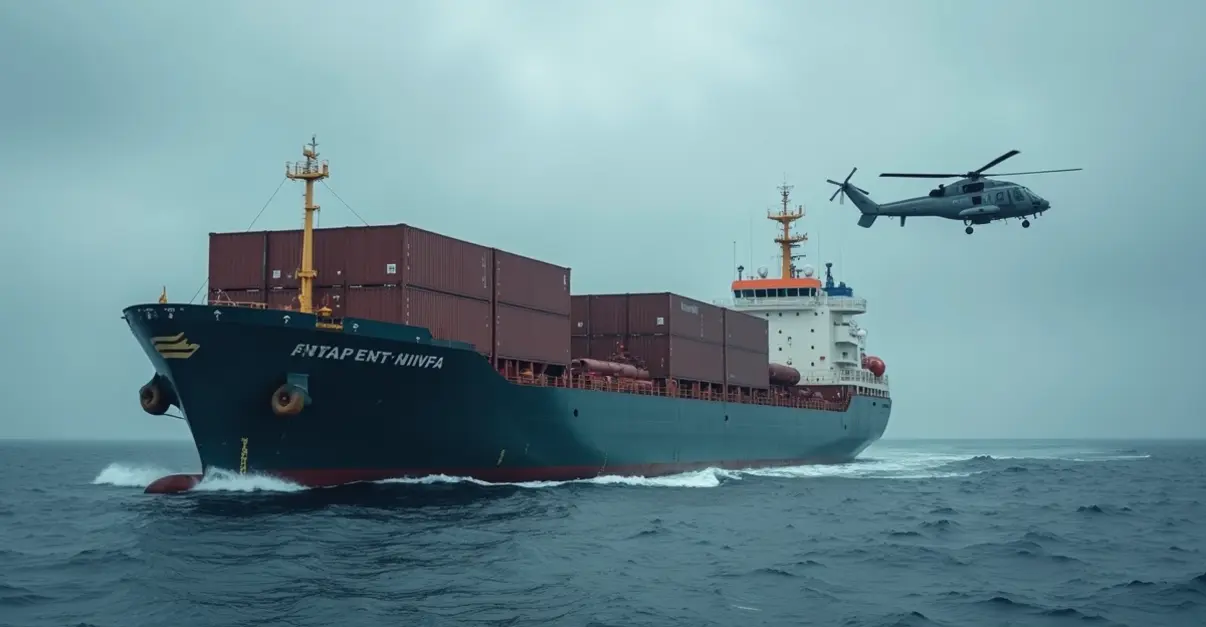
The MV Ursa Major, a heavy-lift ship owned by Russian state corporation Oboronlogistika, sank on December 24, 2024, approximately 60 nautical miles south of Cartagena, Spain. According to Spanish newspaper La Verdad, which obtained official investigation documents, the vessel was carrying two undeclared containers containing components for VM-4SG nuclear reactors - technology specifically designed for nuclear-powered submarines.
'The damage pattern suggests an external impact consistent with certain types of torpedoes used by multiple nations,' a Spanish investigator told the newspaper, speaking on condition of anonymity. 'The breach on the starboard side shows edges pushed inward, indicating penetration from outside the hull.'
Covert Nuclear Technology Transfer
The VM-4SG reactors represent advanced nuclear technology that would significantly enhance North Korea's submarine capabilities. According to Wikipedia, VM series reactors are pressurized water reactors used to power Soviet and Russian nuclear submarines. The VM-4SG variant is particularly concerning as it could potentially enable North Korea to develop its own nuclear-powered submarine fleet.
Spanish investigators discovered that the two blue containers on Ursa Major's aft deck, each weighing approximately 65 tons, contained reactor covers and critical components. These containers were not listed on the ship's official cargo manifest provided by Captain Igor Anisimov, who claimed the vessel was transporting reactor valves for the nuclear icebreaker Lider, harbor cranes, empty containers, and hatch covers.
Military Intervention and Cover-Up Attempts
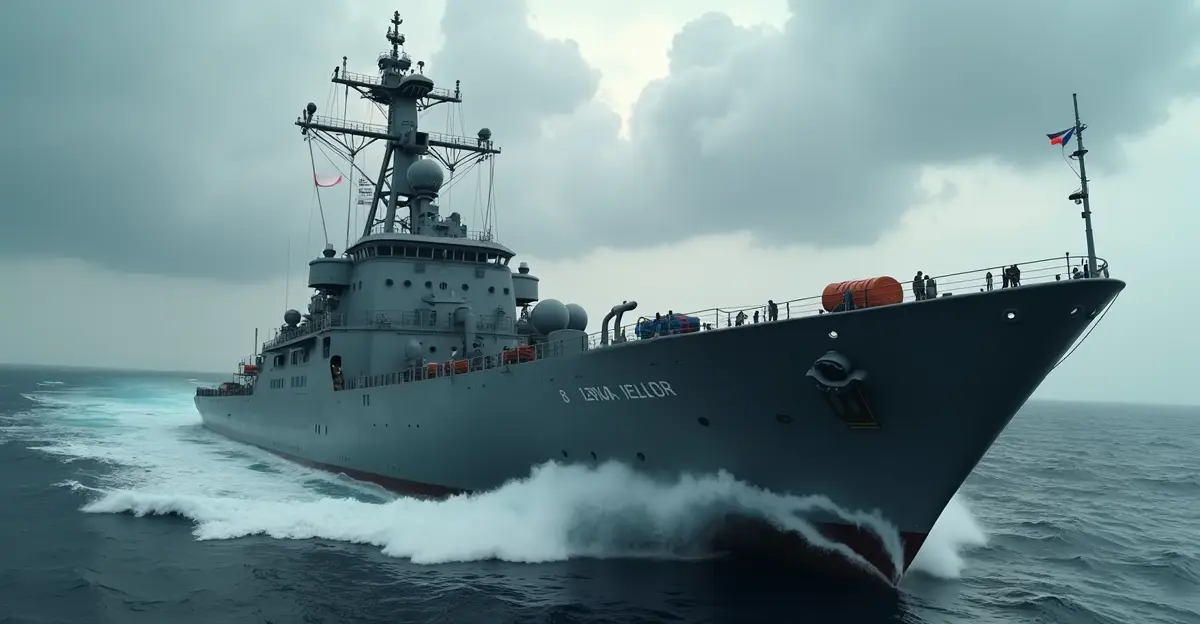
The situation escalated dramatically when the Russian landing ship Ivan Gren arrived in the area shortly before Ursa Major sank. According to reports, the Russian vessel fired red signal flares to 'blind' infrared sensors of reconnaissance satellites and demanded that Spanish patrol boats withdraw from the area.
'This was clearly an attempt to obstruct rescue operations and potentially conceal evidence,' said maritime security analyst Oliver Alexander, whose satellite imagery first revealed the suspicious containers. 'The timing and nature of the Russian intervention suggests they had something significant to hide.'
Seismographic data recorded vibrations consistent with an explosion of 20 to 50 kilograms (44 to 110 pounds) of TNT at the time of sinking. Fourteen of the sixteen crew members were rescued, while two remain missing. Rescue workers from Spanish company Helimer reported that despite the ship still floating initially, they couldn't locate the missing crew members, even though the door to the engine room was properly sealed.
Geopolitical Implications and Sanctions Violations
This incident comes amid deepening military cooperation between Russia and North Korea following their 2024 strategic partnership agreement. The alleged nuclear technology transfer would represent a flagrant violation of multiple United Nations Security Council resolutions sanctioning North Korea's nuclear program.
'If confirmed, this represents one of the most serious breaches of international non-proliferation agreements in recent history,' stated non-proliferation expert Dr. Elena Petrova. 'The use of shadow fleets to transport sensitive nuclear technology shows how determined some actors are to circumvent global security frameworks.'
The Russian government has maintained that Ursa Major was the victim of a 'terrorist attack,' while Western intelligence sources suggest the vessel may have been deliberately scuttled or attacked to prevent inspection of its illicit cargo. The subsequent arrival of the Russian oceanographic vessel Yantar at the wreck site, which lies at a depth of 2,500 meters, has raised further suspicions about potential recovery or destruction operations.
The Ursa Major incident highlights the growing challenge of monitoring Russia's 'shadow fleet' - vessels used to circumvent international sanctions. It also underscores the urgent need for enhanced maritime surveillance and intelligence sharing to prevent the proliferation of sensitive military technology through covert maritime channels.



Follow Discussion