


 Deutsch
 English
 Español
 Français
 Nederlands
 Português


 Share
Share




Russian Cargo Ship Triggers Major Security Incident in British Waters
A Russian cargo ship has triggered a major security alert after anchoring dangerously close to vital undersea data cables in the Bristol Channel, forcing the Royal Navy to deploy an attack helicopter to intercept the vessel. The incident, which occurred this week, highlights growing concerns about Russia's targeting of critical Western infrastructure.
The Sinegorsk Incident: Fourteen Hours of Tension
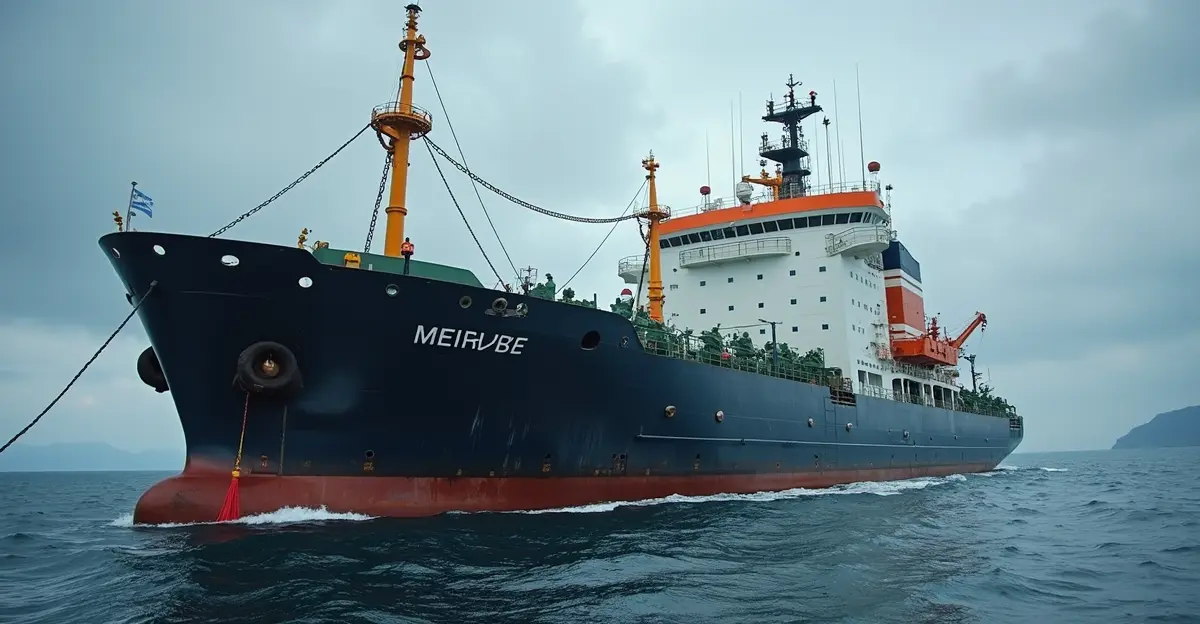
The vessel in question, the Sinegorsk, a Russian-flagged cargo ship, changed course on Tuesday and entered the Bristol Channel before dropping anchor near Minehead, Somerset. What raised immediate alarm was the ship's position—less than 2 kilometers from where crucial submarine cables converge, connecting the United Kingdom to the United States, Canada, Spain, and Portugal.
According to The Telegraph, British authorities observed the suspicious vessel from the air using coastguard aircraft in the early hours of Wednesday morning. The Russians were formally ordered to leave UK waters but refused to comply, claiming they were conducting repairs.
'We are acutely aware of the threat posed by Russia, including attempts to map undersea cables, networks and pipelines of both the United Kingdom and our allies, and we are tackling these threats resolutely,' stated the UK Ministry of Defence.
Pattern of Suspicious Russian Maritime Activity
This incident is not isolated. Russian vessels, both military and civilian, have been increasingly involved in suspicious activities near critical infrastructure across European waters. In December 2024, a Russian ship dragged its anchor across a power cable connecting Finland and Estonia, causing significant damage. The vessel, Eagle S, was seized by Finnish authorities and is being investigated for aggravated criminal mischief.
Similarly, in 2022, a data cable to Scotland's Shetland Islands was severed just as a Russian fishing vessel passed overhead. These incidents form a disturbing pattern that security experts attribute to Russia's hybrid warfare tactics.
'The ship's movements are deeply suspicious and a reminder of the persistent threats from Putin's Russia,' said Conservative shadow security minister Alicia Kearns, commenting on the Sinegorsk incident.
Royal Navy Response and International Cooperation
After the Sinegorsk refused to leave for fourteen hours, British authorities escalated their response. A Royal Navy Wildcat attack helicopter was dispatched toward the vessel. Shortly after the helicopter's launch, the Russian crew lifted anchor and departed the area.
This week, North Sea countries including the Netherlands, Belgium, Germany, Norway, the UK, and Denmark agreed to better protect underwater infrastructure through enhanced cooperation. The nations plan to conduct NATO exercises at sea to counter Russian threats to critical infrastructure.
The Shadow Fleet and Maritime Security Challenges
The Sinegorsk is part of what analysts call Russia's 'shadow fleet'—vessels with obscured ownership used to evade Western sanctions and conduct covert operations. According to a NPR investigation, this fleet transports nearly 70% of Russia's oil exports while allegedly conducting operations to create instability in Europe.
The Sinegorsk has since disappeared from tracking systems after turning off its Automatic Identification System (AIS), violating international maritime regulations that require such vessels to maintain active tracking. This makes the ship's current location and intentions unknown to authorities.
Undersea cables, as explained by Wikipedia, carry approximately 99% of transoceanic digital communications and facilitate trillions of dollars in daily financial transactions, making them critical to global connectivity and economic stability.
The incident underscores the vulnerability of undersea infrastructure and the need for enhanced maritime security cooperation among Western allies to counter what appears to be a coordinated Russian strategy targeting critical communications and energy networks.


Follow Discussion