


 Deutsch
 English
 Español
 Français
 Nederlands
 Português


 Share
Share




Coastal Mangrove Restoration Project Receives Donor Funding: A Comprehensive Analysis
Coastal mangrove restoration projects are receiving unprecedented donor funding in 2026, driven by growing recognition of their triple benefits: ecosystem services, storm protection, carbon sequestration, and local job creation. A recent Nature Communications study reveals that mangrove loss from 1996-2019 resulted in a net ecosystem service value (ESV) loss of $29.2 billion USD, highlighting the urgent need for restoration initiatives. Current mangrove ESV stands at $894 billion annually, with restoration over the next two decades requiring $40-52.1 billion investment but yielding net ESV gains of $231-725 billion.
What Are Mangrove Ecosystem Services?
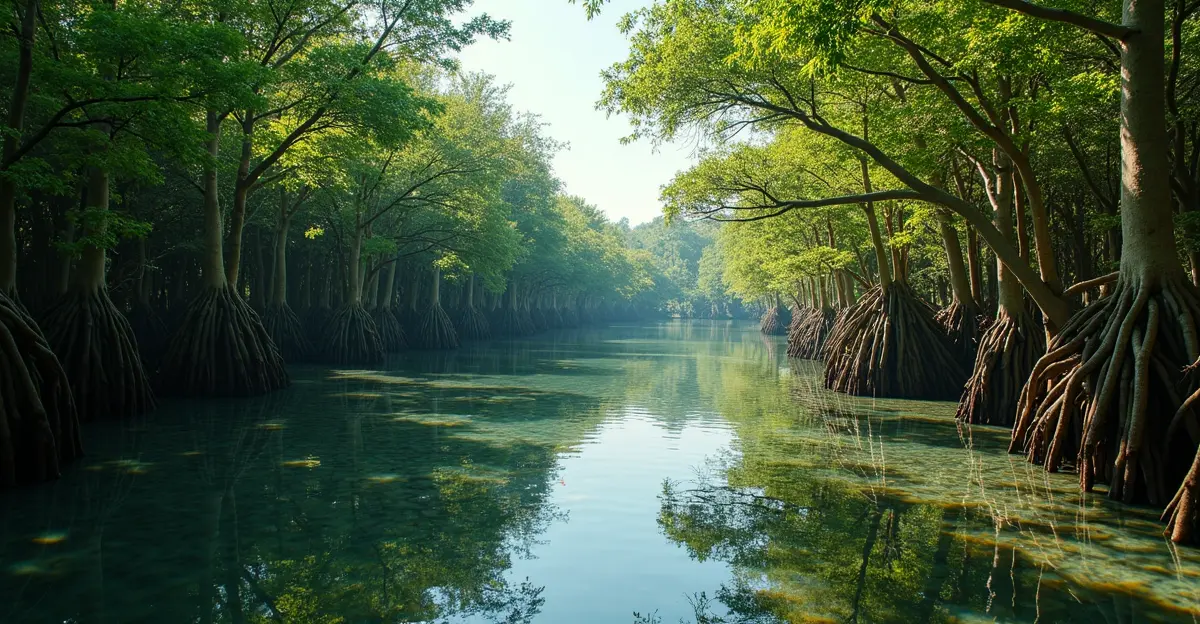
Mangrove ecosystems provide four categories of services according to the Millennium Ecosystem Assessment framework. Firstly, provisioning services include marine resources, genetic materials, and food production. Secondly, regulating services encompass carbon sequestration, flood control, and climate regulation – mangroves store 50% of global carbon despite covering only 2% of Earth's surface. Thirdly, supporting services involve nutrient cycling and primary production. Lastly, cultural services include recreation, tourism, and spiritual values. The blue carbon ecosystems represent a particularly valuable component of these services.
Storm Protection Benefits: Nature's Coastal Defense
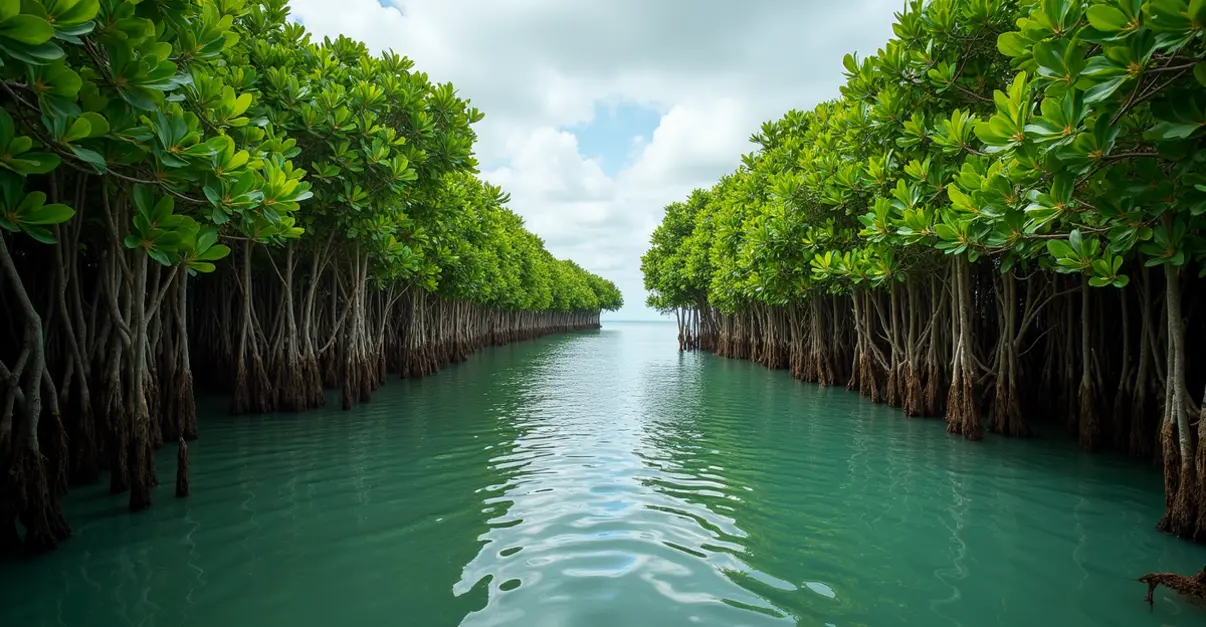
Mangroves serve as natural storm barriers, reducing wave energy by 70-90% and protecting coastal communities from hurricanes and tsunamis. Research indicates that intact mangrove forests can reduce flood damage by up to 25% annually, saving billions in infrastructure costs. The coastal resilience strategies increasingly incorporate mangrove restoration as cost-effective climate adaptation. A 2025 study published in One Earth found that restoring 1.10 million hectares of mangroves globally would remove 0.93 gigatons of CO2 at an implementation cost of $10.73 billion, with the greatest low-cost restoration potential in Indonesia, Brazil, Mexico, Myanmar, and India.
Carbon Sequestration: The Blue Carbon Advantage
Mangroves are carbon sequestration powerhouses, storing up to four times more carbon per hectare than terrestrial forests. A 20-year restoration program could sequester 19.4 teragrams of carbon in mangrove soils, generating $68.6-236 million through blue carbon trading. The carbon credit markets are increasingly recognizing mangrove-based projects, though challenges remain with transparency and governance. According to a 2025 study examining mangrove-based carbon market projects, Southeast Asia dominates both peer-reviewed studies (40.4%) and registered projects (46.7%), but only 31.8% of reported projects appear in carbon registries.
Local Job Creation and Community Benefits
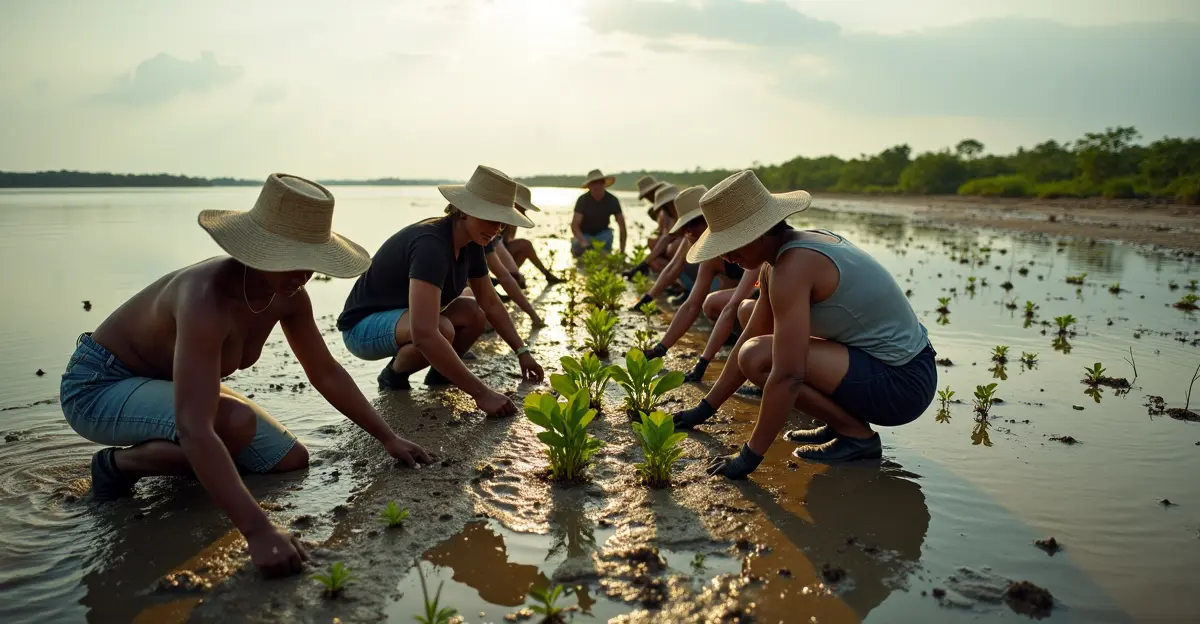
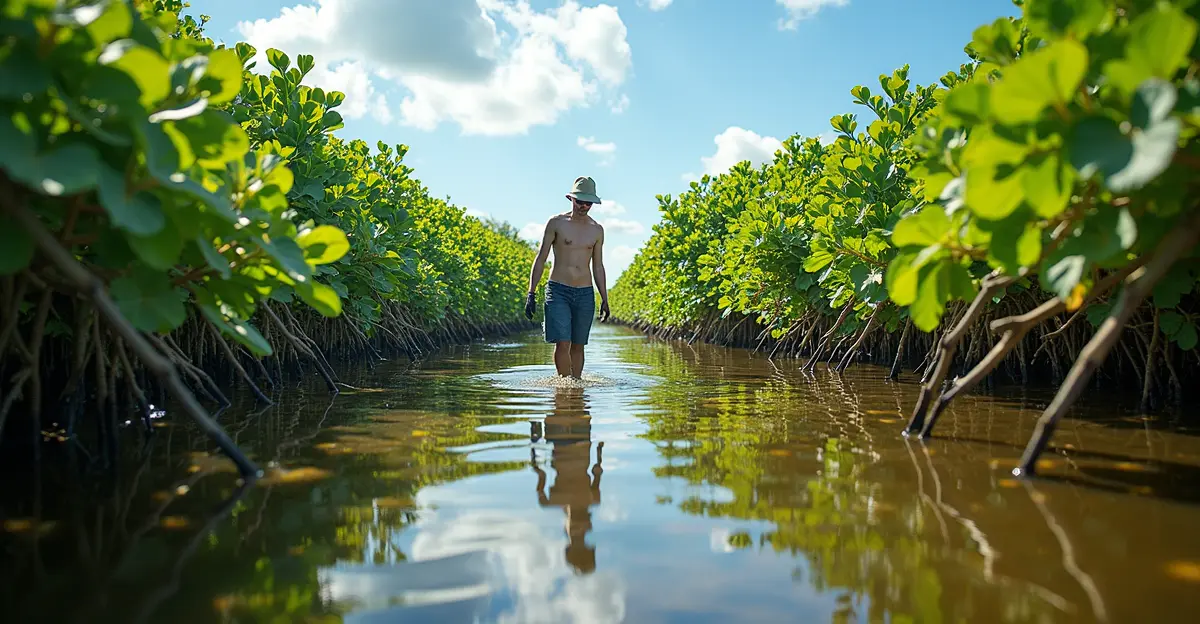
Mangrove restoration projects create substantial employment opportunities in coastal communities. Current job listings show mangrove restoration positions offering $17-112 per hour, with 165 ecological restoration jobs available across the United States alone. These roles include planting mangrove saplings, monitoring ecosystem health, removing invasive species, and conducting environmental assessments. The community-based conservation models emphasize local stewardship, with emerging decentralized finance models using blockchain technology and DAOs enhancing transparency and ensuring direct value flows to communities.
Funding Models and Donor Landscape
Traditional funding approaches like government grants and philanthropic funds are being supplemented by innovative mechanisms. Blue carbon credits offer an innovative financing approach, with IUCN NL collaborating with Eco-Benin in Benin's Bouche du Roy Reserve projecting certification of approximately 402,841 tonnes of CO2-equivalent over 30 years. The benefit-cost ratio for mangrove restoration ranges from 6.35-15.0, making it one of the most economically viable climate solutions available.
Implementation Challenges and Solutions
Despite promising benefits, mangrove restoration faces significant implementation challenges. Technical capacity gaps, governance problems, and risk management limitations hinder project success. Implementation costs decrease with project size, project year, for aquaculture ponds, and in deltas, while increasing with national GDP per capita, for eroded sites, and on open coasts. Successful models integrate robust local governance with genuine community participation, recognizing mangroves as vital socio-ecological systems requiring sophisticated, enduring financial support structures.
Future Outlook and Global Implications
The global momentum for mangrove restoration is accelerating, with international agreements and climate commitments driving increased funding. The reduction in global mangrove loss provides optimism for project growth, offering climate change mitigation and biodiversity conservation benefits. As Dr. Maria Rodriguez, coastal ecologist at the Marine Conservation Institute notes: 'Mangrove restoration represents one of the most cost-effective nature-based solutions available today. The triple benefits of carbon sequestration, coastal protection, and community livelihoods make this an essential component of global climate strategy.'
Frequently Asked Questions (FAQ)
What are the main benefits of mangrove restoration?
Mangrove restoration provides three primary benefits: carbon sequestration (blue carbon storage), coastal storm protection (reducing wave energy by 70-90%), and local job creation through restoration activities and sustainable resource management.
How much does mangrove restoration cost?
Global restoration of 1.10 million hectares would cost $10.73 billion, averaging $9,739 per hectare or $11.49 per ton of CO2 removed. A 20-year restoration program requires $40-52.1 billion investment but yields net ecosystem service value gains of $231-725 billion.
What funding sources are available for mangrove projects?
Funding sources include government grants, philanthropic donations, blue carbon credits, decentralized finance models using blockchain, and international climate funds. Blue carbon credits are emerging as a significant innovative financing mechanism.
How do mangroves protect against storms?
Mangroves reduce wave energy by 70-90% through their dense root systems, decrease flood damage by up to 25% annually, and prevent coastal erosion, making them natural barriers against hurricanes and tsunamis.
What countries have the greatest restoration potential?
Indonesia, Brazil, Mexico, Myanmar, and India have the greatest low-cost restoration potential according to 2025 research, with Southeast Asia dominating both studies (40.4%) and registered carbon market projects (46.7%).

Follow Discussion