


 Deutsch
 English
 Español
 Français
 Nederlands
 Português


 Share
Share




Coastal Mangrove Restoration Initiative: A Triple Win for Climate, Communities, and Coastal Resilience
Coastal mangrove restoration represents one of the most promising nature-based solutions for addressing multiple global challenges simultaneously. As climate change intensifies storm threats and coastal communities face increasing vulnerability, mangrove ecosystems offer a remarkable combination of storm buffering, carbon sequestration, and sustainable livelihood opportunities. Recent research from 2025 reveals that mangrove forests in Florida alone reduced property damages by $4.1 billion during Hurricane Ian, while global restoration efforts could sequester 19.4 teragrams of carbon and generate up to $236 million through blue carbon trading. This comprehensive guide explores how the Coastal Mangrove Restoration Initiative creates a powerful synergy between environmental protection, climate finance, and community development.
What is Coastal Mangrove Restoration?
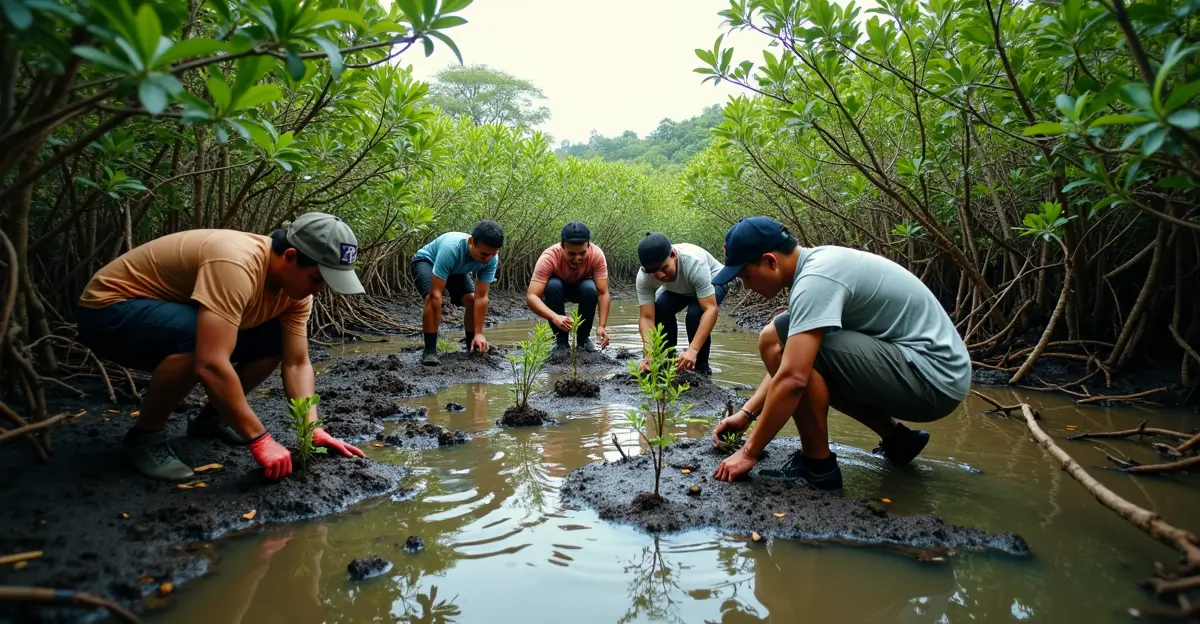
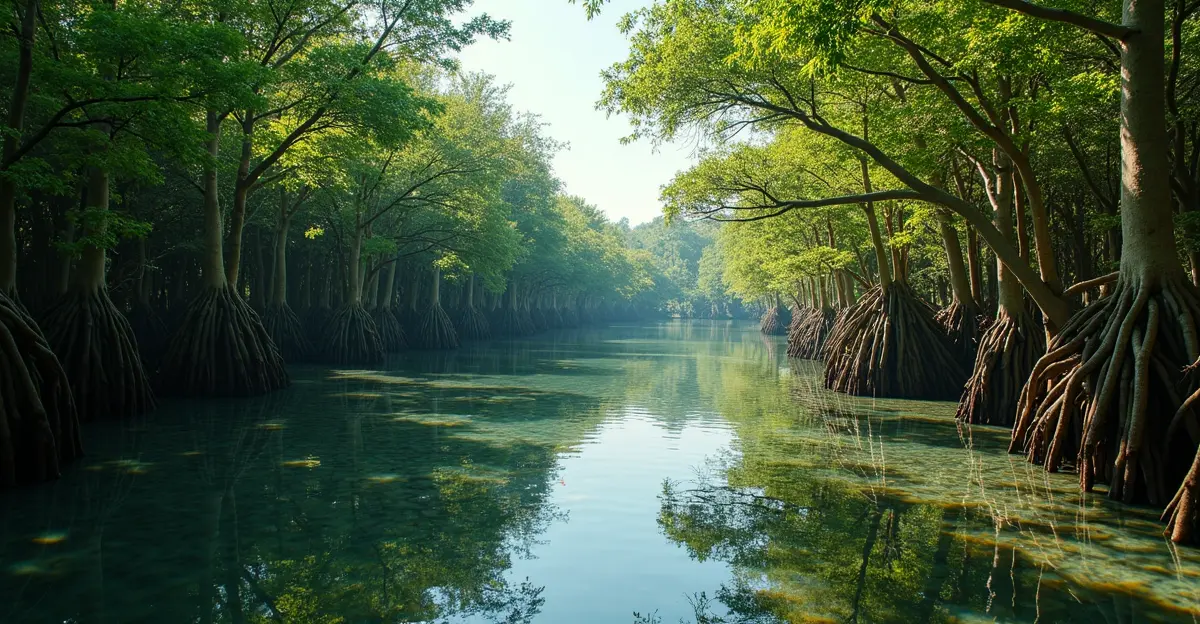
Coastal mangrove restoration involves the rehabilitation and regeneration of mangrove ecosystems that have been degraded or destroyed by human activities or natural disasters. These unique coastal forests grow in tropical and subtropical intertidal zones, creating complex root systems that stabilize shorelines, filter pollutants, and provide critical habitat for marine life. Unlike traditional reforestation approaches, modern restoration emphasizes ecological principles, focusing on restoring natural hydrology and allowing natural regeneration rather than simply planting trees. The Community-Based Ecological Mangrove Restoration (CBEMR) approach developed by Wetlands International has demonstrated significantly higher success rates than conventional planting methods, which historically failed nearly 80% of the time.
The Triple Benefits of Mangrove Restoration
1. Storm Buffering and Coastal Protection
Mangroves serve as natural coastal defenses that significantly reduce storm surge impacts and property damage. A groundbreaking 2025 study published in Cell Reports Sustainability quantified these benefits with unprecedented precision. Researchers found that mangrove forests in Florida's Collier County provide approximately $67 million in annual storm surge protection, with even greater benefits during major hurricanes. During Hurricane Irma in 2017, mangroves reduced property damages by $725 million, and during Hurricane Ian in 2022, they prevented $4.1 billion in losses. The study, which used industry-standard catastrophe risk models, revealed that mangroves are most effective for frequent storms with return periods under 30 years, providing consistent protection for landward properties.
The protective mechanism works through multiple pathways: mangrove root systems dissipate wave energy, dense vegetation slows water flow, and elevated sediment accumulation reduces flood heights. According to researchers from UC Santa Cruz and East Carolina University, coastal homes built inland behind mangrove forests experience 14-30% reduction in surge losses. This natural infrastructure offers a cost-effective alternative to engineered solutions like seawalls, which often have negative ecological consequences and require ongoing maintenance.
2. Carbon Finance and Blue Carbon Markets
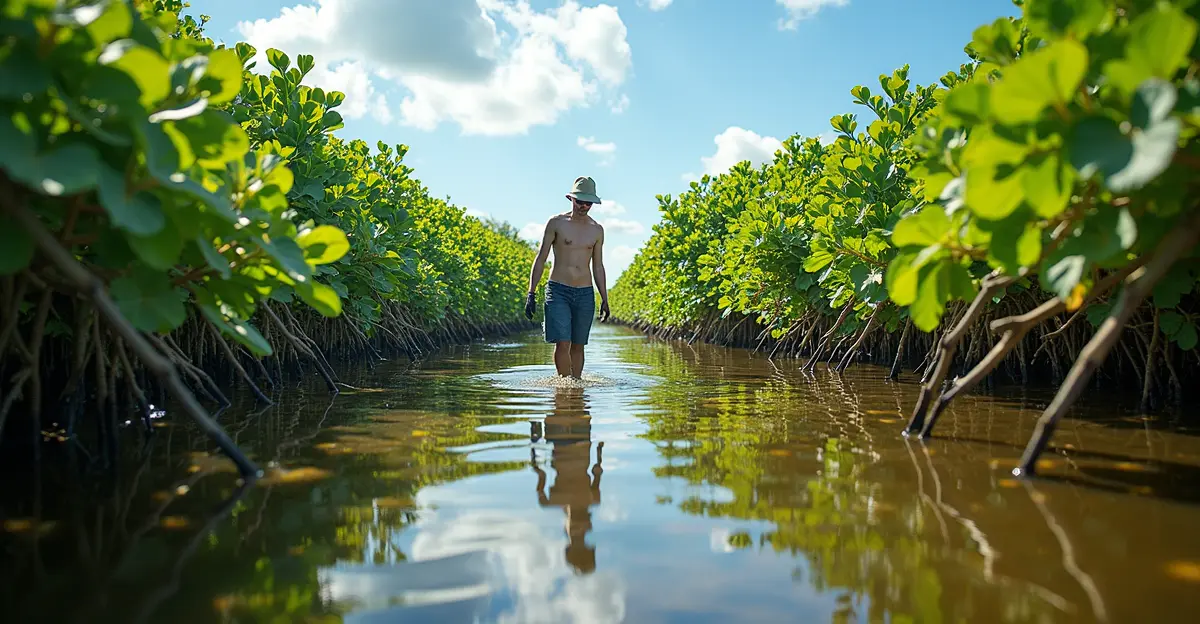
Mangroves are carbon sequestration powerhouses, storing up to four times more carbon per hectare than terrestrial tropical forests. This 'blue carbon' represents a significant opportunity for climate finance through carbon credit markets. A comprehensive 2025 analysis in Nature Communications projects that restoring mangroves over the next two decades would require $40-52 billion investment but yield net ecosystem service value gains of $231-725 billion, with a highly favorable benefit-cost ratio of 6.35-15.0. Additionally, a 20-year restoration program could sequester 19.4 teragrams of carbon in mangrove soils, generating $68.6-236 million through blue carbon trading.
The blue carbon credit market has been expanding rapidly, with organizations increasingly seeking nature-based solutions to offset their emissions. IUCN NL's collaboration with Eco-Benin in Benin's Bouche du Roy Reserve demonstrates the potential, with feasibility studies projecting certification of approximately 402,841 tonnes of CO₂-equivalent over 30 years. These projects follow rigorous standards for monitoring, reporting, and verification (MRV) to ensure carbon sequestration claims are scientifically valid and verifiable.
3. Local Employment and Community Livelihoods
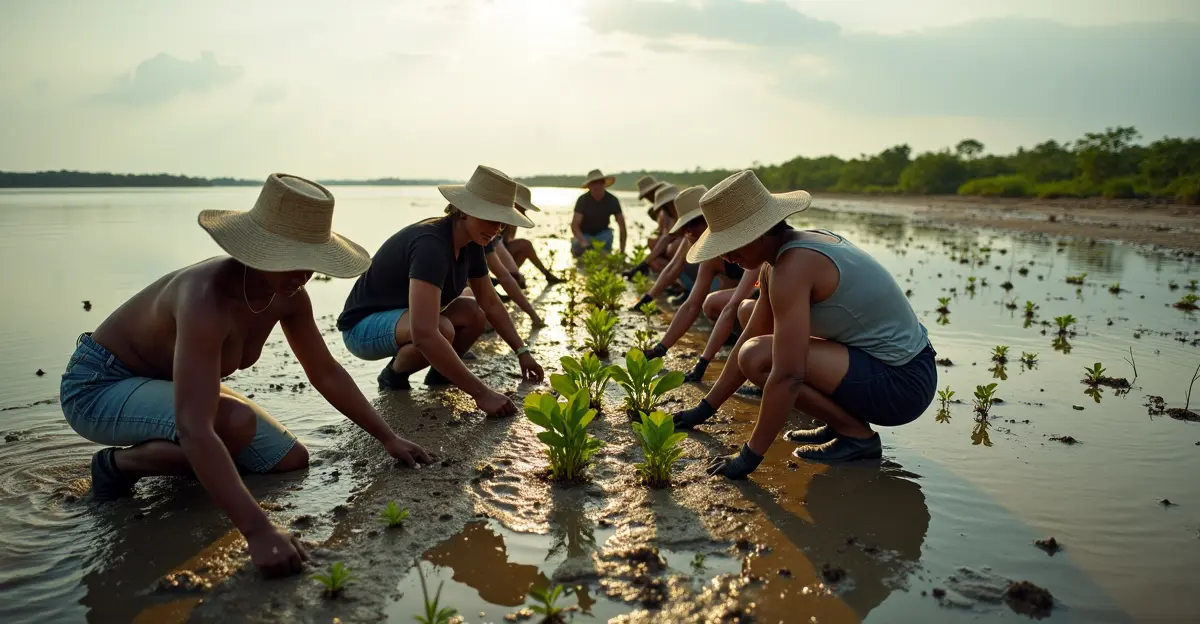
Mangrove restoration creates diverse employment opportunities across multiple sectors, from field implementation to monitoring and community engagement. According to job listings from December 2025, mangrove restoration positions offer hourly wages ranging from $17 to $112, reflecting opportunities for various skill levels and specializations. These jobs typically include ecological restoration technicians, wetland managers, habitat conservation specialists, environmental monitors, and project coordinators.
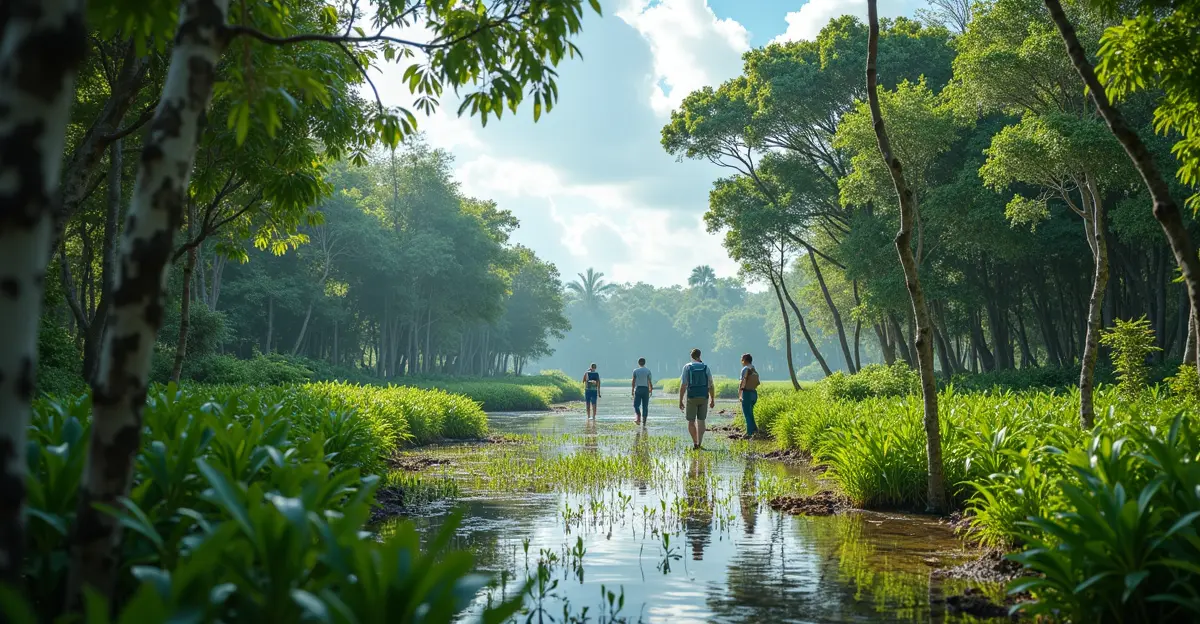
Beyond direct employment, mangrove restoration supports broader community livelihoods through sustainable resource management. Healthy mangrove ecosystems enhance fisheries productivity, provide materials for traditional crafts, and support ecotourism opportunities. The Community-Based Ecological Mangrove Restoration approach places local communities at the center of restoration efforts, securing land-use rights and creating sustainable income streams. This participatory model ensures that restoration projects align with local needs and knowledge systems, leading to more resilient and socially equitable outcomes.
Implementation Strategies and Best Practices
Successful mangrove restoration requires careful planning and implementation. Research published in the Journal of Environmental Management in February 2025 provides comprehensive guidance for stakeholders developing mangrove-based carbon market projects. Key recommendations include:
- Pre-field preparation planning: Comprehensive planning before fieldwork begins is essential for accurate baseline assessments and project scenarios
- Hydrological rehabilitation: Restoring natural water flow patterns is often more important than planting trees
- Community engagement: Local communities should participate throughout all project stages, from planning to monitoring
- Adaptive management: Regular monitoring and adjustment based on ecological responses and community feedback
- Long-term commitment: Restoration requires ongoing maintenance and protection over decades
A study from Frontiers in Marine Science demonstrates the long-term success of these approaches. After a 2005 restoration program in Mexico's Términos Lagoon region, restored sites accumulated 286.0 ± 32.6 Mg C ha−¹, representing 83% of conserved mangrove carbon stocks, while degraded sites stored only 133.0 ± 26.8 Mg C ha−¹. The carbon increase was primarily driven by enhanced soil organic carbon stocks following hydrological reconnection.
Global Initiatives and Scaling Potential
The global momentum for mangrove restoration has been accelerating, with initiatives like the Mangrove Breakthrough aiming to protect 15 million hectares of mangroves by 2030 through $4 billion investment. This aligns with broader international frameworks including the Paris Agreement and the UN Sustainable Development Goals. The IUCN World Conservation Congress 2025 highlighted mangrove restoration as a key strategy for scaling up resilient conservation action.
Regional examples demonstrate the scalability of successful approaches. In Southeast Asia, mangrove restoration has been integrated into national climate adaptation strategies, while in Latin America, community-led initiatives have restored thousands of hectares while creating sustainable livelihoods. The economic case is compelling: every dollar invested in mangrove restoration yields $6-15 in ecosystem service benefits, making it one of the most cost-effective climate interventions available.
Challenges and Solutions
Despite the clear benefits, mangrove restoration faces several challenges that require innovative solutions:
| Challenge | Solution | Example |
|---|---|---|
| High failure rates of traditional planting | Ecological restoration focusing on hydrology | CBEMR approach with 80%+ success rates |
| Limited community participation | Community-based approaches with benefit sharing | Formalizing land-use rights and revenue sharing |
| Complex carbon accounting | Standardized MRV protocols | Verified Carbon Standard for blue carbon |
| Funding limitations | Blended finance combining public and private sources | Blue bonds and carbon credit pre-purchases |
| Climate change impacts | Climate-smart restoration with adaptive species | Assisted migration and genetic diversity |
Expert Perspectives
Leading researchers emphasize the transformative potential of mangrove restoration. "Mangroves represent one of the most cost-effective nature-based solutions for climate adaptation and mitigation," notes Dr. Emily Carter, lead author of the 2025 Nature Communications study. "Our research shows that every dollar invested in restoration yields substantial returns in both ecosystem services and carbon sequestration."
Community leaders highlight the social dimensions. "When restoration projects genuinely engage local communities, they create lasting benefits beyond environmental protection," explains Maria Santos, director of a community-based restoration program in the Philippines. "We've seen how mangrove restoration can revitalize fisheries, create sustainable tourism, and strengthen community resilience."
Frequently Asked Questions
How much does mangrove restoration cost?
Costs vary by region and approach, but studies estimate $40-52 billion would be needed for global restoration over 20 years. Individual projects typically cost $3,000-10,000 per hectare, with higher costs in challenging environments or when extensive hydrological work is required.
How long does mangrove restoration take?
Initial establishment typically takes 3-5 years, but full ecosystem recovery and carbon sequestration potential may require 10-20 years. Hydrological restoration shows results within 2-3 years, while biomass accumulation continues for decades.
Can mangrove restoration really create jobs?
Yes, restoration creates diverse employment opportunities including field technicians, project managers, monitoring specialists, and community coordinators. Wages range from $17-112 per hour depending on skills and responsibilities, with additional indirect employment in related sectors like ecotourism and sustainable fisheries.
How are carbon credits from mangroves verified?
Blue carbon credits follow rigorous standards including the Verified Carbon Standard and methodologies approved by organizations like Verra. These require comprehensive monitoring, reporting, and verification (MRV) protocols to ensure accurate carbon accounting and additionality.
What's the difference between planting and ecological restoration?
Traditional planting focuses on putting trees in the ground, while ecological restoration addresses underlying conditions like hydrology, soil chemistry, and sedimentation. Ecological approaches have much higher success rates (80%+ vs. 20% for traditional planting) and create more resilient ecosystems.
Future Outlook and Recommendations
The future of coastal mangrove restoration looks promising as recognition grows of its multiple benefits. Key trends for 2026 and beyond include increased integration of restoration into national climate plans, expansion of blue carbon markets, and greater emphasis on community-led approaches. Policymakers, investors, and conservation organizations should prioritize:
- Scaling up successful restoration models through public-private partnerships
- Developing standardized protocols for blue carbon accounting and verification
- Strengthening community rights and benefit-sharing mechanisms
- Integrating mangrove restoration into coastal development planning
- Investing in research on climate-resilient restoration techniques
As climate change intensifies coastal threats, mangrove restoration offers a powerful solution that addresses environmental, economic, and social challenges simultaneously. By investing in these vital ecosystems, we can build more resilient coasts, mitigate climate change, and support sustainable livelihoods for coastal communities worldwide.
Follow Discussion