


 Deutsch
 English
 Español
 Français
 Nederlands
 Português


 Share
Share




Background
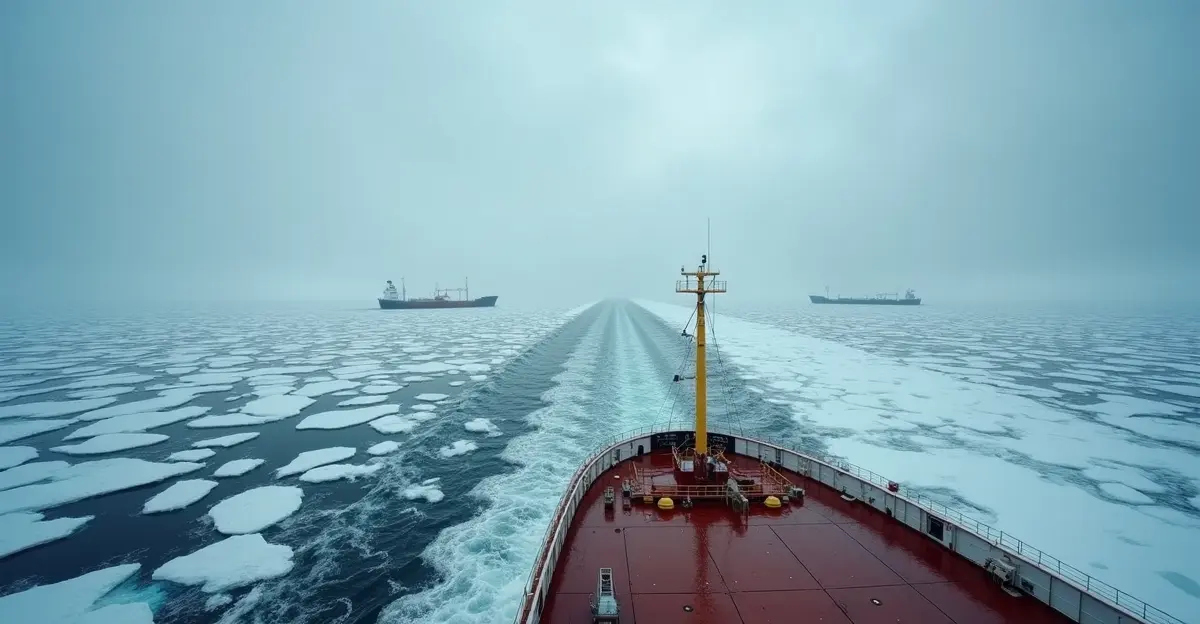
The accelerated melting of Arctic sea ice has turned the Northern Sea Route (NSR) and the Northeast Passage (NEP) into potential shortcuts for global trade. A new commercial viability study released in 2025 evaluates seasonal corridors, trade risk, environmental cost and insurance requirements for the first time at this depth.
Key Findings
Route Viability
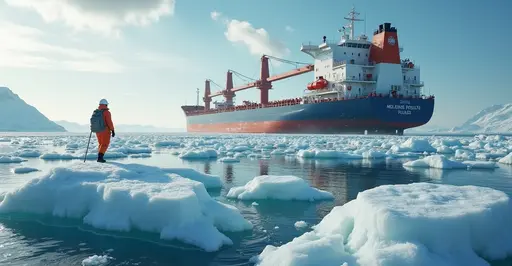
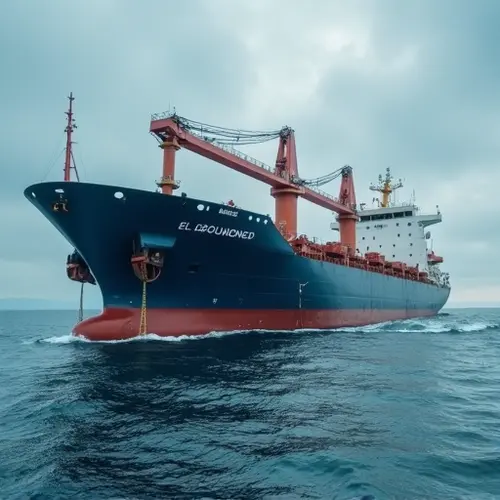
The study uses a well‑to‑wake assessment model and compares container travel times between the NSR and the traditional Suez Canal route (SCR). It finds that in the high‑summer window (June‑August) the NSR can cut about 25% of the distance, translating to a 12‑hour savings for a 12,000‑tonne container ship. However, the NEP remains largely impassable outside the 6‑week polar season due to ice floes and limited search‑and‑rescue coverage.
Economic Trade‑Offs
While fuel savings and shorter transit times boost gross margins, the study notes higher port handling costs in Murmansk and the Russian Arctic ports. Insurance premiums for polar operations have spiked 30% in 2024, with projected increases of 15% annually over the next decade. “Insurers are still learning to price the unique risks of ice‑bound navigation,” says Dr. Elena Petrova, maritime risk analyst at the International Maritime Organization.
Environmental Costs
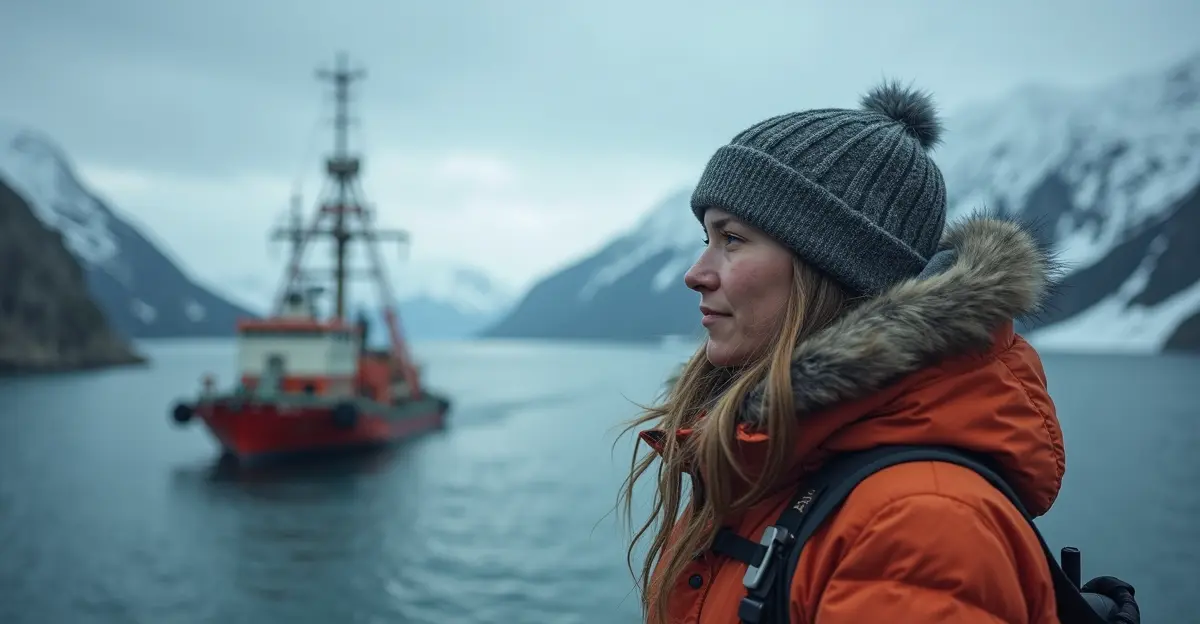
The Arctic ecosystem is highly sensitive to shipping traffic. The report estimates that each container trip along the NSR releases 10% more greenhouse gases than a conventional route due to lower engine loads, but compensates with reduced ship‑to‑ship collisions. Marine biodiversity impacts are projected to be most severe near the Kara Sea and Laptev Sea zones, where shipping density is expected to rise. The study recommends mandatory carbon offsetting schemes and real‑time ice‑monitoring protocols.
Insurance Landscape
Insurance underwriters are developing new polar‑coverage products that bundle hull protection, oil‑spill liability, and environmental remediation. The study highlights the need for standardized international guidelines to prevent fragmented coverage and ensure that insurance costs are transparent to shippers. “Policymakers must act swiftly to create a level playing field for insurers and shipowners alike,” adds Dr. Ahmed Rahman, CEO of PolarNav Insurance Group.
Stakeholder Reactions
Shipping giants such as Maersk and CMA CGM have already begun pilot container services via the NSR, citing cost savings. However, environmental NGOs warn that commercial use could accelerate ice melt. The Russian Federation has announced investment in new port facilities and a coordinated search‑and‑rescue network, while the United Nations Convention on the Law of the Sea (UNCLOS) is revisiting jurisdictional claims.
Future Outlook
The study concludes that the commercial viability of Arctic routes hinges on climate trends, regulatory support, and technological innovations. Seasonal corridors will remain operational only if robust insurance models and stringent environmental safeguards are in place.
For a deeper dive, see the full report on Frontiers in Marine Science and the latest policy analysis on Nature Communications.


Follow Discussion