


 Deutsch
 English
 Español
 Français
 Nederlands
 Português


 Share
Share




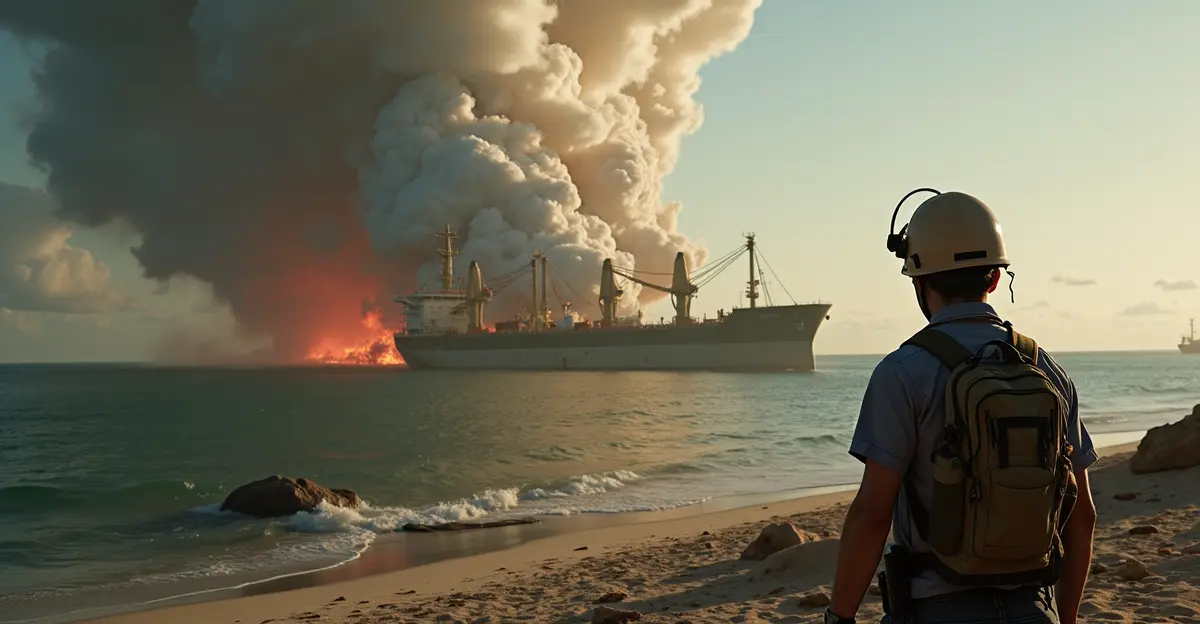
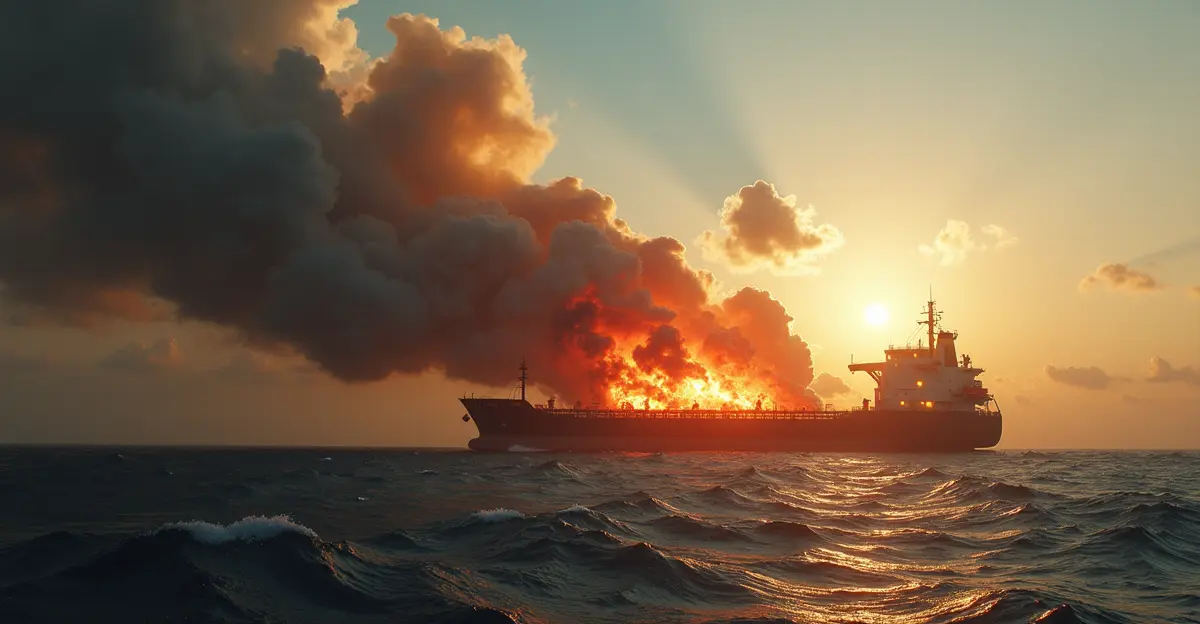
The de facto closure of the Strait of Hormuz since late February 2026 has removed approximately 10 million barrels per day from global supply—the largest oil disruption in history—sending Brent crude above $128 per barrel and triggering the World Bank's biggest energy price surge projection in four years. As the crisis enters its third month, ship transits have collapsed by 95%, from 130 per day in February to just six in March, according to UNCTAD. This strategic analysis examines how the energy shock is cascading through three interconnected fault lines: soaring sovereign borrowing costs as global debt surpasses $100 trillion, acute debt distress in developing nations where 3.3 billion people already spend more on debt than on health or education, and the IMF's warning that hidden amplification risks beneath market composure could trigger broader financial instability.
Context: The Strait of Hormuz and the 2026 Crisis
The Strait of Hormuz is a 104-mile-long waterway connecting the Persian Gulf to the Gulf of Oman, through which 20% of the world's liquefied natural gas and 25% of seaborne oil trade passed annually before 2026. It is the only maritime route for several Gulf countries including the UAE, Qatar, Bahrain, Kuwait, and Iraq. The current disruption, triggered by the US-Iran conflict and Iranian attacks on commercial vessels, has created a physical supply gap no alternative route can fully bridge. Unlike the 2019 tanker attacks, markets now embed a structural risk premium across the forward curve, with steep contango reflecting acute near-term supply anxiety. Key importers China, Japan, South Korea, and India remain most exposed.
The 2026 Iran war and global energy security has fundamentally altered the risk calculus for energy markets. Brent crude spiked to $126.41 per barrel on April 30, 2026, while WTI reached $110.29, widening the WTI-Brent spread to approximately $13—over double normal levels—as a geopolitical risk barometer. US gas prices rose to $4.48 per gallon, from $2.98 before the conflict, with analysts warning prices could hit $5 if the strait remains closed.
Fault Line One: Sovereign Debt Crisis Amplified
Global public debt reached a record $102 trillion in 2024, according to UNCTAD's 'A World of Debt 2025' report, with developing countries holding $31 trillion of this debt—growing twice as fast as in developed economies since 2010. The IMF's October 2024 Fiscal Monitor warned that global public debt was expected to exceed $100 trillion (93% of global GDP) by end of 2024, approaching 100% by 2030. In a severely adverse scenario, debt could reach 115% of GDP within three years.
The energy shock is now compounding these vulnerabilities. Developing nations are borrowing at rates two to four times higher than the US, and experienced a $25 billion negative net resource transfer in 2023. A record 61 developing countries spent 10% or more of government revenues on interest payments in 2024, outpacing spending on health and education. The global debt crisis and developing economies face an increasingly dire outlook as higher oil prices widen current account deficits and weaken currencies.
The IMF's Warning on Hidden Risks
IMF Managing Director Kristalina Georgieva warned during the April 2026 Spring Meetings that central banks must be prepared to raise interest rates if inflationary pressures from the conflict escalate. The IMF's Pierre-Olivier Gourinchas identified three channels of economic impact: higher commodity prices as a supply shock, risk of wage-price spirals, and potential financial market repricing. The reference forecast projects 3.1% global growth with 4.4% inflation, while adverse scenarios could push growth to 2% and inflation above 6%.
Fault Line Two: Acute Debt Distress in the Global South
Developing countries face the most severe impacts through higher import costs, weaker currencies, tighter financial conditions, and rising borrowing costs. The UN warns that 32 million more people could be pushed into poverty if the disruption persists. UNDP Administrator Alexander De Croo described the situation as 'development in reverse,' noting that those pushed back into poverty are often people who had previously escaped it.
Civil society groups and policy advocates from the Global South have warned that policy prescriptions from the IMF and World Bank's 2026 Spring Meetings risk entrenching debt distress and austerity. Critics argue the Bretton Woods institutions are treating a structural crisis as a short-term liquidity challenge by relying on more lending, fiscal consolidation, and private capital mobilization amid overlapping shocks from energy, food, trade, and financial markets. Debt analyst Daniela Berdeja noted that every dollar spent on debt servicing is a dollar less for healthcare, education, and climate adaptation.
Fault Line Three: Financial Instability and Market Amplification
The IMF warns that hidden amplification risks beneath market composure could trigger broader financial instability. The energy shock is cascading through supply chains, with global merchandise trade growth projected to slow from 4.7% in 2025 to between 1.5% and 2.5% in 2026, while global GDP growth is expected to dip from 2.9% to 2.6%. A joint IMF, World Bank, and International Energy Agency statement described the war's impact as 'substantial, global, and highly asymmetric,' disproportionately affecting energy-importing low-income countries with higher oil, gas, and fertilizer prices threatening food security and jobs.
The financial contagion risks from energy shocks are particularly acute for nations already grappling with high debt burdens. UN Secretary-General António Guterres warned on April 30, 2026, that the escalating crisis is 'strangling the global economy.' He outlined three scenarios: even if restrictions lift immediately, global growth would drop from 3.4% to 3.1% with inflation rising to 4.4%; if disruptions continue through midyear, 32 million people could be pushed into poverty and 45 million more could face extreme hunger; in a worst-case scenario persisting through year-end, the world would face a global recession.
Emergency Policy Responses: Are They Sufficient?
The United States announced the release of 172 million barrels of oil from its Strategic Petroleum Reserve (SPR)—the second-largest release in history after Biden's 2022 drawdown of 180 million barrels. This would reduce reserves from 415 million to roughly 243 million barrels, the lowest level since 1982. Energy Secretary Chris Wright stated the US has arranged to replace these reserves with approximately 200 million barrels within the next year.
President Trump's 'Project Freedom' initiative, aimed at guiding ships through the blocked strait, saw only four ships cross on its first day—compared to the pre-war average of over 120 vessels daily. Shipping companies remain hesitant due to safety concerns, with up to 20,000 seafarers stranded on some 2,000 vessels.
On the debt front, the Borrowers' Platform was launched by UNCTAD on April 15, 2026, during the IMF-World Bank Spring Meetings. This new forum enables developing borrowing countries to share knowledge, exchange experiences, and speak collectively on debt issues. With developing countries' external debt reaching $11.7 trillion in 2024, and 54 countries spending more on debt than on health or education, the platform addresses the long-standing gap in a creditor-driven global debt architecture. However, it is not a crisis-coordination or negotiation mechanism, but a voluntary, non-binding forum for peer learning and collective advocacy.
The UN-led sovereign debt restructuring platform represents a step toward rebalancing power in global economic governance, but critics argue that without binding mechanisms or debt cancellation, it may prove insufficient against the scale of the crisis. Advocates are calling for large-scale debt cancellation, fairer restructuring mechanisms, and a comprehensive UN-led sovereign debt framework.
Expert Perspectives
'The Strait of Hormuz closure is the most consequential global financial stability test since the 2008 crisis,' said a senior IMF official during the Spring Meetings. 'We are navigating uncharted waters where an energy shock, a debt crisis, and geopolitical conflict are converging simultaneously.'
UNCTAD's rapid assessment warns that if disruptions persist, the situation could escalate into a cascading crisis with risks of a wider debt crisis, prolonged inflation, and worsening food security for vulnerable economies. The IMF emphasizes that preserving price signals is critical, and that untargeted measures like price controls often backfire. Central banks should look through the energy surge only if inflation expectations remain anchored.
FAQ
What caused the Strait of Hormuz closure in 2026?
The closure resulted from the US-Iran conflict, with Iranian attacks on commercial vessels and threats to shipping, combined with US military responses including the destruction of Iranian boats. The US announced 'Project Freedom' to guide vessels, but shipping companies remain hesitant due to safety concerns.
How much oil has been removed from global supply?
Approximately 10 million barrels per day have been removed from global supply since late February 2026, making it the largest oil disruption in history. Over 600 million barrels of crude have been prevented from reaching markets in the first 50 days.
What is the impact on global debt?
Global public debt has surpassed $100 trillion, with developing countries holding $31 trillion. The energy shock is compounding debt distress by raising borrowing costs, weakening currencies, and widening current account deficits. A record 61 developing countries spend more on debt interest than on health or education.
What emergency measures have been taken?
The US released 172 million barrels from the Strategic Petroleum Reserve. The UN launched the Borrowers' Platform to give developing countries a stronger collective voice in debt negotiations. The IMF and World Bank have called for targeted fiscal support rather than broad subsidies.
How many people could be pushed into poverty?
The UN warns that 32 million more people could be pushed into poverty if the disruption persists, with 45 million more facing extreme hunger in a midyear disruption scenario. A worst-case scenario through year-end could trigger a global recession.
Conclusion: A Test of Global Financial Architecture
The Strait of Hormuz crisis represents the most severe test of global financial stability since 2008. The convergence of an unprecedented energy supply shock, record sovereign debt levels, and acute vulnerability in developing nations creates a perfect storm that existing policy tools may be inadequate to address. While strategic reserve releases and new borrowing platforms offer some relief, the scale of the crisis demands more fundamental reforms to the international financial architecture. As UN Secretary-General Guterres demanded, the world needs the Strait to 'breathe again'—but even if navigation resumes tomorrow, the economic scars of this crisis will persist for years, reshaping energy markets, debt dynamics, and global governance in ways we are only beginning to understand.


Follow Discussion