Nederlands
 English
 Deutsch
 Français
 Español
 Português
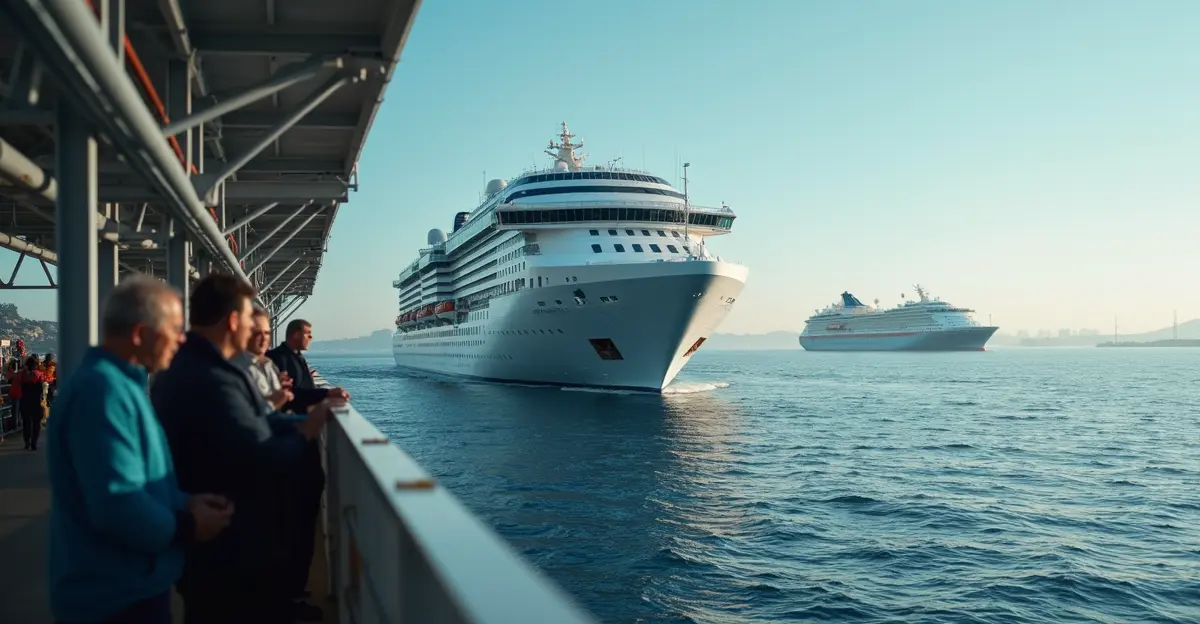





Global Cruise Industry Faces Sweeping Emission Overhaul
The International Maritime Organization (IMO) has announced groundbreaking new emission standards for cruise ships that will fundamentally reshape the industry's environmental footprint. Starting in 2025, cruise operators must navigate a complex web of cleaner fuel mandates, stricter scrubber regulations, and significant financial implications that could add millions to operational costs.
The 2025-2026 Regulatory Timeline
The new framework introduces a phased approach with critical deadlines. In 2025, the Mediterranean Sea becomes an Emission Control Area (ECA), requiring ships to use fuel with less than 0.10% sulphur content or install approved scrubber technology. The following year, in 2026, the Norwegian Sea joins as an ECA with additional nitrogen oxide (NOx) controls, particularly stringent in Norwegian fjords where cruise ships are prominent visitors.
'This represents the most significant regulatory shift in cruise industry history,' says maritime analyst Dr. Elena Rodriguez. 'Operators who haven't started planning are already behind schedule. The two-year transition period until 2027 when regulations fully enter force is shorter than it appears given the scale of fleet upgrades required.'
Cleaner Fuel Compliance Options
Cruise lines face multiple pathways to compliance, each with distinct challenges and costs. The primary options include:
Low-Sulphur Marine Gas Oil (LSMGO): The most straightforward approach involves switching to cleaner-burning fuels, but this comes with a 20-30% price premium compared to traditional heavy fuel oil. Major ports are already implementing fuel quality checks, with non-compliance risking vessel detention.
Scrubber Technology: Exhaust gas cleaning systems allow ships to continue using cheaper high-sulphur fuel while removing pollutants. However, recent regulations address environmental concerns about scrubber wastewater containing heavy metals being discharged into oceans. 'Scrubbers are no longer a simple compliance solution,' notes environmental engineer Mark Thompson. 'New monitoring requirements and discharge restrictions make them more complex and expensive to operate.'
Alternative Fuels: Forward-thinking operators are investing in liquefied natural gas (LNG) capabilities, biofuels, and methanol conversion projects. Carnival Corporation has led this charge with several LNG-powered ships already in operation and more on order.
Port Fee Implications and Financial Penalties
The financial impact extends beyond fuel costs. The IMO's new global economic measure introduces what amounts to a carbon tax on shipping emissions. Ships exceeding emission thresholds face fees potentially reaching $380 per tonne of carbon dioxide, with collected funds directed to a Net-Zero Fund expected to raise approximately $10 billion annually.
Ports worldwide are implementing environmental charges, with France introducing a €15 per passenger per night tax. These fees reflect growing public pressure on popular cruise destinations to address environmental concerns. 'Port fees are becoming a significant revenue stream for coastal communities,' explains port authority representative Sarah Chen. 'But they're also a tool to incentivize cleaner operations. Ships with better environmental performance pay lower fees.'
Operator Challenges and Strategic Responses
Cruise operators face unique pressures compared to cargo vessels. Extended port stays in ECAs require constant compliance rather than just transiting through controlled areas. The public visibility of cruise ships makes them targets for environmental activism and regulatory scrutiny.
Major operators are responding with comprehensive strategies:
Fleet Modernization: Retrofitting older vessels with selective catalytic reduction (SCR) systems that can reduce NOx emissions by up to 80% compared to older standards.
Itinerary Planning: Adjusting routes to minimize time in ECAs or planning fuel switches at strategic points.
Digital Monitoring: Implementing continuous emission monitoring systems (CEMS) for real-time compliance tracking and predictive maintenance.
Passenger Education: Some lines are incorporating sustainability messaging into their customer experience, recognizing that environmentally conscious travelers increasingly factor ecological impact into vacation decisions.
The Road Ahead for Sustainable Cruising
While the regulatory burden is substantial, industry experts see potential benefits. 'These regulations are driving innovation that was overdue,' says cruise industry consultant James Wilson. 'We're seeing accelerated development of cleaner technologies that will make cruising more sustainable in the long term. The companies that adapt successfully will gain competitive advantage.'
The coming years will test the cruise industry's ability to balance environmental responsibility with economic viability. With passenger fares likely to increase as environmental costs are internalized, and with some older, less efficient ships potentially being retired early, the face of global cruising is set to change dramatically by the end of the decade.
For more information on IMO regulations, visit IMO official website. Details on emission control areas can be found at EPA maritime emissions page.