Nederlands
 English
 Deutsch
 Français
 Español
 Português
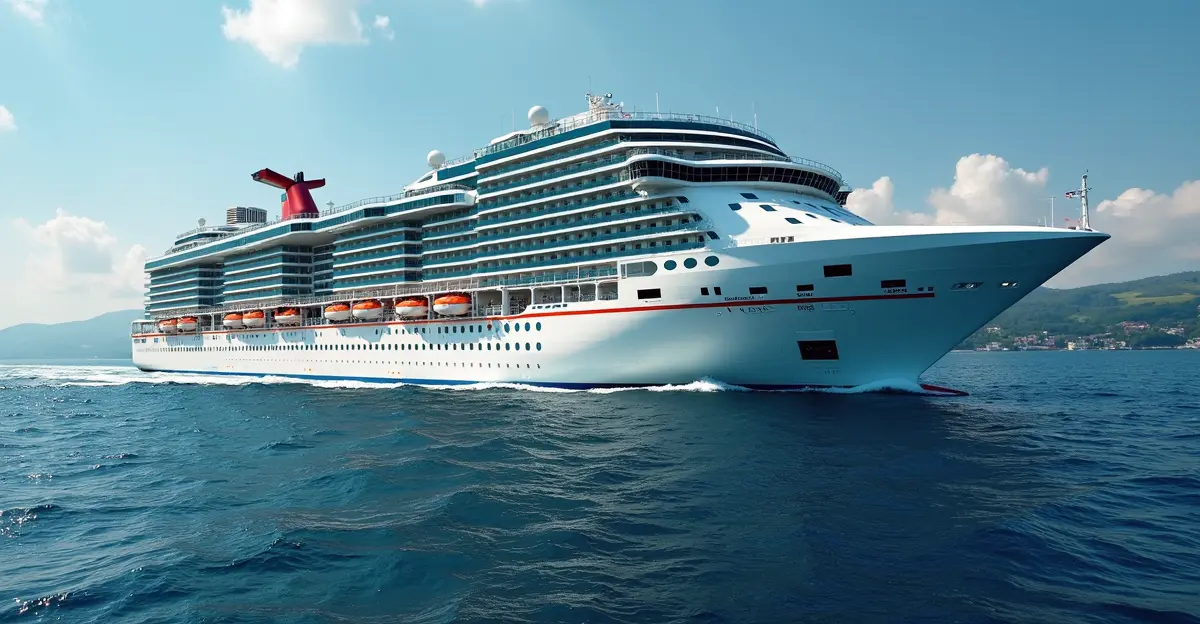





Cruise Industry Navigates Waters of New Emission Regulations
The global cruise industry is entering a transformative period as new environmental regulations take effect in 2025, forcing operators to accelerate their transition to cleaner fuels while facing increased port fees and complex compliance schedules. With the International Maritime Organization (IMO) establishing landmark global regulations requiring cruise ships to pay for their carbon emissions, and the European Union implementing its FuelEU Maritime Regulation, cruise lines are navigating uncharted waters of environmental accountability.
Global Emission Rules Take Effect
Starting in 2025, cruise ships over 5,000 tonnes must comply with the IMO's new carbon pricing mechanism, which could see operators paying up to $380 per tonne of CO2 emitted unless they implement emissions reduction measures. 'This makes shipping the first industry to agree on financial penalties for emissions,' notes an industry analyst. The rules aim to generate $10 billion annually for a net-zero fund while requiring 43% emissions cuts by 2035.
Simultaneously, the EU's FuelEU Maritime Regulation took effect on January 1, 2025, mandating gradual decarbonization of the maritime sector. Ships calling at EU ports must reduce greenhouse gas intensity of onboard energy, starting with a 2% reduction in 2025 and reaching 80% by 2050 compared to 2020 levels. 'We're seeing the most comprehensive regulatory framework for maritime emissions in history,' says James O'Connor, an energy sector expert.
Cleaner Fuel Transitions Accelerate
Cruise operators are rapidly transitioning to alternative fuels to meet these requirements. Carnival Corporation leads the industry with ten LNG-capable ships currently operating and six more planned by 2033. The company has also conducted successful biofuel trials across multiple vessels. 'LNG offers immediate emissions reductions, but biofuels and methanol represent the future,' explains a Carnival spokesperson.
Royal Caribbean's Icon Class ships utilize LNG and fuel cells, while Norwegian Cruise Line's new Prima Class ships are 20% more energy efficient. MSC Cruises made history in 2023 with the industry's first zero-emissions cruise using bio-LNG. Biofuels offer up to 86% reduction in greenhouse gas emissions compared to traditional marine fuels and are compatible with existing ship engines, making them an attractive short-term solution.
Port Fees and Compliance Costs Rise
Passengers in 2025 will face new or increased fees at major ports worldwide as governments implement taxes to fund infrastructure and environmental initiatives. The U.S. Virgin Islands is increasing wharfage fees by $0.44 and ship dues by $3.00 starting April 2025, while Mexico implements a $42 immigration levy and $5 Quintana Roo fee from July 1, 2025.
Greece now charges approximately $22 per passenger to visit islands like Santorini and Mykonos, and Hawaii is considering a $50 'Green Fee' starting July 2025. 'These fees reflect a growing trend of governments addressing overtourism and environmental impacts through taxation,' observes a travel industry analyst.
Compliance Schedules and Technical Challenges
The industry faces significant technical challenges in meeting compliance deadlines. New Emission Control Areas (ECAs) will be established in the Mediterranean Sea in 2025 and Norwegian Sea in 2026, requiring ships to use fuel with less than 0.10% sulphur content or install sulphur abatement technology. Cruise operators face unique challenges due to extended port stays within ECAs, requiring constant compliance and higher costs for low-sulphur fuels.
Companies must begin monitoring energy use in 2025 and submit compliance reports by January 2026 under the EU regulations. 'The compliance timeline is aggressive but necessary for meaningful environmental progress,' says an EU regulatory official.
Industry Response and Future Outlook
Cruise lines are investing billions in fleet modernization and fuel infrastructure. Carnival Corporation exemplifies industry preparation, with all ships already ECA-capable using LNG, scrubbers, or compliant fuels, and testing biofuels and methanol conversions. The successful completion of Europe's first major LNG dry-docks for large passenger vessels by Lloyd's Register, Carnival UK, and Carnival Cruise Line represents a significant milestone.
However, challenges remain with scalability, cost, and supply chain infrastructure for alternative fuels. 'The transition requires unprecedented collaboration between cruise lines, ports, fuel suppliers, and regulators,' notes a sustainability director at a major cruise company. As the industry sails toward its 2050 net-zero targets, 2025 marks a critical inflection point where environmental regulations, fuel transitions, and economic realities converge to reshape the future of cruise travel.