


 Deutsch
 English
 Español
 Français
 Nederlands
 Português


 Share
Share




What Is Geoeconomic Fragmentation and Why Does It Matter?
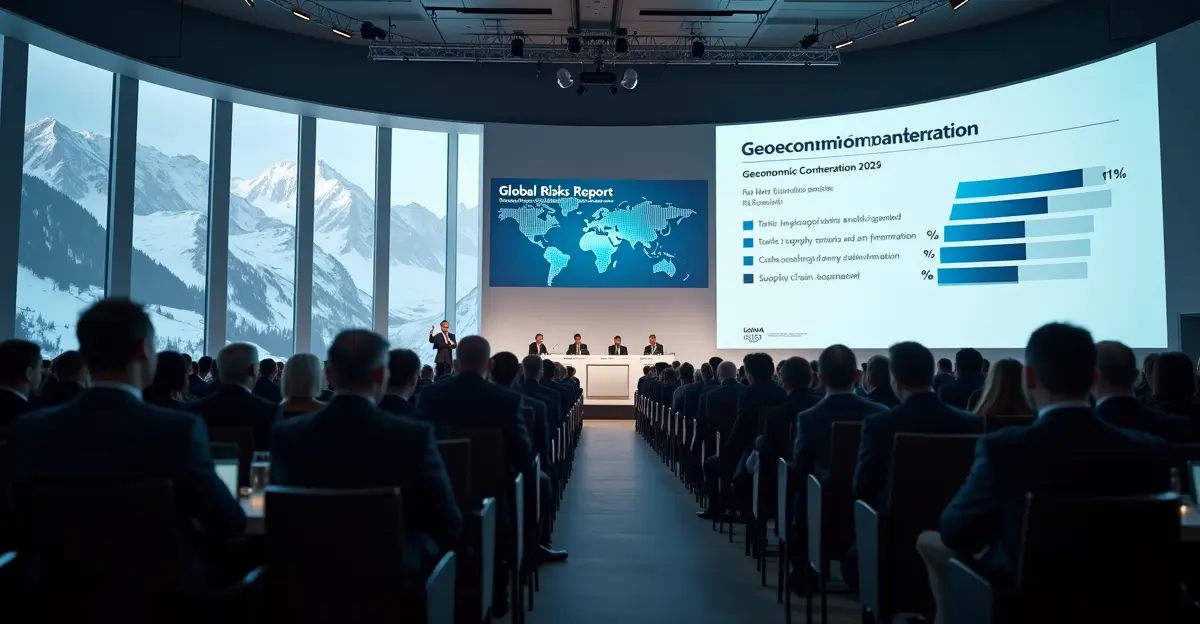
Geoeconomic fragmentation refers to the unraveling of global economic integration as nations erect trade barriers, impose investment restrictions, and weaponize economic dependencies for national security. A landmark World Economic Forum (WEF) report released on June 4, 2026, titled Deepening Divides: The Cost of a More Fragmented Financial System, reveals that this phenomenon now costs the global economy between $213 billion and $307 billion annually. The report also finds that fragmentation adds 0.2 to 0.3 percentage points to global inflation, hitting consumers and businesses alike. The WEF geoeconomic fragmentation report underscores that damage is no longer confined to rival blocs; it has spread to traditionally allied economies such as the European Union, Japan, Canada, and South Korea.
Key Findings of the WEF's Deepening Divides Report
Staggering Annual Costs
The WEF estimates that geoeconomic fragmentation reduces global GDP by $213–$307 billion each year. This figure captures losses from disrupted trade flows, reduced cross-border investment, and lower productivity growth. The report emphasizes that these costs are likely to rise if policymakers fail to address the underlying drivers.
Inflationary Pressure
Fragmentation adds 0.2–0.3 percentage points to global inflation. Tariffs, supply chain disruptions, and the cost of relocating production drive up prices for goods and services. Central banks face a difficult trade-off: tightening monetary policy to combat inflation risks further slowing growth already constrained by fragmentation.
Disproportionate Impact on Emerging Markets
Emerging economies outside major blocs face the steepest losses. In severe scenarios, these nations could see GDP declines of up to 10.7%, compared to a global average of 6.4%. Countries like Vietnam, India, and Brazil are caught between competing economic spheres, forced to choose sides or bear the cost of multi-alignment.
US Tightens AI Chip Export Controls: Closing the Loophole
Just days before the WEF report, on May 31, 2026, the U.S. Department of Commerce moved to close a loophole that allowed Chinese companies to acquire advanced AI chips through overseas subsidiaries. The new guidance clarifies that license requirements apply to entities headquartered in China, even when operating outside the country. This targets Nvidia's Blackwell and Rubin processors and AMD's MI350x chips. A Bureau of Industry and Security spokesperson stated the guidance clarifies existing rules dating back to 2023. An industry source estimated that hundreds of thousands of advanced chips may have been exported through the regulatory gap that existed since May 2025, when the Trump administration declined to enforce the Biden-era AI Diffusion rule. The US AI chip export controls 2026 mark a significant escalation in tech decoupling.
How Tariff Escalation and Investment Restrictions Reshape Supply Chains
Triple Redundancy Strategies
Companies are adopting triple redundancy supply chain strategies—maintaining parallel production in North America, Europe, and Asia—at a 15–25% cost increase. Manufacturing costs have risen 8–12%, and transportation expenses 15–20%, according to industry analyses. The global supply chain realignment 2026 is forcing firms to prioritize resilience over efficiency.
Regional Blocs and the New Trade Architecture
Global trade is fragmenting into three rival blocs: US-led, EU-led, and China-led. Nearly 18,000 discriminatory trade measures have been enacted since 2020, per the WEF Global Risks Report. McKinsey confirms that geopolitical alignment has become a permanent supply chain design criterion. The EU's fully implemented Carbon Border Adjustment Mechanism (CBAM) adds another layer, imposing carbon costs on imports. Meanwhile, South-South trade has grown to $6.8 trillion, as middle powers like India, Vietnam, and Brazil position themselves as connectors between blocs.
Impact on Allied Economies: No One Is Immune
The WEF report highlights that fragmentation is spreading beyond geopolitical rivals. Allied economies—the EU, Japan, Canada, South Korea—are experiencing collateral damage from tariffs and investment restrictions originally aimed at adversaries. For example, EU exporters face higher compliance costs due to overlapping regulatory regimes, while Japanese semiconductor firms are caught between US export controls and Chinese market access. The economic impact on allied economies is a stark reminder that in a fragmented world, even friends pay a price.
Expert Perspectives
Kristalina Georgieva, Managing Director of the IMF, has warned that geoeconomic fragmentation could be the most consequential shift in the global economy since the end of the Cold War. The WEF report echoes this, calling for five key actions: establishing shared guardrails, ensuring policy predictability, advancing regional integration (e.g., the African Continental Free Trade Area), strengthening multilateral institutions, and investing in supply chain resilience.
Frequently Asked Questions
What is geoeconomic fragmentation?
Geoeconomic fragmentation is the breakdown of global economic integration due to geopolitical tensions, trade barriers, investment restrictions, and the formation of competing economic blocs. It reduces trade flows, investment, and productivity growth.
How much does geoeconomic fragmentation cost the global economy?
According to the WEF's June 2026 report, fragmentation costs between $213 billion and $307 billion annually and adds 0.2–0.3 percentage points to global inflation.
Which countries are most affected by fragmentation?
Emerging markets outside major blocs face the largest losses—up to 10.7% of GDP in severe scenarios. However, allied economies like the EU, Japan, and Canada are also significantly impacted.
What did the US do about AI chip exports in May 2026?
On May 31, 2026, the US Commerce Department closed a loophole that allowed Chinese firms to acquire advanced AI chips (e.g., Nvidia Blackwell, AMD MI350x) through overseas subsidiaries. License requirements now apply to entities headquartered in China, regardless of location.
How are companies adapting to supply chain fragmentation?
Many firms are adopting triple redundancy strategies—maintaining parallel supply chains in North America, Europe, and Asia—at a 15–25% cost increase. Others are regionalizing production or investing in multi-alignment approaches.
Conclusion: A Pivotal Moment for Global Trade
The convergence of the WEF's alarming cost estimates and the US crackdown on AI chip exports signals a new phase in geoeconomic fragmentation. Policymakers face a stark choice: deepen divisions through protectionism or rebuild cooperative frameworks. The next few years will determine whether the global economy can reverse this costly trend or accept a permanently fragmented—and poorer—world.
Sources
- World Economic Forum, Deepening Divides report, June 4, 2026
- Reuters, US Takes Step to Halt Nvidia AI Chip Shipments to Chinese Firms Outside China, May 31, 2026
- CNBC, US Moves to Close AI Chip Loophole, May 31, 2026
- Informed Clearly, Trade Fragmentation Costs Global Economy $307B Annually in 2026
- IGAPA Intelligence Unit, Navigating the New Geoeconomic Order, 2026





Follow Discussion