
 Deutsch
 English
 Español
 Français
 Nederlands
 Português







The AI-Driven Trade Revolution: How Semiconductor and Data-Center Exports Are Redefining Global Economic Architecture in 2026
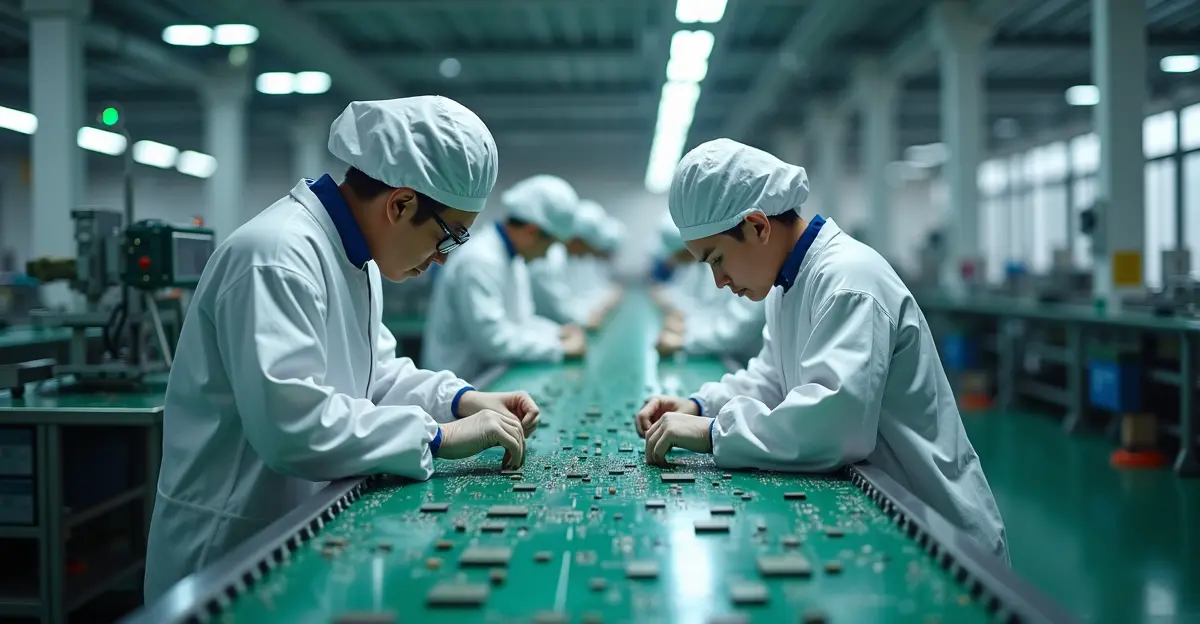
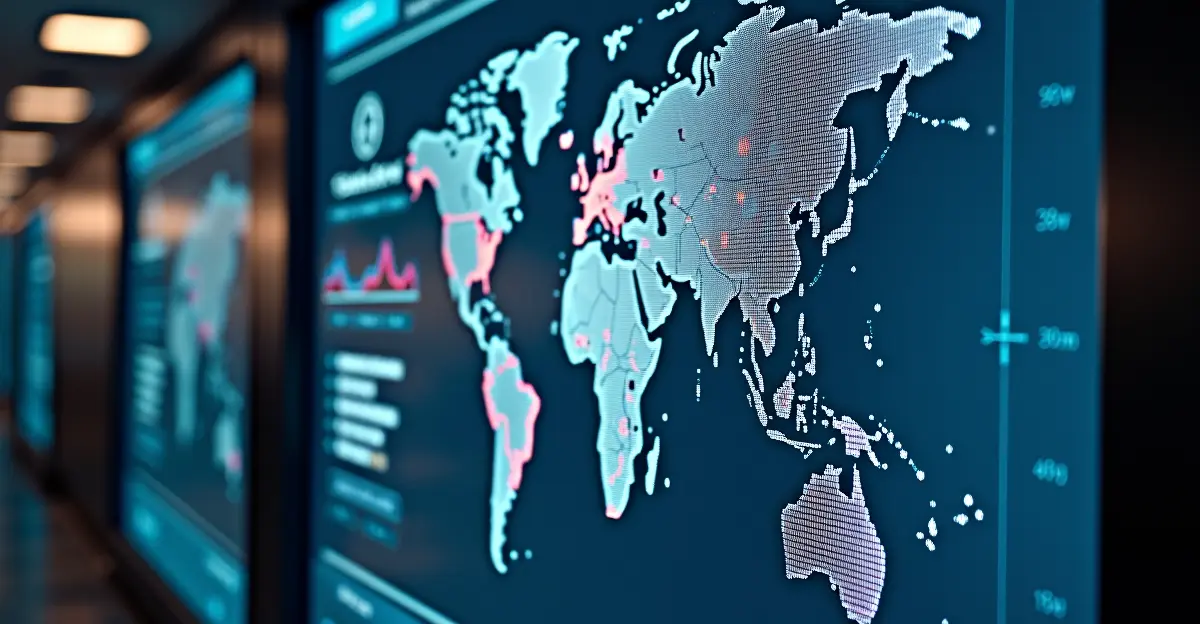
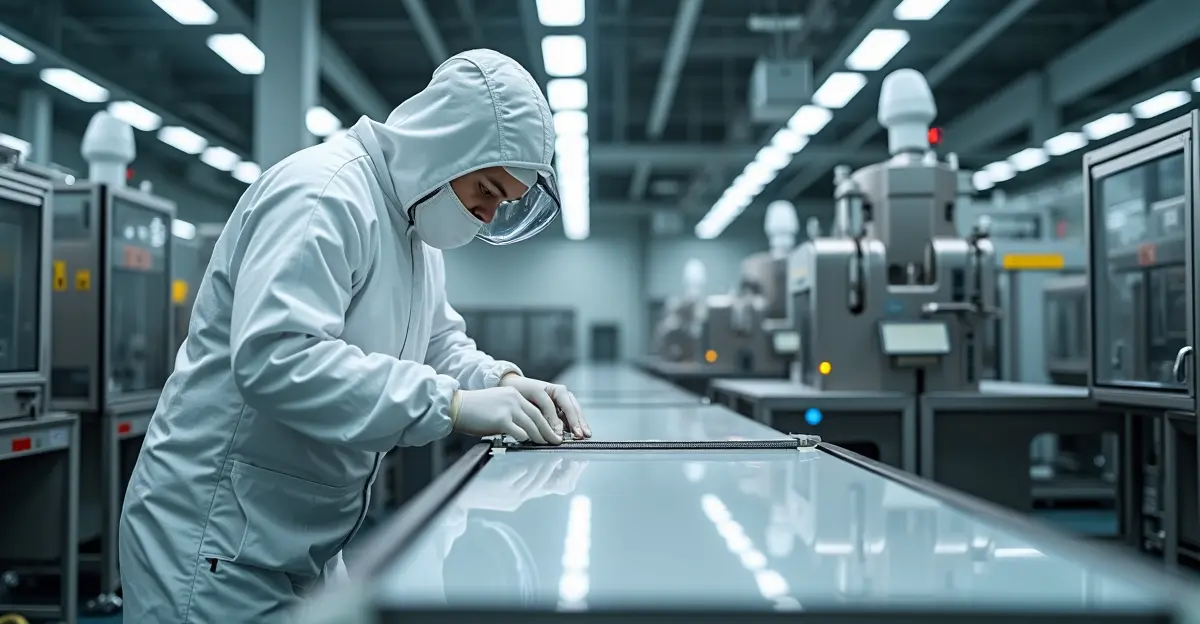
In a fundamental shift reshaping global commerce, AI-related trade—specifically semiconductor and data-center equipment exports—has emerged as the primary engine of global economic growth, accounting for one-third of all international trade expansion in 2026 according to McKinsey's latest report. This transformation marks a historic pivot from traditional manufacturing to technology-driven trade flows, creating what analysts call the 'AI Trade Paradox' where AI chips generate over 50% of semiconductor revenue while representing less than 0.2% of unit volume. The global semiconductor industry, projected to exceed $1.3 trillion by 2026, has become the epicenter of new economic dynamics, with supply chains undergoing geographic diversification and geopolitical realignments creating unprecedented challenges and opportunities.
What is the AI Trade Revolution?
The AI trade revolution refers to the fundamental transformation of global commerce driven by artificial intelligence infrastructure demands, particularly semiconductors and data-center equipment. According to Federal Reserve analysis, AI-related trade drove nearly half of merchandise trade growth in the first half of 2025, despite representing only about 15% of total trade. This surge is primarily tied to equipment for semiconductor manufacturing and data center construction, with three key product categories dominating: servers (HS-6 8471.50), other data processing units (8471.80), and related parts/accessories (8473.30). The structural shift involves permanent changes to trade patterns, investment flows, and economic dependencies that will shape the global economy for decades.
China's Evolution: From Factory to 'Factory to the Factories'
China is undergoing a dramatic transformation in its economic role, shifting from exporting finished consumer goods to becoming a 'factory to the factories' that supplies intermediate industrial components to emerging manufacturing hubs. According to McKinsey Global Institute research, while China's consumer goods exports declined 2% last year, intermediate goods exports rose 9%. This includes critical components like smartphone parts, processors, memory chips, and lithium-ion batteries. The shift comes as U.S.-China trade declined 30% due to tariffs, prompting China to diversify trading partners toward emerging economies, particularly Southeast Asia.
The Semiconductor Supply Chain Realignment
The most dramatic change in global trade patterns is a 30% decline in US-China semiconductor trade due to tariffs, creating what experts call a 'supply chain divorce' between the world's two largest economies. This has led to a bifurcated global chip ecosystem where both sides are building independent supply chains and incompatible AI infrastructure. China has made significant domestic progress under these constraints: SMIC has developed 5nm-class manufacturing capabilities without EUV lithography, Huawei's Ascend AI chips are gaining traction as NVIDIA alternatives, and China implemented a '50% Mandate' requiring domestic fabs to source half their equipment locally.
Southeast Asia's Emergence as Manufacturing Hub
Southeast Asia (ASEAN) has emerged as the primary beneficiary of the AI trade revolution, with regional exports growing 14%—more than twice the global average. The region is serving as a 'matchmaker' for global supply chains, maintaining connections between China and the U.S. despite geopolitical tensions. According to industry analysis, Southeast Asia's semiconductor market was valued at USD 23.9 billion in 2024 and is projected to exceed USD 55 billion by 2033, growing at a CAGR of 8.9%. The region is expected to capture 25% of global ATP capacity by 2032 as supply chains diversify from China and Taiwan.
Key ASEAN Semiconductor Players
- Malaysia and Vietnam: Lead in high-value semiconductor manufacturing
- Singapore: Focuses on advanced R&D and design capabilities
- Thailand, Indonesia, and the Philippines: Strengthening chip assembly and testing capabilities
Energy Demands: The AI Infrastructure Bottleneck
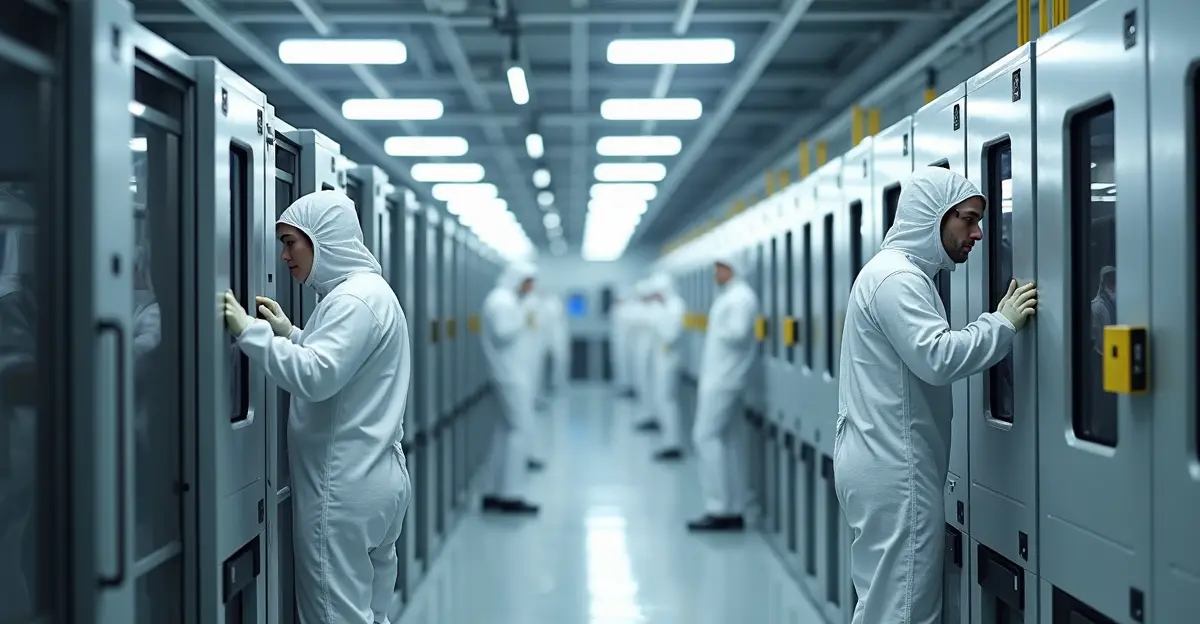
The AI trade revolution is creating unprecedented energy demands that are fundamentally reshaping global power dynamics. AI infrastructure is creating a 'power bottleneck' that's altering energy security calculations and industrial competition worldwide. Data centers currently use 415 TWh of electricity (1.5% of global consumption) projected to double to 945 TWh by 2030. AI-optimized racks now demand 30-100 kW compared to 5-15 kW for traditional racks, overwhelming local grid capacity and causing electricity costs to rise by 267% near data centers.
This has created a multi-trillion dollar market for energy infrastructure, with McKinsey projecting $6.7 trillion in global data center infrastructure investment through 2030. Major tech companies like Microsoft and Google are forming strategic partnerships with energy firms, securing gigawatt-scale power through deals like Microsoft's 10.5 GW agreement with Brookfield Renewable Partners. The AI energy consumption crisis is forcing a strategic pivot toward on-site power generation as public electrical grid limitations become the primary constraint on AI expansion.
Geopolitical Competition Over Critical Technology
The AI trade revolution has intensified geopolitical competition over critical technology supply chains, with nations pursuing different strategies based on their industrial capabilities and energy resources. The United States leads in AI infrastructure build-out, followed by China, while Europe faces challenges from both Chinese imports and US tariffs. The US-China technology rivalry has transformed the once-smooth global flow of chips into a complex maze requiring approvals, rerouting, and strategic stockpiling.
National Strategies in the AI Trade Era
| Country/Region | Strategy | Key Focus |
|---|---|---|
| United States | Deregulation and domestic investment | Maintaining AI computing leadership |
| China | Import substitution and domestic innovation | Building independent semiconductor ecosystem |
| European Union | Sustainability balancing | Green AI infrastructure development |
| Southeast Asia | Manufacturing hub diversification | Capturing supply chain relocation |
| Middle East | 'AI oases' leveraging energy resources | Attracting AI investments with power availability |
Strategic Implications for National Industrial Policies
The AI trade revolution is forcing governments worldwide to reconsider their industrial policies, with energy access becoming a weapon in technological competition. Nations are forming strategic energy-AI alliances based on mutual energy availability, with energy-rich nations leveraging their power generation to attract AI investments. By 2026, AI infrastructure will be treated as critical national infrastructure comparable to electricity grids and ports, with supply chain vulnerabilities affecting computing hardware, cooling systems, and transformers creating additional security concerns.
Companies are responding by geographically diversifying supply chains (54%) and prioritizing resilience over pure efficiency, reflecting a broader shift from market efficiency to geopolitical alignment in global trade patterns. The global semiconductor supply chain resilience has become a top priority for national security, with countries investing in local capabilities to reduce trade disruption exposure.
Expert Perspectives on the AI Trade Transformation
Industry leaders and analysts recognize the profound implications of the AI trade revolution. Nvidia CEO Jensen Huang described this as the catalyst for 'the largest infrastructure buildout in human history,' requiring complete data center overhauls with advanced cooling systems and massive construction projects. Meanwhile, McKinsey researchers note that while trade is being reconfigured along geopolitical lines, globalization continues as countries trade more with aligned partners over longer distances rather than reshoring manufacturing.
The structural shift involves permanent changes to trade patterns, investment flows, and economic dependencies that will shape the global economy for decades, with businesses now prioritizing supply chain resilience alongside cost efficiency. The geopolitical realignment of global trade is creating new economic geometries that favor regions with both manufacturing capabilities and energy resources.
FAQ: Understanding the AI Trade Revolution
What percentage of global trade growth comes from AI-related exports?
AI-related trade accounts for one-third of all international trade growth in 2026, with semiconductors and data-center equipment driving this expansion according to McKinsey's report.
How has China's role in global trade changed?
China has evolved from a factory for finished consumer goods to a 'factory to the factories,' exporting intermediate industrial components like semiconductor parts and processors to emerging manufacturing hubs in Southeast Asia and elsewhere.
Why is Southeast Asia benefiting from the AI trade revolution?
Southeast Asia (ASEAN) has emerged as a crucial manufacturing hub with 14% export growth—more than double the global average—serving as a 'matchmaker' connecting Chinese components with Western markets despite geopolitical tensions.
What are the energy implications of AI infrastructure growth?
AI infrastructure demands are creating unprecedented energy consumption, with data center electricity use projected to double from 415 TWh to 945 TWh by 2030, creating power bottlenecks that are reshaping energy security calculations worldwide.
How is the US-China trade relationship affecting semiconductor supply chains?
US-China semiconductor trade has declined 30% due to tariffs, creating a bifurcated global chip ecosystem where both sides are building independent supply chains, with China implementing domestic substitution policies like the '50% Mandate' for local equipment sourcing.
Conclusion: The Future of AI-Driven Global Trade
The AI trade revolution represents a fundamental restructuring of global economic architecture, with semiconductor and data-center exports becoming the primary drivers of international commerce. As we move through 2026, several key trends will shape the future: continued geographic diversification of supply chains, intensified competition for energy resources to power AI infrastructure, and the emergence of new economic alliances based on technological capabilities rather than traditional trade relationships. The nations that successfully navigate this transformation will be those that combine advanced manufacturing capabilities with sustainable energy resources and strategic geopolitical positioning.
The structural shifts documented in McKinsey's 2026 report—AI-driven trade growth, emerging market expansion, and China's manufacturing evolution—represent not just temporary adjustments but permanent changes to the global economic order. As businesses and governments adapt to this new reality, the future of global economic architecture will increasingly be defined by technological innovation, energy security, and strategic supply chain resilience in the age of artificial intelligence.
Sources
McKinsey Global Institute: Geopolitics and the Geometry of Global Trade 2026 Update
Federal Reserve: The Global Trade Effects of the AI Infrastructure Boom
Fortune: China's Transformation to 'Factory to the Factories'
Informed Clearly: AI Energy Demands and Geopolitical Power Dynamics 2026
Oplexa: US-China Chip War 2026 Semiconductor Realignment
Follow Discussion