


 Deutsch
 English
 Español
 Français
 Nederlands
 Português


 Share
Share




The AI-Driven Trade Paradox: How Semiconductors Are Reshaping Global Economic Alignment in 2026
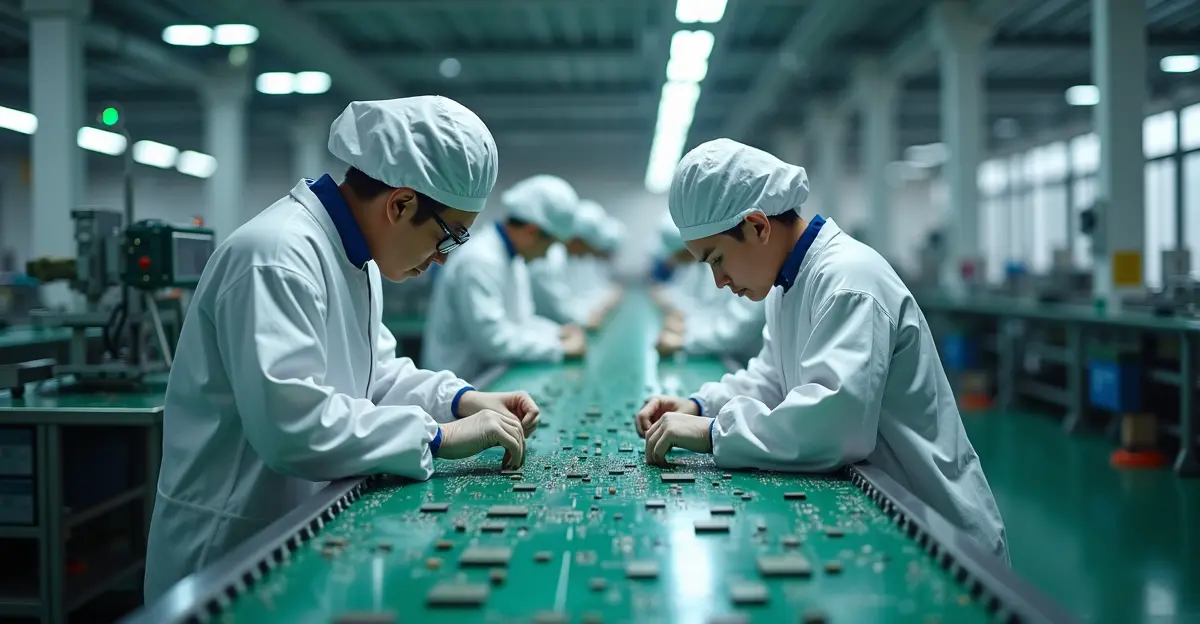
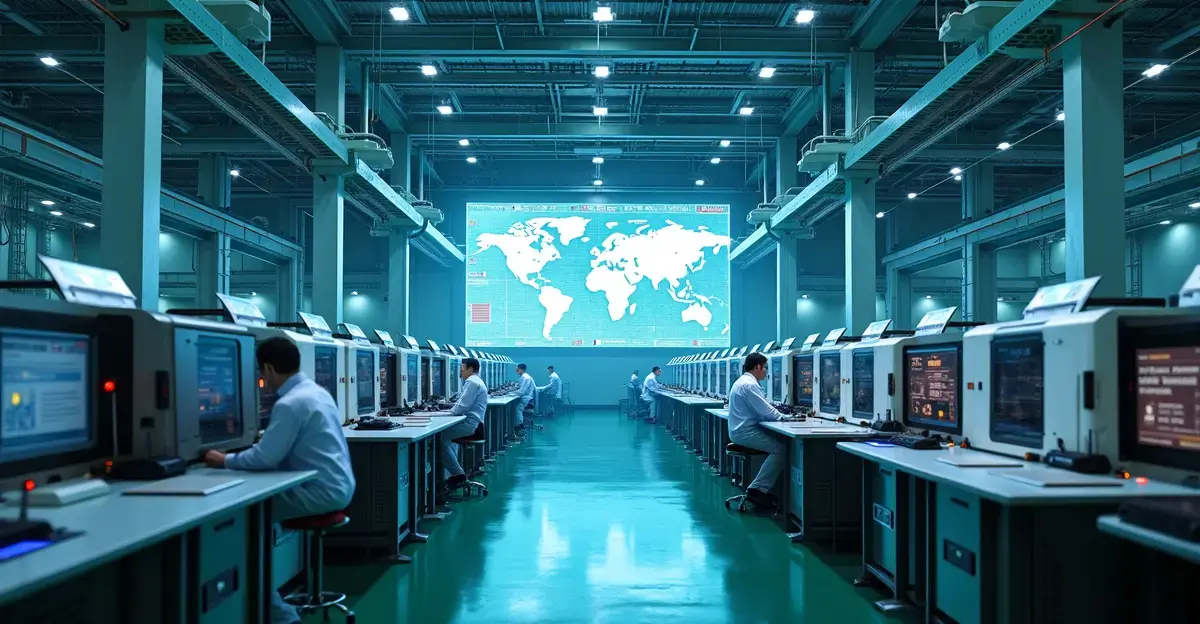
In a striking paradox of modern globalization, artificial intelligence infrastructure has emerged as the dominant engine of global trade growth in 2026, accounting for one-third of total trade expansion despite accelerating geopolitical fragmentation. According to McKinsey's 2026 global trade update, AI-related trade—particularly semiconductors and data-center equipment—is creating new economic geometries that defy traditional geopolitical alignments, with China evolving into a 'factory to the factories' supplying critical components to emerging economies while the US-China trade relationship undergoes fundamental restructuring. This semiconductor-centric trade architecture presents strategic implications for global supply chain resilience, technological sovereignty movements, and the deepening economic interdependence in an era of geopolitical competition.
What is the AI Trade Paradox?
The AI trade paradox describes the simultaneous acceleration of AI-driven commerce alongside geopolitical decoupling. While nations pursue technological sovereignty and supply chain resilience through protectionist measures, AI infrastructure demand has created unprecedented trade flows that cross geopolitical fault lines. According to Federal Reserve research, AI-related trade drove nearly half of merchandise trade growth in early 2025 despite representing only about 15% of total trade. This phenomenon is particularly concentrated in three key categories: servers, graphics processing units (GPUs), and semiconductor manufacturing equipment—the building blocks of the AI infrastructure boom that is transforming global commerce.
The Semiconductor Surge: Numbers Behind the Boom
Global semiconductor sales are projected to reach $975 billion in 2026, representing 26% year-over-year growth fueled by AI infrastructure demands. Deloitte's 2026 semiconductor industry outlook reveals that generative AI chips alone are approaching $500 billion in revenue—roughly half of global chip sales—despite accounting for less than 0.2% of total unit volume. This concentration creates both opportunity and vulnerability, with the top three semiconductor companies now comprising 80% of the industry's $9.5 trillion market capitalization. The AI-driven surge has created what analysts call a 'high-stakes paradox' where record revenues mask structural divergences between AI chips and traditional semiconductor applications in automotive, computers, and smartphones.
China's Transformation: Factory to the Factories
China is undergoing a fundamental economic transformation, evolving from the 'world's factory' to what McKinsey researchers term a 'factory to the factories.' While U.S.-China trade declined 30% following 2025 tariff increases, China has diversified its export base by significantly increasing intermediate goods shipments to emerging economies. According to Fortune analysis, China's intermediate goods exports—including smartphone parts, processors, memory chips, and lithium-ion batteries—rose 9% in 2025 as consumer goods exports fell 2%. This strategic pivot positions China as a critical supplier of components to manufacturing hubs across Southeast Asia and other emerging regions, creating new supply chain geometries that bypass traditional Western markets.
US-China Trade Restructuring
The US-China semiconductor relationship has entered a phase of structural realignment, with both nations building increasingly independent supply chains and incompatible AI infrastructure ecosystems. Key developments include U.S. policy reversals allowing NVIDIA to sell H200 chips to China with strict conditions and 25% tariffs, alongside China's significant domestic progress with SMIC achieving 5nm-class manufacturing without EUV equipment. Huawei's Ascend AI chips are gaining traction as alternatives to NVIDIA products, while China's '50% Mandate' requires domestic fabs to source half their equipment locally. This strategic divergence is creating what Oplexa analysts describe as a 'bifurcated global chip ecosystem' that will define competitive positions through 2035.
ASEAN's Crucial Role in New Trade Geometry
Southeast Asia has emerged as the crucial 'matchmaker' in global semiconductor supply chains, with ASEAN exports growing 14% in 2025—more than double the global average. The region serves as both manufacturing hub and intermediary, maintaining connections between geopolitical rivals while benefiting from redirected trade flows. According to maritime trade data, following 2025 tariff increases, supply chains rerouted to ASEAN economies and other alternative suppliers, creating what analysts term 'geopolitical arbitrage' opportunities. This positioning allows the region to capitalize on the global supply chain reconfiguration while avoiding the most severe impacts of US-China tensions.
Strategic Implications for Global Supply Chains
The semiconductor-centric trade architecture presents three critical strategic implications for global supply chain resilience. First, concentration risk has reached unprecedented levels, with AI chips representing roughly 50% of semiconductor revenue but less than 0.2% of unit volume. Second, the bifurcation of technology standards between U.S. and Chinese ecosystems creates compatibility challenges for multinational corporations. Third, the rapid growth of AI infrastructure trade has exposed vulnerabilities in traditional trade measurement systems, with researchers developing new classification methods to better isolate AI-specific trade flows due to limitations in existing Harmonized System (HS) codes.
Technological Sovereignty Movements
Nation-states are accelerating technological sovereignty initiatives in response to semiconductor concentration risks. The European Union is pursuing new trade agreements with Mercosur, Indonesia, and potentially India to access markets serving over 2 billion customers while reducing dependency on existing supply chains. Meanwhile, the United States continues implementing the CHIPS and Science Act provisions, providing subsidies and tax breaks to boost domestic semiconductor production. These sovereignty movements create what analysts term the 'geopolitical geometry of trade'—new patterns where countries trade more with aligned partners and less with rivals, yet remain interconnected through AI infrastructure demands.
Expert Perspectives on the Trade Paradox
Industry analysts offer contrasting views on the sustainability of current trends. McKinsey researchers note that 'despite concerns about deglobalization, global trade continues as countries connect over longer distances, though investment patterns show faster geopolitical realignment than trade flows.' Federal Reserve economists emphasize measurement challenges, stating that 'the surge in AI-related trade is particularly tied to equipment for semiconductor manufacturing and data center construction, but existing classification systems struggle to capture these dynamics accurately.' Deloitte analysts warn of concentration risks, noting that 'this AI-centric growth masks structural divergences, as chips for automotive, computers, smartphones, and non-data center applications see slower growth.'
Future Outlook: 2026 and Beyond
Looking ahead to 2026, moderate trade growth is expected amid ongoing protectionism and geopolitical influences. The AI infrastructure boom shows signs of maturing, with U.S. data-center spending expected to exceed half a trillion dollars in 2025 but potentially plateauing in subsequent years. SEMICON China 2026, scheduled for March 25-27 in Shanghai, will highlight strategic opportunities in what organizers term 'the era of AI and trillion-dollar market growth.' The event will gather 1,500 exhibitors across 100,000 square meters to discuss smart manufacturing, heterogeneous integration, and sustainable growth foundations—key themes for navigating the semiconductor industry transformation.
FAQ: AI Semiconductor Trade in 2026
What percentage of global trade growth comes from AI infrastructure?
AI-related trade accounts for approximately one-third of global trade expansion in 2026, with semiconductors and data-center equipment driving this growth despite representing only about 15% of total trade volume.
How has China's trade role changed in the semiconductor sector?
China has transformed from the 'world's factory' to a 'factory to the factories,' increasing intermediate goods exports by 9% while consumer goods exports declined 2%. China now supplies critical components to emerging manufacturing hubs across Southeast Asia and other regions.
What is the projected size of the semiconductor market in 2026?
Global semiconductor sales are expected to reach $975 billion in 2026, with 26% year-over-year growth. Generative AI chips alone are approaching $500 billion in revenue, representing roughly half of total chip sales.
How are US-China semiconductor relations evolving?
The relationship is undergoing structural realignment with both countries building independent supply chains. The U.S. has implemented 25% tariffs on certain AI chips to China, while China has made domestic manufacturing advances and implemented a '50% Mandate' for local equipment sourcing.
What role does Southeast Asia play in semiconductor supply chains?
ASEAN serves as a crucial 'matchmaker' and manufacturing hub, with exports growing 14% in 2025—more than double the global average. The region maintains connections between geopolitical rivals while benefiting from redirected trade flows.
Conclusion: Navigating the New Trade Geometry
The AI-driven trade paradox presents both challenges and opportunities for global economic alignment in 2026. While geopolitical fragmentation accelerates, semiconductor and data-center equipment trade creates new connections that defy traditional alignments. China's transformation into a 'factory to the factories,' ASEAN's emergence as supply chain intermediaries, and the structural realignment of US-China relations are reshaping what McKinsey terms the 'geometry of global trade.' For businesses and policymakers, success will require navigating this complex landscape—balancing technological sovereignty with economic interdependence, supply chain resilience with efficiency, and geopolitical alignment with market realities. The semiconductor-centric trade architecture that has emerged in 2026 represents not merely a temporary anomaly but a fundamental reconfiguration of global economic relationships with implications that will extend through the decade and beyond.



Follow Discussion