


 Deutsch
 English
 Español
 Français
 Nederlands
 Português


 Share
Share




The AI-Driven Trade Revolution
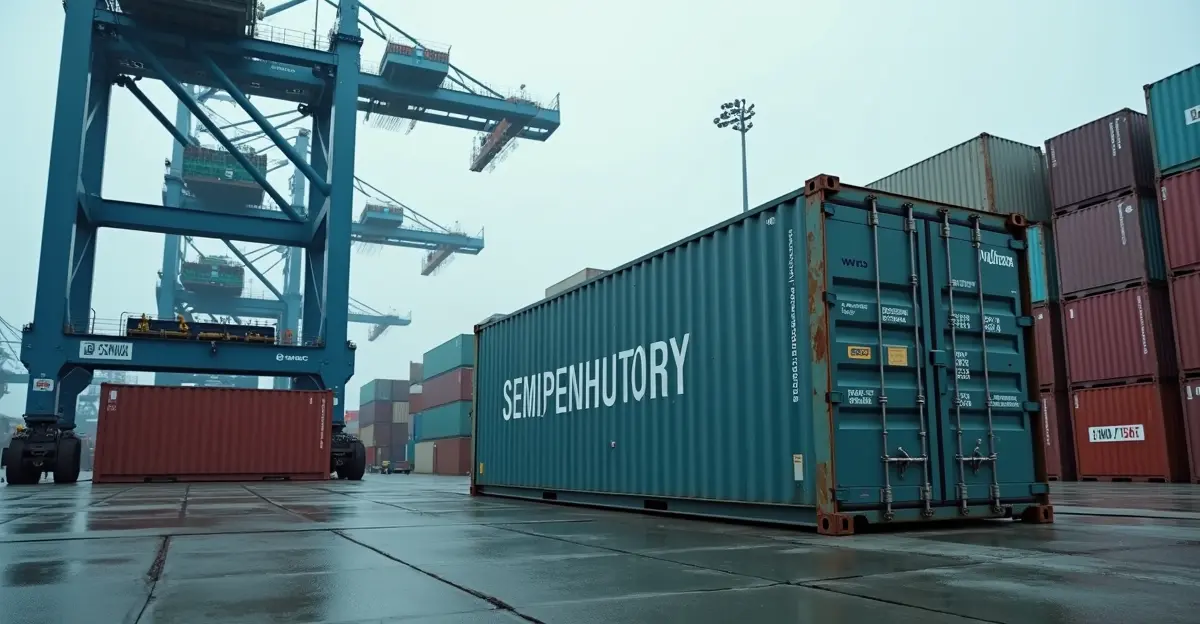
Global commerce is undergoing a fundamental transformation in 2026, with artificial intelligence-related trade emerging as the dominant engine of international economic growth. According to recent McKinsey Global Institute analysis, AI-related trade accounted for approximately one-third of global trade expansion in 2025, signaling a structural shift where semiconductors and data-center equipment now define trade patterns more than traditional manufacturing sectors. This AI-driven realignment is reshaping global supply chains, creating new geopolitical dynamics, and fundamentally altering the geography of international commerce as nations position themselves for the AI infrastructure boom.
What is AI-Driven Trade?
AI-driven trade encompasses the international exchange of goods and services specifically related to artificial intelligence infrastructure and development. This includes three primary categories: semiconductor manufacturing equipment, data center construction materials, and specialized AI hardware components. According to Federal Reserve analysis, AI-related capital expenditure has accelerated sharply, with U.S. data-center spending expected to exceed half a trillion dollars in 2025 alone. Despite representing only about 15% of total global trade, AI-related goods drove nearly half of merchandise trade growth in the first half of 2025, demonstrating their disproportionate impact on international commerce.
The Semiconductor Supply Chain Reshuffle
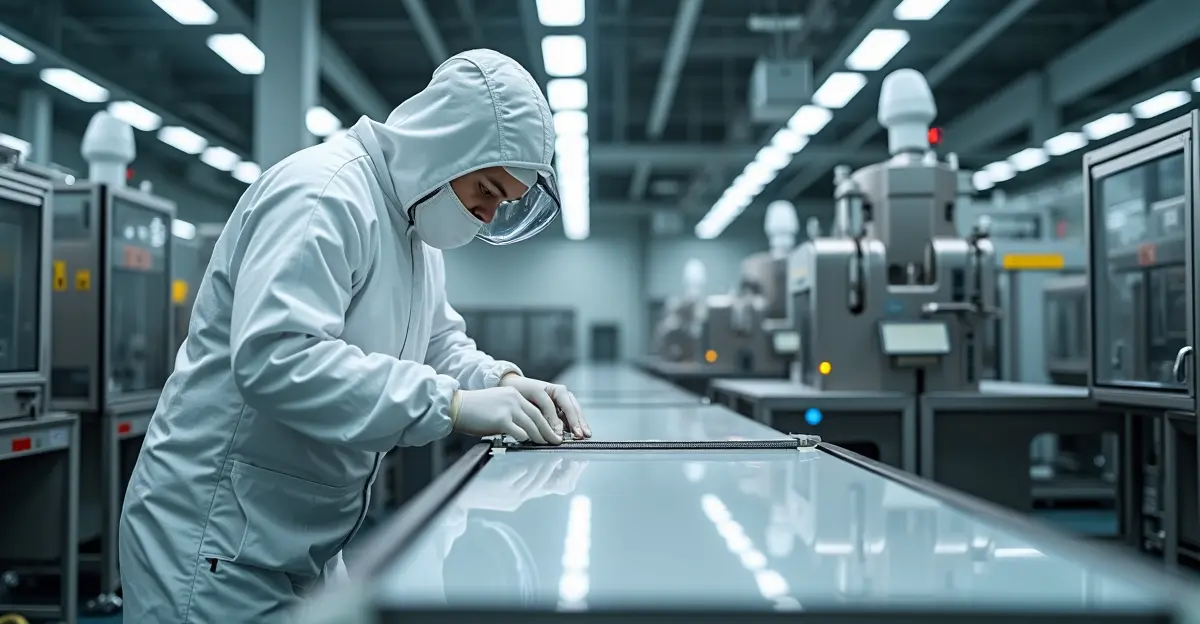
The global semiconductor industry is experiencing unprecedented transformation as AI demands reshape production and distribution networks. The United States leads global demand, adding roughly half of the world's new data center capacity in 2025 and driving a 66% increase in AI-related goods trade. Asia plays a central role in the supply chain, with Taiwan, South Korea, and Southeast Asia serving as critical production hubs. However, the most significant development is China's evolving role as a 'factory to the factories,' where massive domestic investment estimated at $150 billion is creating self-reliance in semiconductor manufacturing.
China's Strategic Pivot
China's semiconductor industry is undergoing rapid transformation amid global AI advancements. While U.S. and allied export controls have limited access to leading-edge chips and equipment, their primary effect has been to spur adoption of indigenous equipment and products. Domestic semiconductor manufacturing equipment market share surged from 25% to 35% between 2024-2025, exceeding the Made in China 2025 target of 30%. Chinese end-users are increasingly sourcing domestic chips, particularly in mature nodes where China now accounts for about half of global capacity. TrendForce projects China's domestic share of the AI chip market will reach 50% by 2026, fundamentally altering global supply chain dynamics.
Southeast Asia vs. European Union: Divergent Fortunes
The AI trade boom is creating sharply divergent outcomes across global regions. Southeast Asia is rapidly emerging as a critical pillar in the global semiconductor ecosystem, with the regional market valued at USD 23.9 billion in 2024 and projected to exceed USD 55 billion by 2033, growing at a CAGR of 8.9%. The region is expected to capture 25% of global ATP (Assembly, Test, and Packaging) capacity by 2032 as supply chains diversify from China and Taiwan. Malaysia and Vietnam lead in high-value manufacturing, while Singapore focuses on advanced R&D, and Thailand, Indonesia, and the Philippines strengthen chip assembly capabilities.
In contrast, the European Union faces significant challenges in the AI trade landscape. While maintaining strong positions in specialized equipment manufacturing, the EU struggles with fragmented investment and regulatory complexity that hampers rapid scaling of AI infrastructure. The EU Green Deal initiatives sometimes conflict with the energy-intensive demands of AI development, creating policy tensions that could impact the region's competitiveness in the global AI race.
Energy Demands Reshaping Trade Geography
The AI infrastructure boom is fundamentally altering global energy patterns and trade geography. According to IMF analysis, AI-producing sectors in the U.S. have grown nearly triple the rate of the private non-farm business sector, with electricity costs for vertically integrated AI companies nearly doubling between 2019-2023. The IMF projects that AI-driven data center growth will lead to manageable but varying increases in energy prices and emissions by 2030. Under constrained renewable energy scenarios, U.S. electricity prices could rise by 8.6%, while U.S. and global carbon emissions would increase by 5.5% and 1.2% respectively under current policies.
This energy intensity is creating new trade patterns as data center construction increasingly clusters around reliable, affordable power sources. The global energy transition is becoming intertwined with AI development, with governments using tax credits, subsidies, and local-content rules to achieve both economic and environmental goals. China leads clean energy manufacturing, investing nearly as much as the US and EU combined, creating strategic advantages in the AI infrastructure race.
Strategic Implications for 2026
The AI-driven trade realignment has profound strategic implications for global commerce in 2026. First, traditional geopolitical tensions are being overridden by technological demand, with AI-related trade showing remarkable resilience despite trade restrictions and political barriers. Second, supply chain resilience is becoming increasingly critical, with nations investing in domestic capabilities while maintaining strategic international partnerships. Third, the digital infrastructure gap between nations is widening, creating new forms of economic inequality based on AI readiness and infrastructure investment.
According to McKinsey analysis, global trade in 2025 grew faster than the global economy despite geopolitical tensions, with AI-related trade emerging as the dominant growth driver. This signals a fundamental shift where technological innovation now drives international commerce more than traditional manufacturing or resource extraction. The global economic order is being reshaped by AI infrastructure development, with nations that successfully navigate this transition gaining significant competitive advantages.
Expert Perspectives
'The AI infrastructure boom represents the most significant shift in global trade patterns since the rise of Chinese manufacturing in the early 2000s,' notes Harper Singh, economic analyst. 'What we're witnessing is not just technological change but a complete reconfiguration of international supply chains, energy systems, and geopolitical relationships. Nations that fail to adapt to this new reality risk economic marginalization in the coming decade.'
Federal Reserve researchers emphasize that 'the AI boom has already supported international trade since early 2025, with strong demand for critical components boosting exports in key supplier economies. This represents a structural shift where AI now defines trade composition and direction rather than traditional manufacturing alone.'
FAQ: AI-Driven Trade Realignment
What percentage of global trade growth comes from AI-related goods?
AI-related trade accounted for approximately one-third of global trade growth in 2025, according to McKinsey Global Institute analysis. Federal Reserve data shows AI-related goods drove nearly half of merchandise trade growth in the first half of 2025.
How is China's role in semiconductor manufacturing changing?
China is evolving from a manufacturing hub to a 'factory to the factories,' with massive domestic investment creating self-reliance in semiconductor production. Domestic equipment market share increased from 25% to 35% between 2024-2025, and China is projected to capture 50% of the domestic AI chip market by 2026.
Why is Southeast Asia outperforming the EU in AI trade?
Southeast Asia benefits from strategic location advantages, aggressive talent development programs, and massive foreign direct investment in semiconductor facilities. The region is projected to capture 25% of global ATP capacity by 2032, while the EU faces regulatory complexity and fragmented investment.
How are AI energy demands affecting trade patterns?
AI's significant energy consumption is reshaping trade geography as data center construction clusters around reliable power sources. This is creating new dependencies and strategic considerations in energy trade and infrastructure development.
What are the key strategic implications for 2026?
The main implications include: technological demand overriding geopolitical tensions, increased focus on supply chain resilience, widening digital infrastructure gaps between nations, and AI infrastructure becoming a primary driver of international commerce.




Follow Discussion