


 Deutsch
 English
 Español
 Français
 Nederlands
 Português


 Share
Share




Devastating 7.1 Magnitude Earthquake Strikes Kumamoto, Japan
A powerful magnitude 7.1 earthquake struck Japan's Kumamoto Prefecture on July 28, 2026, at 4:27 PM local time, causing catastrophic damage across the southern island of Kyushu. The quake, which registered a shindo 7 — the highest level on Japan's seismic intensity scale — triggered a deadly gas explosion and partial collapse at the Aeon Mall in Kashima Town, leaving dozens feared dead and many more missing. The Japan Meteorological Agency briefly issued a tsunami advisory for the Ariake and Yatsushiro Seas, which was lifted within two hours. This earthquake is the strongest to hit the region since the deadly 2016 Kumamoto earthquake sequence that killed 277 people.
Mall Collapse and Gas Explosion
The most devastating damage occurred at the Aeon Mall in Kashima, a sprawling shopping complex housing over 200 stores, restaurants, a cinema, and businesses. Approximately one hour after the main quake, a massive explosion — believed to be caused by a ruptured gas line — tore through the building, causing the second floor to collapse. Witnesses reported smelling gas shortly before the blast. Between 20 and 30 employees remain unaccounted for, though around 200 shoppers were safely evacuated to the parking lot. Kumamoto police have confirmed a 'considerable number' of fatalities at the mall, though an exact death toll has not yet been released. Rescue workers are combing through the rubble, hampered by aftershocks and the risk of further collapse.
The mall had only recently reopened on June 13, 2026, after extensive renovations and seismic reinforcement following the 2016 earthquake, making the destruction particularly tragic. Similar to the 2016 Kumamoto earthquake sequence, the region is once again facing a major disaster response.
Widespread Damage Across Kyushu
Industrial and Infrastructure Damage
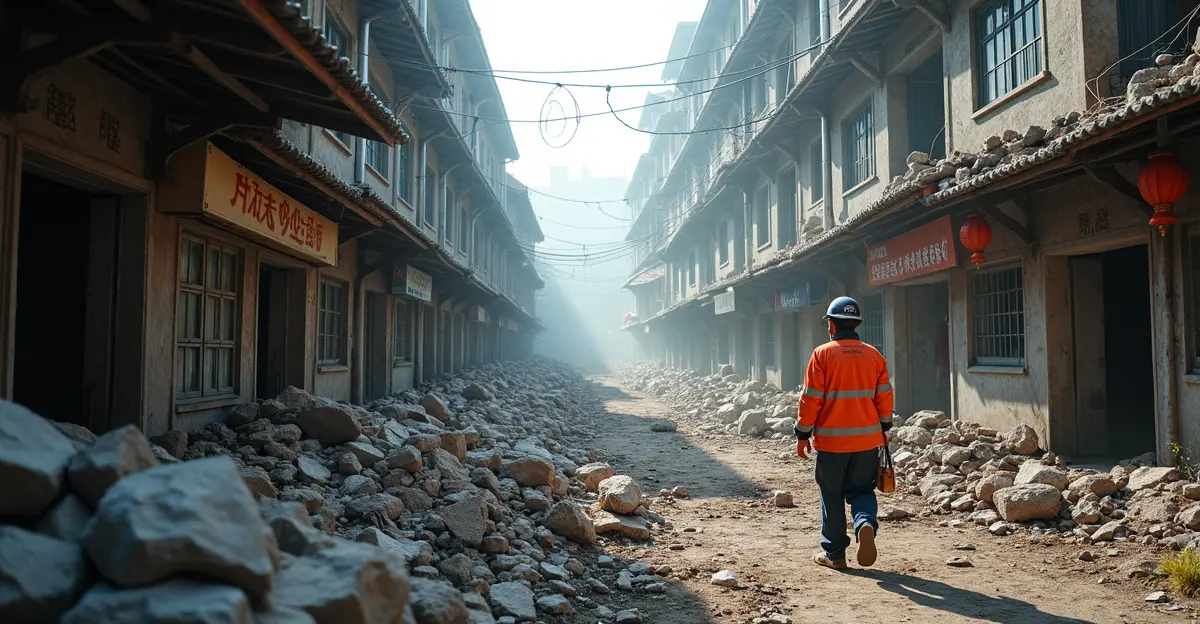
At the Nippon Paper Industries factory in Yatsushiro City, a chimney collapse trapped 11 people. Two individuals were found in cardiopulmonary arrest, and nine remain unaccounted for. Several fires broke out across the region, including in Uki City. Roads and bridges suffered severe damage, and a cargo train was derailed. Parts of the historic Kumamoto Castle, already damaged in 2016, collapsed again. The Kyushu Shinkansen bullet train service was suspended between Kumamoto and Kagoshima, and Kumamoto Airport suspended 40 flights. Approximately 48,000 households lost power, and water outages affected most areas hit by the strongest tremors. Over 260,000 people were advised to evacuate.
Casualties and Medical Response
As of July 29, at least 13 deaths have been confirmed, with the toll expected to rise significantly. Hospitals in Kumamoto City have admitted over 50 injured individuals, including some in critical condition. Some medical facilities are operating with disrupted utilities, hampering treatment. Prime Minister Sanae Takaichi has established an emergency disaster task force and deployed over 4,500 Self-Defense Forces personnel for search and rescue operations, describing the effort as a 'race against time.'
Experts in earthquake preparedness and response are closely monitoring the situation as aftershocks continue.
Aftershocks and Ongoing Risks
A magnitude 3.0 aftershock struck the same region on the evening of July 28, and the Japan Meteorological Agency has warned that strong aftershocks could continue for at least a week. The region is also facing extreme summer heat, complicating rescue efforts and endangering evacuees. Landslides remain a significant risk in mountainous areas. No abnormalities have been reported at nearby nuclear power plants, including the Sendai and Genkai facilities. Major manufacturers including TSMC, Sony, Honda, and Toyota have suspended operations at local plants as a precaution.
This earthquake is the first to register shindo 7 in Japan since the 2024 Noto Peninsula Earthquake. The 2026 Kumamoto earthquake serves as a stark reminder of Japan's vulnerability along the Pacific Ring of Fire, where four tectonic plates meet. The 2024 Noto Peninsula earthquake also caused widespread devastation, highlighting the ongoing seismic risks across the nation.
Frequently Asked Questions
What was the magnitude of the Japan earthquake in July 2026?
The earthquake that struck Kumamoto Prefecture on July 28, 2026, had a magnitude of 7.1 and registered a shindo 7, the highest level on Japan's seismic intensity scale.
How many people died in the Kumamoto earthquake?
As of July 29, 2026, at least 13 deaths have been confirmed, but authorities expect the toll to rise significantly due to the mall collapse and other incidents. A 'considerable number' of fatalities are feared at the Aeon Mall alone.
What caused the explosion at the Aeon Mall?
The explosion is believed to have been triggered by a gas leak following the earthquake. Witnesses reported smelling gas before the blast, which caused the second floor of the mall to collapse.
Was there a tsunami after the Kumamoto earthquake?
A tsunami advisory was issued for the Ariake and Yatsushiro Seas but was lifted within two hours. No significant tsunami waves were reported.
How does this earthquake compare to the 2016 Kumamoto earthquake?
The 2016 Kumamoto earthquake sequence included a magnitude 7.0 mainshock and killed 277 people. The 2026 quake is of similar magnitude and struck the same region, which had been rebuilding since the earlier disaster.

Follow Discussion