


 Deutsch
 English
 Español
 Français
 Nederlands
 Português


 Share
Share




Massive Blaze Destroys Dozens of Homes in Guryong Village
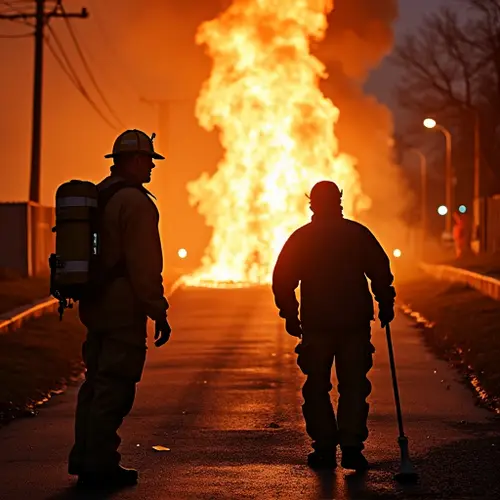
A devastating fire tore through Guryong Village, Seoul's last remaining shantytown, early Friday morning, displacing approximately 200 residents and destroying dozens of makeshift homes. The blaze, which started around 5 a.m. on January 16, 2026, was finally extinguished around 1:28 p.m. after an intense eight-hour battle by firefighters.
Rapid Spread and Massive Response
The fire spread rapidly through the densely packed settlement due to the highly flammable construction materials used in the makeshift homes - primarily thermal cotton and plywood. Authorities raised the fire alert to the second-highest level amid concerns the blaze could spread to a nearby mountain.
Firefighters deployed an impressive force of 1,258 personnel and 106 pieces of equipment to contain the inferno. 'We faced extremely challenging conditions due to the narrow alleys and combustible materials,' said a senior fire official who spoke on condition of anonymity. 'Our priority was preventing casualties and containing the spread to adjacent areas.'
Residents Displaced, No Casualties Reported
Approximately 258 residents were evacuated from the area, with about 180 believed to have lost their homes completely. The Seoul city government established a temporary shelter at a nearby middle school to accommodate displaced residents.
Remarkably, no casualties were reported despite the scale of the destruction. 'We lost everything - our home, our belongings, but at least we're alive,' said 68-year-old resident Kim Jong-soo, who has lived in Guryong Village for over 30 years.
Historical Context of Guryong Village
Guryong Village, often called 'the last slum in Seoul's glitzy Gangnam district,' has a complex history dating back to the 1980s. The settlement emerged when low-income residents were displaced by development projects ahead of the 1988 Olympic Games. Located just across a six-lane motorway from the affluent Dogok-dong neighborhood, the village represents a stark contrast to the wealth surrounding it.
According to Wikipedia, the village has been home to approximately 336 households living in makeshift structures built with highly flammable materials. The area has been plagued by fires throughout its history, including a major blaze in January 2023 that destroyed more than 60 homes.
Urban Inequality and Redevelopment Plans
The fire has reignited discussions about urban inequality and the long-delayed redevelopment of Guryong Village. The Seoul Metropolitan Government has been gradually relocating residents since 2015, with plans to demolish the village and build apartments in its place.
'This tragedy highlights the urgent need to address housing inequality in our city,' said urban planning expert Dr. Lee Min-ji from Seoul National University. 'Guryong Village represents a failure of urban policy that has persisted for decades.'
The village was scheduled for redevelopment into high-rise residential buildings, with only about 336 households remaining at the time of the fire. Residents have been offered drastically reduced rents to live in the new apartments once completed.
As reported by Al Jazeera, the fire serves as a painful reminder of the vulnerability of marginalized communities in one of Asia's most developed cities.
Follow Discussion