


 Deutsch
 English
 Español
 Français
 Nederlands
 Português


 Share
Share




Baby Food Recall: Rattengif Found in Hipp Products in Austria | Breaking Safety Alert
In a shocking food safety incident that has alarmed parents across Europe, Austrian authorities have ordered a major recall of Hipp baby food products after discovering rattengif (rat poison) contamination in jars sold in supermarkets. The potentially lethal contamination was detected in the popular Hipp 'Carrots and Potatoes' baby food variety, prompting immediate removal from more than 1,000 SPAR supermarket shelves across Austria and triggering international investigations.
What Happened: The Rattengif Discovery
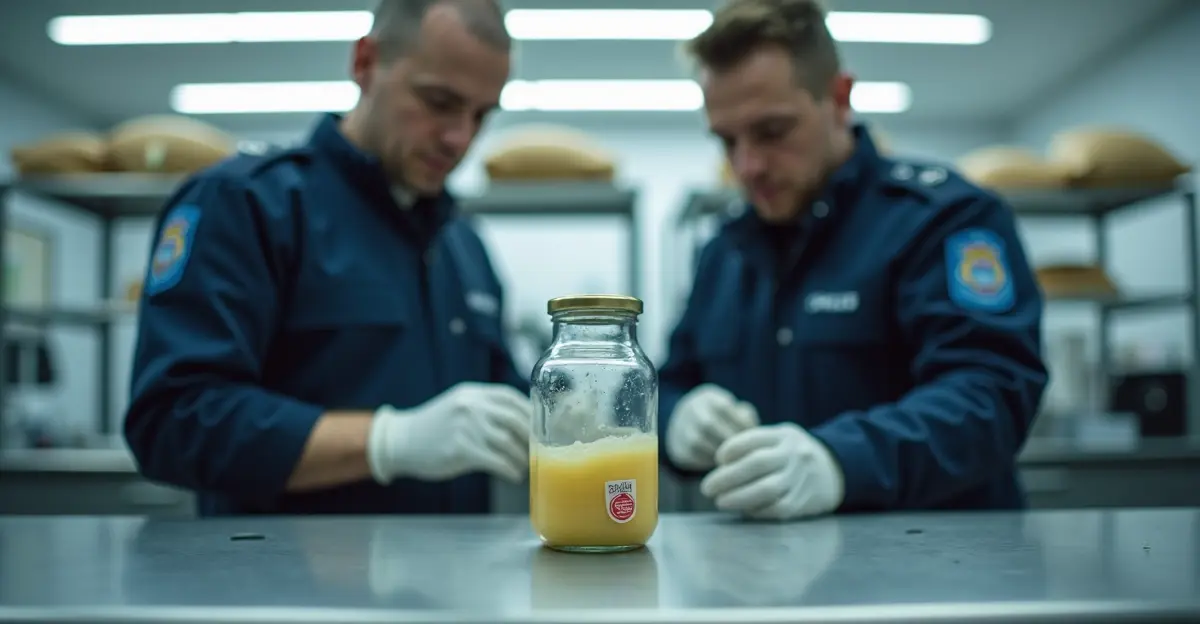
The crisis began when Austrian police in Burgenland received a tip from German investigators about potentially contaminated baby food circulating near Eisenstadt, approximately 60 kilometers south of Vienna. Police seized a jar of Hipp baby food for testing, which confirmed the presence of bromadiolone, a potent anticoagulant rattengif commonly used in rodent control. 'The consuming of even just one of these small jars can be life-threatening,' warned a Hipp spokesperson in a statement to German press agency DPA.
The contaminated product identified is the Hipp 'Carrot/Potato—190 grams' baby food jar, which authorities believe may have been tampered with during distribution. Affected jars can be identified by specific markers including a white label with a red circle on the bottom, damaged lids, missing safety seals, or unusual odors. The Austrian Agency for Health and Food Safety (AGES) has confirmed at least one jar tested positive for the toxic substance, though similar incidents have been reported in the Czech Republic and Slovakia.
Extortion Investigation Underway
Authorities suspect this contamination may be part of an extortion attempt against the German-Swiss baby food manufacturer. According to AGES officials, 'This appears to be a case of attempted extortion of the food producer,' with criminal elements potentially targeting the company's supply chain. The Burgenland police have launched a full criminal investigation, examining distribution records and supply chain vulnerabilities that could have allowed the tampering to occur.
How to Identify Affected Products
Parents and caregivers should immediately check any Hipp baby food purchased from Austrian SPAR supermarkets. Key identification markers include:
- Product: Hipp 'Carrots and Potatoes' 190g jars
- Look for white labels with red circles on the bottom
- Check for damaged lids or missing safety seals
- Be alert to unusual smells or appearance
- Purchase location: SPAR supermarkets in Austria
The recall affects specific batches distributed through SPAR Austria's network, though authorities warn that similar contamination could potentially affect other distribution channels. Both Hipp and SPAR are offering full refunds for returned products, regardless of purchase proof.
EU Food Safety Regulations and Response
This incident highlights the stringent EU food safety regulations governing infant nutrition products. Under Regulation (EU) 2016/127 and Directive 2006/141/EC, baby food manufacturers must adhere to the strictest safety standards in the European food industry. The European Food Safety Authority (EFSA) maintains rigorous oversight of foods for vulnerable groups, including infants under 12 months and young children aged 1-3 years.
The rapid response by Austrian authorities demonstrates the effectiveness of Europe's food safety alert systems. Within hours of confirmation, products were removed from shelves across Austria, and warnings were issued through official channels. This incident follows a similar recall in February 2026 when French food giant Danone recalled over 120 batches of infant milk formula in Austria and Germany, highlighting ongoing challenges in infant food safety.
Health Risks and Medical Advice
Bromadiolone, the rattengif identified in the contaminated jars, is a potent anticoagulant that prevents blood clotting. According to medical experts, symptoms of poisoning may include:
- Unusual bruising or bleeding
- Pale skin or lethargy
- Blood in urine or stool
- Nosebleeds or gum bleeding
AGES advises parents to consult a doctor immediately if children exhibit any symptoms 2-5 days after consumption. 'With appropriate treatment, the poisoning can be effectively managed,' notes the agency, though they emphasize that prevention through product avoidance is crucial.
International Impact and Supply Chain Security
The contamination has triggered concerns beyond Austria's borders, with similar incidents reported in neighboring countries. Czech and Slovak authorities have seized suspicious jars containing 'a toxic additive,' though the exact relationship to the Austrian case remains under investigation. This international dimension suggests potential vulnerabilities in cross-border food supply chains that criminals may be exploiting.
Hipp, a family-owned company founded in 1932 and now headquartered in Switzerland, has built its reputation on organic and natural baby food products. The company has stated this appears to be 'external criminal interference' affecting specifically the SPAR Austria distribution channel, rather than a manufacturing defect. Both companies are cooperating fully with police investigations while implementing enhanced security measures across their distribution networks.
FAQ: Baby Food Rattengif Contamination
What baby food products are affected?
The recall specifically affects Hipp 'Carrots and Potatoes' 190g baby food jars sold in Austrian SPAR supermarkets. Products may be identified by white labels with red circles on the bottom.
What should I do if I purchased affected products?
Immediately stop using the product and return it to any SPAR supermarket for a full refund. Do not consume the contents, even if the jar appears normal.
What are the symptoms of rattengif poisoning?
Symptoms may include unusual bruising, bleeding, pale skin, lethargy, or blood in urine/stool appearing 2-5 days after consumption. Seek immediate medical attention if symptoms occur.
Is this a manufacturing defect or criminal tampering?
Authorities believe this is criminal tampering, possibly as part of an extortion attempt against the manufacturer, rather than a manufacturing quality issue.
Are other countries affected?
Similar contamination has been reported in the Czech Republic and Slovakia, though the exact connection to the Austrian case is under investigation.



Follow Discussion