


 Deutsch
 English
 Español
 Français
 Nederlands
 Português


 Share
Share




What is the Sinaloa Cartel Power Struggle?
Mexican security forces have confirmed at least 11 fatalities during a major operation targeting the powerful Sinaloa Cartel in Culiacán, Sinaloa state. The March 2026 raid resulted in the arrest of Omar Oswaldo Torres, alias 'El Patas,' a key lieutenant in the faction loyal to imprisoned drug lord Ismael 'El Mayo' Zambada. This violent confrontation highlights the escalating power struggle within Mexico's most dominant drug trafficking organization as new generations battle for control following the imprisonment of veteran leaders.
Operation Details: The Culiacán Confrontation
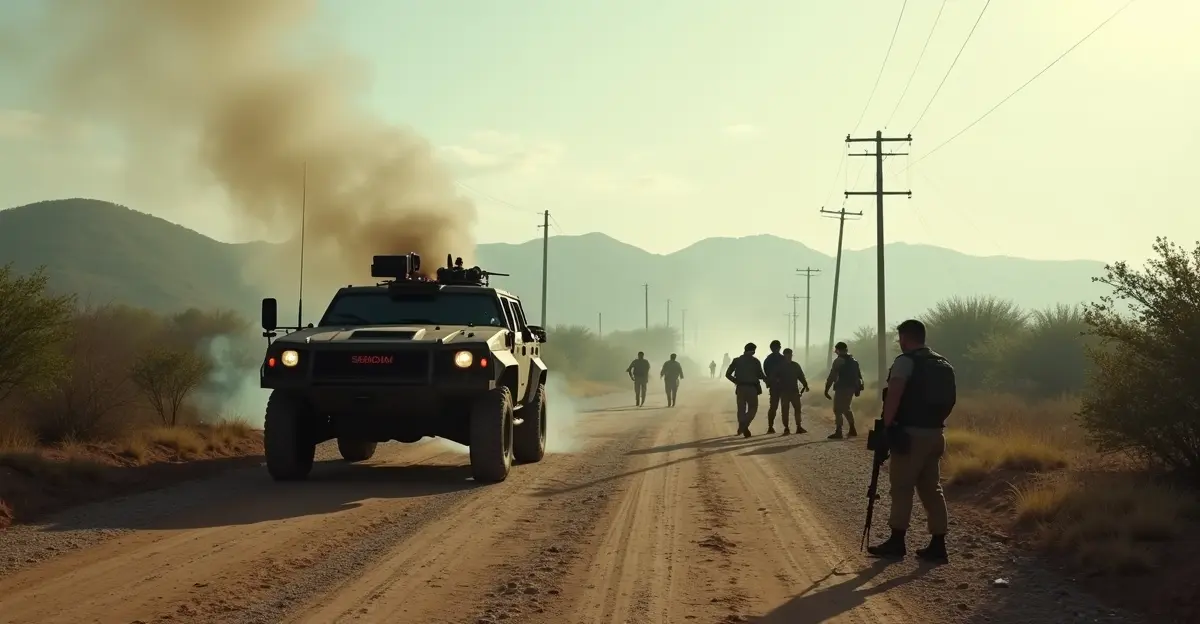
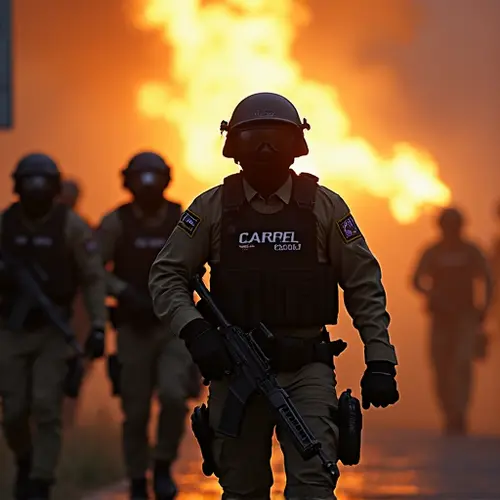
The joint military operation began in the early hours of March 19, 2026, when Mexican Navy, Army, and SSPC forces raided properties in El Álamo and Valle Escondido, rural areas east of Culiacán historically controlled by the Zambada family. Security forces deployed three Black Hawk helicopters and ground units in what authorities described as a targeted operation against the 'Los Mayos' faction of the Sinaloa Cartel.
Casualties and Arrests
During the raid, security forces were attacked by armed cartel members, leading to a firefight that left 11 alleged aggressors dead. Authorities seized multiple high-powered weapons and tactical equipment from the properties. The operation resulted in the detention of Omar Oswaldo Torres Cabada, known as 'El Patas,' who authorities identified as a key operative in the Zambada faction. Interestingly, Mónica Zambada Niebla, daughter of 'El Mayo' Zambada, was briefly detained but later released after authorities determined she had no criminal activities or legal warrants against her.
The Sinaloa Cartel Power Vacuum
The current violence stems from a leadership crisis within the Sinaloa Cartel, which has dominated Mexican drug trafficking for decades. With both Ismael 'El Mayo' Zambada and Joaquín 'El Chapo' Guzmán imprisoned in the United States since 2024, their sons and lieutenants are engaged in a brutal succession battle. This internal conflict mirrors the broader Mexican drug war dynamics that have plagued the country since 2006.
Historical Context: From El Chapo to El Mayo
The Sinaloa Cartel, founded in the late 1960s, evolved from a small cannabis smuggling operation into what the U.S. Intelligence Community considers 'the largest and most powerful drug trafficking organization in the world.' Under the leadership of Joaquín 'El Chapo' Guzmán and his partner Ismael 'El Mayo' Zambada, the cartel diversified into cocaine, fentanyl, heroin, and methamphetamine trafficking, establishing global networks across the Americas, Europe, and Asia.
Following Guzmán's 2017 conviction and life sentence in the U.S., Zambada assumed leadership until his own arrest in July 2024. The current violence represents the third generation of cartel leadership struggling to maintain control of a criminal empire that generates an estimated $40 billion annually from drug trafficking.
Recent Escalation in Mexican Cartel Violence
The Culiacán operation comes just weeks after another major security development that shook Mexico's criminal landscape. In late February 2026, Mexican forces killed Nemesio Oseguera Cervantes, alias 'El Mencho,' leader of the rival Jalisco New Generation Cartel (CJNG). That operation triggered retaliatory violence across multiple states, resulting in 74 deaths as cartel members blocked roads, burned vehicles, and attacked civilians.
Security analysts note that these high-profile operations against both the Sinaloa and CJNG cartels represent a significant escalation in Mexico's long-running war on drugs strategy, though questions remain about the sustainability of such militarized approaches.
Impact on Mexico's Security Landscape
Statistical Context
Mexico has experienced persistently high violence levels, with 2021 recording 34,369 homicides - the highest annual total on record. While recent government data suggests a 27% decline in homicides during early 2025 compared to 2024, operations like the Culiacán raid demonstrate that cartel violence remains concentrated in specific regions, particularly northern smuggling routes and Pacific states where fentanyl precursors enter the country.
Government Response and Challenges
Current President Claudia Sheinbaum has pledged to strengthen the National Guard and social programs, continuing the approach of her predecessor Andrés Manuel López Obrador. However, critics question whether militarized strategies can address the root causes of cartel power, including poverty, corruption, and the massive demand for drugs in the United States.
The operation also highlights ongoing tensions in U.S.-Mexico security cooperation. The 2024 arrest of Zambada and Guzmán's son Joaquín Guzmán López by U.S. authorities in El Paso, Texas, reportedly angered Mexican officials who suspected unauthorized cross-border operations. This delicate balance between cooperation and sovereignty continues to shape cross-border security initiatives.
Frequently Asked Questions
What is the Sinaloa Cartel?
The Sinaloa Cartel is a transnational drug trafficking organization based in Culiacán, Sinaloa, Mexico. Considered the world's most powerful drug cartel, it specializes in trafficking cocaine, fentanyl, heroin, methamphetamine, and cannabis, with operations spanning the Americas, Europe, and Asia.
Who are 'El Mayo' Zambada and 'El Chapo' Guzmán?
Ismael 'El Mayo' Zambada and Joaquín 'El Chapo' Guzmán were co-leaders of the Sinaloa Cartel for decades. Guzmán was captured in 2016 and sentenced to life imprisonment in the U.S. in 2017. Zambada led the cartel until his arrest in July 2024. Both are now imprisoned in the United States.
Why is there violence within the Sinaloa Cartel?
With both veteran leaders imprisoned, their sons and lieutenants are fighting for control of the cartel's lucrative operations. The 'Los Mayos' faction (loyal to Zambada) and the 'Los Chapitos' faction (loyal to Guzmán's sons) are engaged in a violent power struggle that has resulted in numerous casualties.
How does this affect U.S.-Mexico relations?
Cartel violence and cross-border operations create diplomatic tensions. While both countries cooperate on security matters, Mexican authorities have expressed concerns about U.S. operations on Mexican soil, and the U.S. continues to pressure Mexico to combat drug trafficking organizations more effectively.
What is being done to combat cartel violence?
Mexican authorities employ military and police operations against cartels, while also implementing social programs aimed at reducing poverty and opportunity gaps. The U.S. provides intelligence support and targets cartel financial networks, though reducing drug demand remains a critical challenge.

Follow Discussion