


 Deutsch
 English
 Español
 Français
 Nederlands
 Português


 Share
Share




Flanders Launches Comprehensive Highway Sign Modernization
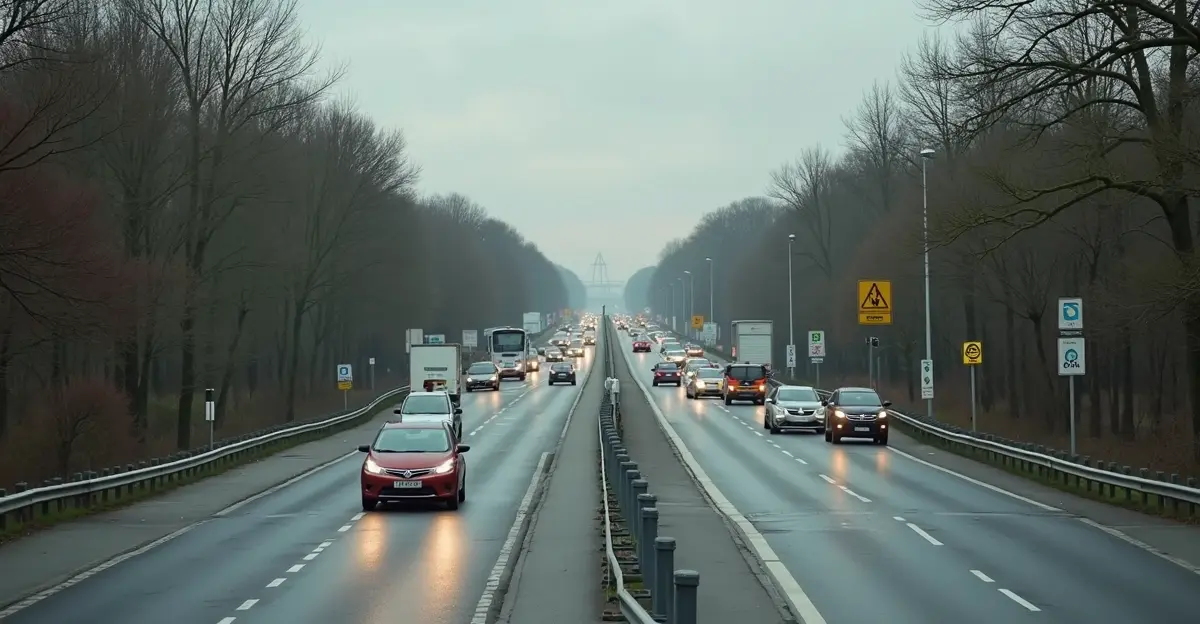
The Flemish Roads and Traffic Agency (AWV) has announced a sweeping overhaul of highway signage across the Flanders region, aiming to eliminate long-standing inconsistencies and improve road safety. The makeover, reported by Belgian broadcaster VRT, will see the familiar green-and-yellow exit signs disappear and directional arrows on overhead gantries standardized to always point upward. The changes are designed to align Flemish signage more closely with that of neighboring Netherlands and Germany, reducing confusion for both local and international drivers.
According to AWV spokesperson Thomas Lieben, the current signage system varies from province to province, leading to ambiguity. 'Bestuurders begrijpen die signalisatie veel vlotter. Ze maken daardoor minder bruuske bewegingen, wat de verkeersveiligheid ten goede komt,' Lieben told VRT. The new guidelines promise a uniform look across all Flemish highways, with clearer information and fewer distractions.
Key Changes: Arrows, Exit Signs, and Lighting
Arrows Always Point Upward
One of the most visible changes is the standardization of arrows on overhead gantries. Currently, arrows sometimes point downward or diagonally, which can confuse drivers about which lane to take. Under the new rules, all arrows will point upward, matching the design used in the Netherlands and Germany. Research by the Vias Institute for road safety shows that upward-pointing arrows help drivers make faster, more accurate lane decisions and reduce abrupt lane changes. Stef Willems, a traffic expert at Vias, noted that this design also aligns better with the visual cues in modern navigation apps, making the transition from screen to road sign more intuitive.
Green-and-Yellow Exit Signs Replaced
The iconic green-and-yellow exit signs that have been a staple of Flemish highways for decades will be phased out. In their place, a black-and-white international exit symbol will be introduced, featuring the exit number prominently. This new design is already used in many European countries and is considered more legible, especially at high speeds and in adverse weather conditions. The change also reduces visual clutter, as the new signs carry less but more relevant information.
Retroreflective Signs Replace Internally Lit Ones
Another major shift is the move from internally illuminated signs to retroreflective ones. The new signs use microprismatic technology that reflects car headlights back toward the driver, making them equally readable at night without the need for built-in lighting. AWV says these signs are 'even goed leesbaar, en een stuk onderhouds- en budgetvriendelijker' — as readable, but much cheaper to maintain and operate. The transition will also reduce energy consumption and lower the carbon footprint of highway infrastructure. The Flemish road maintenance strategy has long prioritized cost-efficiency, and this move fits that approach.
Phased Rollout Across Flanders
The AWV has not set a hard deadline for the complete overhaul. Instead, the replacement will happen gradually, starting with major construction zones along the Antwerp and Brussels ring roads. New signs will also be installed at all new infrastructure projects and whenever old or damaged signs need replacement. This means it could take several years before all Flemish highways are fully updated. The agency emphasizes that this phased approach minimizes disruption and spreads costs over multiple budget cycles.
Drivers can expect to see the first new signs in the coming weeks near the Antwerp Orbital Motorway (R1) and the Brussels Ring (R0). These are the busiest highways in Flanders, handling hundreds of thousands of vehicles daily, and the new signage is expected to bring immediate safety benefits. The Belgian traffic safety reforms have been a topic of discussion for years, and this signage update is a tangible step forward.
Alignment with Neighboring Countries
A key motivation for the overhaul is harmonization with the Netherlands and Germany. Flemish drivers crossing into the Netherlands have long encountered different signage conventions, and the reverse is true for Dutch drivers entering Flanders. By adopting upward-pointing arrows, black-and-white exit symbols, and retroreflective materials, Flanders is bringing its signage in line with European best practices. The AWV also studied successful examples from France. This alignment is expected to make cross-border driving safer and more intuitive, especially for the millions of trucks and cars that traverse the Benelux region daily. Similar European road sign standardization efforts have been underway for years, and Flanders is now catching up.
Impact on Road Safety and Driver Experience
The ultimate goal of the makeover is to reduce accidents caused by last-minute lane changes, missed exits, and driver confusion. According to Belgian road safety data, a significant proportion of highway incidents occur near exits and interchanges, where unclear signage can lead to erratic driving behavior. By providing clearer, more consistent information, the AWV hopes to lower these numbers. The Vias Institute supports the changes, with Willems stating that upward arrows in particular help drivers prepare earlier and execute smoother lane changes. The move to retroreflective signs also ensures that visibility remains high in all conditions, from bright sunlight to heavy rain and fog.
FAQ
When will the new signs appear?
The first new signs are being installed at major construction sites on the Antwerp and Brussels ring roads in July 2026. Full rollout across Flanders will take several years as signs are replaced during regular maintenance or when damaged.
Why are the green-and-yellow exit signs being removed?
The green-and-yellow design is being replaced by a black-and-white international symbol that is more legible and consistent with signage in neighboring countries. The new design reduces visual clutter and improves readability at speed.
Will the new signs be harder to see at night?
No. The new retroreflective signs are designed to reflect headlight beams back toward the driver, making them just as visible as internally lit signs, but without the need for electricity or ongoing maintenance.
How do the arrow changes improve safety?
Upward-pointing arrows help drivers identify their lane more quickly and reduce abrupt maneuvers. Research by Vias shows that this design leads to earlier and smoother lane changes, lowering the risk of collisions near exits.
Will the signs in Wallonia also change?
This overhaul applies only to Flanders. However, the AWV has coordinated with Walloon authorities to ensure consistency where possible, and the new Flemish design aligns with broader European trends.



Follow Discussion