


 Deutsch
 English
 Español
 Français
 Nederlands
 Português


 Share
Share




In a landmark shift that took effect in January 2026, the European Union replaced punitive tariffs of up to 35.5% on Chinese electric vehicles with a strategic minimum price floor mechanism. This 'price undertaking' framework allows manufacturers like BYD, SAIC, and Geely to sell in Europe if they commit to a minimum import price, effectively ending a two-year trade dispute that threatened to escalate into a full-blown trade war. The move represents a new era of 'managed competition' in global automotive trade, with profound implications for consumers, automakers, and the geopolitics of the green transition.
How the EU-China EV Price Floor Works
Under the new system, Chinese BEV exporters submit individual price undertaking offers to the European Commission, specifying a minimum import price for each model. If accepted, the exporter is exempt from the countervailing duties imposed in October 2024, which ranged from 7.8% to 35.3% on top of the standard 10% import tariff. The Commission evaluates each offer based on whether it eliminates the harm caused by subsidies and provides equivalent effect to duties. Two methods are used to determine minimum prices: based on the exporter's previous CIF price plus the duty margin, or based on the sales price of comparable EU-produced BEVs including SG&A and profit margin.
The EU anti-subsidy investigation that preceded this framework found that Chinese EV makers benefited from unfair state subsidies, giving them a cost advantage of over 30% compared to European rivals. Rather than imposing tariffs that would have raised consumer prices and slowed EV adoption, the EU opted for a more surgical approach. Chinese automakers retain the difference between their original price and the minimum price—money that would have gone to EU customs under the tariff regime. This creates an incentive for Chinese firms to invest in Europe, as they can use the extra margin to fund local production facilities.
Winners and Losers in the New Trade Framework
Chinese Automakers: From Exporters to Multinationals
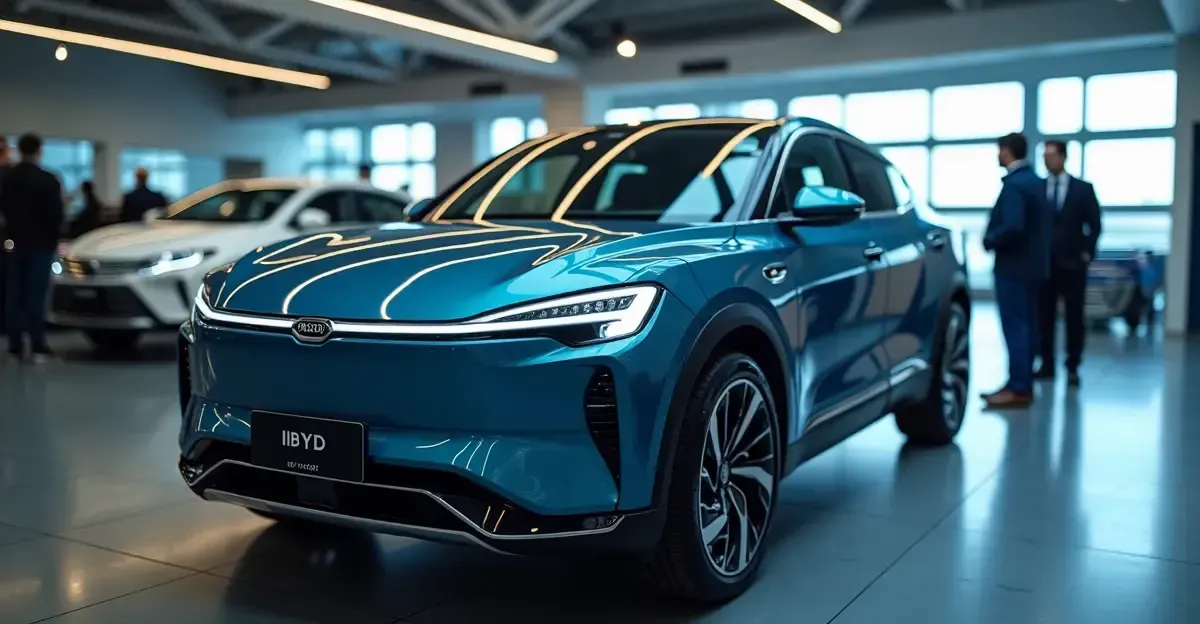
Chinese brands had captured 7.4% of Europe's EV market by 2025, with BYD alone delivering 159,900 vehicles—a 276% year-on-year surge. The price floor benefits premium-positioned manufacturers like BYD (pricing above €35,000), NIO, and XPeng, while pressuring scale-oriented brands like SAIC to elevate their MG brand positioning. Analysts project Chinese EV exports to Europe will grow by 20% annually under the new framework. Crucially, the deal incentivizes localization: BYD is building a factory in Hungary, Chery in Spain, and Geely is expanding its European footprint. This shift from export-driven growth to genuine multinational operations is a key strategic outcome of the EU-China trade negotiations.
European Automakers: Breathing Room but No Shelter
For legacy European giants like Volkswagen, Stellantis, and Renault, the price floor prevents a 'race to the bottom' that could have bankrupted weaker players. However, it keeps Chinese EVs highly competitive—forcing Western automakers to innovate rather than hide behind tariff walls. Volkswagen made the first meaningful price undertaking offer in December 2025 for its CUPRA Tavascan model built in China, and the Commission accepted it in February 2026. The German automaker also committed to limiting import volumes and investing in significant BEV-related projects in the EU, supporting the bloc's industrial strategy. European manufacturers rebounded in 2025 with 26% BEV sales growth to 2.5 million vehicles, but they still struggle to match Chinese cost and technology advantages, particularly in battery supply chains and software-defined vehicle architectures.
Consumers: Affordable EVs but Higher Prices Than Free Trade
European consumers benefit from continued access to Chinese EVs, which are generally more affordable than European equivalents. However, the price floor means they will not see the rock-bottom prices that free trade would have delivered. Critics at the Centre for Economic Policy Research warn that the mechanism keeps consumer prices artificially high, transfers income from European consumers to Chinese producers, and eliminates approximately €2 billion in annual tariff revenue. The European Commission counters that the alternative—punitive tariffs—would have raised prices even more and slowed the EV transition. Environmentalists are divided: some see the deal as essential for keeping decarbonization on track, while others argue any price floor hinders the green transition by limiting access to the cheapest EVs.
The US: Isolated by 100% Tariffs
While the EU pursues managed competition, the United States maintains 100% tariffs on Chinese EVs, effectively doubling their price and locking them out of the American market. This divergent approach risks isolating US automakers from global EV supply chains and advanced battery technology. China controls approximately 80% of global battery cell manufacturing, and Chinese companies like CATL are building factories in Hungary, Brazil, and Thailand to bypass trade barriers. The US EV tariff policy has drawn criticism from analysts who warn that protectionism will slow American EV adoption and leave US automakers dependent on less competitive domestic supply chains. Meanwhile, Canada agreed in early 2026 to cut its 100% tariff on Chinese EVs in return for lower tariffs on Canadian farm products, signaling that even close US allies are choosing engagement over isolation.
WTO Compliance and Enforcement Challenges
The European Commission insists the price undertaking framework is fully compliant with WTO rules, following non-discrimination principles and objective assessment criteria. China, which had challenged the original duties at the WTO in November 2024, welcomed the shift as 'more practical and consistent with WTO rules.' However, enforcement remains complex. Each model is evaluated case by case, and non-compliance—including failure to meet investment milestones—can lead to retroactive reinstatement of duties. The Commission has established monitoring mechanisms to track compliance, but critics question whether the EU has the capacity to effectively police hundreds of individual price commitments across a rapidly expanding market.
Expert Perspectives
'This is a diplomatic masterstroke that provides regulatory certainty while keeping the green transition on track,' said a senior EU trade official. 'The price floor prevents a price war that could bankrupt European automakers, but it keeps Chinese EVs accessible for the middle class.' However, not all experts agree. 'Price floors are a second-best solution that transfers wealth from European consumers to Chinese producers,' warned a trade economist at the Centre for Economic Policy Research. 'They are complex to enforce and eliminate valuable tariff revenue that could fund Europe's own EV transition.'
FAQ: EU-China EV Price Floor
What is the EU-China EV price floor?
The EU-China EV price floor is a mechanism introduced in January 2026 that allows Chinese electric vehicle manufacturers to avoid punitive tariffs by committing to sell their vehicles in Europe at or above a minimum price. It replaces tariffs of up to 35.5% that were imposed in October 2024.
How does the price undertaking process work?
Chinese BEV exporters submit individual offers to the European Commission specifying a minimum import price for each model. The Commission evaluates whether the offer eliminates harm from subsidies and provides equivalent effect to duties. If accepted, the exporter is exempt from countervailing duties.
Which Chinese automakers are affected?
Major Chinese EV manufacturers including BYD, SAIC (MG), Geely, NIO, and XPeng are affected. Volkswagen's Chinese subsidiary also submitted a successful price undertaking for its CUPRA Tavascan model.
How does this compare to US tariffs on Chinese EVs?
The US maintains 100% tariffs on Chinese EVs, effectively blocking them from the American market. The EU's price floor approach keeps Chinese EVs accessible while preventing a price war, representing a more nuanced form of managed trade.
Will the price floor slow EV adoption in Europe?
Opinions are divided. Supporters argue it keeps EVs more affordable than the tariff alternative, supporting the EU's 2035 ICE ban. Critics contend that any price floor above free-market levels reduces consumer access to the cheapest EVs and slows the green transition.
Conclusion: A New Model for Green Industrial Policy?
The EU-China EV price floor represents a historic experiment in managed trade that could define the next phase of green industrial policy. By replacing blunt tariffs with a flexible, negotiation-driven framework, the EU has preserved market access for advanced Chinese EV technology while protecting its domestic industry from a destructive price war. The success of this approach will depend on effective enforcement, the pace of Chinese localization in Europe, and whether European automakers use the breathing room to close the innovation gap. As the US remains isolated with its 100% tariff wall, the EU's 'third way' may prove to be the most pragmatic path forward in an increasingly fragmented global trading system.
Sources
- European Commission, 'Guidance Document on Submission of Price Undertaking Offers for BEVs from China,' 12 January 2026
- European Commission, 'Commission Accepts Price Undertaking from Chinese Electric Car Producer,' 10 February 2026
- Reuters, 'EU Sets Out Firm Conditions for China EVs to Avoid Tariffs,' 12 January 2026
- Torque News, 'The Great EV Truce of 2026,' January 2026
- Rest of World, 'Why the EU is Ready to Drop High Tariffs on China-Made EVs,' 2026
- Fraunhofer ISI, 'Electric Car Sales 2025: China Leads, Europe Rebounds,' 2026
- IEA, 'Global EV Outlook 2026: Manufacturing and Trade'

Follow Discussion