


 Deutsch
 English
 Español
 Français
 Nederlands
 Português


 Share
Share




In January 2026, the European Union executed a strategic pivot in its trade policy toward Chinese electric vehicles, replacing punitive anti-subsidy tariffs with a minimum price floor mechanism known as a 'price undertaking.' This framework, formalized on January 12, 2026, allows Chinese exporters such as BYD, SAIC, and Geely to sell battery electric vehicles (BEVs) in Europe above a set threshold rather than face duties of up to 35.3%. The move avoids a full-blown trade war while preventing Chinese overcapacity from collapsing European manufacturing. As of mid-2026, early data shows Chinese brands captured 8.4% of the European BEV market in Q1, up from 5.1% in H1 2025, with BYD alone delivering approximately 73,500 units — a 154.7% year-on-year increase.
Background: From Tariffs to Price Undertakings
The EU's anti-subsidy investigation, launched in October 2023, concluded in October 2024 with definitive countervailing duties ranging from 7.8% (Tesla Shanghai) to 35.3% (SAIC), on top of the standard 10% import tariff. These measures aimed to counter what the European Commission identified as unfair subsidies in China's BEV value chain. However, by late 2025, both sides sought a less confrontational path. The EU-China trade dispute had begun to strain broader diplomatic relations, and Chinese brands continued gaining ground despite tariffs. The breakthrough came in December 2025, when the Commission opened the door for price undertakings as a WTO-compatible alternative.
Under the guidance issued on January 12, 2026, Chinese exporters can submit price undertaking offers that set a Minimum Import Price (MIP) per vehicle model. The MIP is calculated either based on the exporter's CIF price plus the countervailing duty margin, or benchmarked against unsubsidized EU-produced BEV prices including administrative costs and profit. Once accepted, the punitive duties are suspended for that specific exporter, provided they comply with strict monitoring requirements including vehicle-level traceability from factory to final EU sale.
How the Price Floor Mechanism Works
Minimum Import Price Calculation
The Commission's guidance document outlines two methodologies for determining MIPs. The first approach uses the exporter's historical CIF (cost, insurance, freight) price plus the countervailing duty margin that would otherwise apply. The second benchmarks against the price of comparable unsubsidized BEVs produced in the EU, including a reasonable profit margin. Each offer is assessed objectively and non-discriminatorily, in line with WTO rules. The mechanism effectively ensures that Chinese EVs cannot undercut European-made equivalents on price alone.
Market Impact: Winners and Losers
The price floor framework benefits premium-positioned manufacturers like BYD, NIO, and XPeng, which already target higher price segments. BYD's European lineup now spans from the €19,990 Dolphin Surf to the €70,000+ Han sedan, giving it flexibility to absorb the MIP. In contrast, scale-oriented brands like SAIC's MG face pressure to elevate their positioning. MG sold approximately 38,000 BEVs in Europe in Q1 2026, holding its UK market lead despite the highest tariff rate of 35.3% — now potentially replaced by a price undertaking. The Chinese EV export strategy is shifting from volume-driven to value-capture, compressing entry-level margins while expanding profitability for technology-intensive models.
For European automakers such as Volkswagen, Stellantis, and Renault, the price floor prevents a 'race to the bottom' on pricing while keeping Chinese rivals competitive. Volkswagen secured a landmark exemption for its China-made Cupra Tavascan in February 2026, agreeing to a minimum price and annual import quota. This forces Western brands to compete on innovation — particularly in software, autonomous driving, and AI features — rather than relying on protectionist barriers.
Transatlantic Divergence: EU vs. US Approach
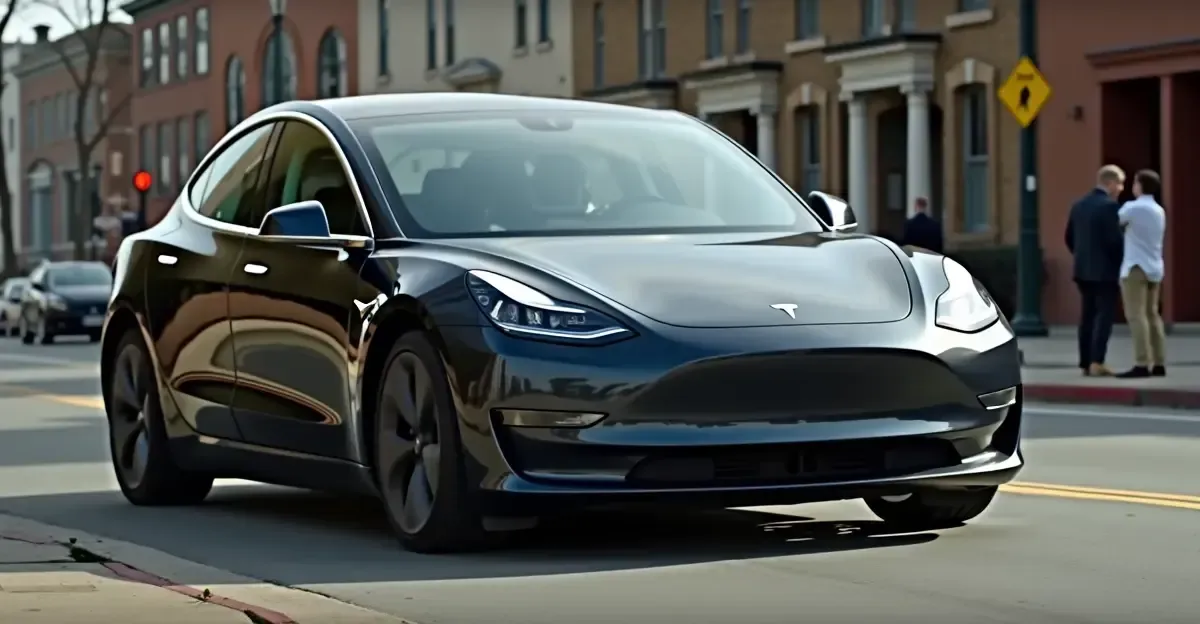
The EU's price undertaking framework stands in stark contrast to US policy. The United States maintains a 100% tariff on Chinese-made EVs under Section 301, effectively blocking brands like BYD, NIO, and XPeng from the American market. A $20,000 Chinese EV would cost over $50,000 landed in the US after tariffs, making it uncompetitive against domestic options like the Tesla Model 3 ($44,990) or Chevy Equinox EV ($34,995). This transatlantic rift risks creating a fragmented global EV market, where Europe remains open to Chinese competition while the US builds a high-cost silo. The EU-US trade alignment on EVs is increasingly strained, as European policymakers argue that managed competition is more effective than outright exclusion.
Environmentally, the EU's approach supports its 2035 internal combustion engine phase-out goals by keeping affordable EVs available to middle-class consumers. BEV registrations in Europe surged 29.4% year-on-year in Q1 2026, reaching nearly 560,000 units, with Chinese brands contributing significantly to that growth. In contrast, US EV adoption faces headwinds from higher prices and limited affordable options.
Strategic Implications for Global Trade Architecture
The price undertaking mechanism represents a novel tool in trade policy — one that could become a template for managing competition in other strategic sectors. By replacing tariffs with managed pricing, the EU avoids the price-distorting effects of duties while maintaining market access. This approach is consistent with WTO rules, as both China's Ministry of Commerce and the European Commission have emphasized. The framework also incentivizes Chinese manufacturers to localize production within the EU. BYD's factory in Szeged, Hungary, began trial production in early 2026, and Chery has announced plans for a Spanish facility. Leapmotor, backed by Stellantis, surged 340% to 8,900 units in Q1 2026 using the Italian-American group's distribution network.
However, risks remain. The price floor could slow EV adoption if set too high, and monitoring compliance across thousands of vehicle sales is a logistical challenge. There is also the danger that the mechanism becomes a permanent feature of EU-China trade, potentially distorting market dynamics over the long term. The global trade architecture for EVs is being reshaped in real time, with the EU's gambit offering a middle path between protectionism and laissez-faire.
Expert Perspectives
'The price undertaking framework is a masterstroke of economic diplomacy,' said Dr. Anna Müller, trade policy analyst at the European Centre for International Political Economy. 'It keeps the European market open to competition while preventing the most damaging effects of Chinese overcapacity. Western automakers now have a clear signal: innovate or lose market share.'
Industry observers note that Chinese brands are already adapting. BYD's 5-15% price cuts in Germany and promotional offers on new models like the Dolphin Surf and Atto 2 demonstrate aggressive pricing within the MIP boundaries. Meanwhile, SAIC's MG is repositioning upward, launching premium trims to maintain margins. The framework compresses entry-level margins but expands profitability for technology-intensive vehicles, accelerating the shift toward software-defined EVs.
FAQ
What is the EU's price floor mechanism for Chinese EVs?
The price floor mechanism, or price undertaking, allows Chinese EV exporters to avoid anti-subsidy duties by committing to sell their vehicles in the EU at or above a minimum import price (MIP). The MIP is calculated to eliminate the injurious effects of subsidies and is set per vehicle model.
How does the price floor differ from tariffs?
Tariffs add a tax on imports, raising costs for consumers and potentially triggering retaliatory measures. A price floor sets a minimum selling price, preventing below-cost dumping while allowing market competition above that threshold. The revenue that would have gone to the EU as tariff income instead stays with the exporter, incentivizing compliance.
Which Chinese automakers are affected?
Major exporters including BYD, SAIC (MG), Geely, NIO, XPeng, and Leapmotor are affected. BYD faces a 17% countervailing duty rate, while SAIC faces 35.3%. Under the price undertaking, these duties are suspended if the exporter's offer is accepted.
Will the price floor raise EV prices for European consumers?
Industry experts expect consumer prices to remain similar to the tariff regime. The price floor prevents the lowest-cost Chinese EVs from undercutting European models, but competition among Chinese and European brands above the floor should keep prices in check. BYD's recent price cuts in Germany suggest continued affordability.
How does this affect the US-EU trade relationship?
The EU's open approach contrasts with US 100% tariffs on Chinese EVs, creating a transatlantic rift. European policymakers argue that managed competition is more effective than exclusion, while US officials worry about Chinese overcapacity flooding the European market and then being diverted to the US.
Conclusion and Future Outlook
The EU's price floor gambit is still in its early stages, but the data from Q1 2026 suggests it is achieving its dual goals: protecting European manufacturing while maintaining affordable EV options for consumers. Chinese brands are growing market share, but at managed prices that allow European automakers to compete. The framework could become a model for other sectors facing similar overcapacity concerns, from solar panels to steel. However, success depends on rigorous enforcement and the willingness of both sides to resist protectionist pressures. As the global EV market evolves, the EU's middle path may prove to be the most sustainable route to a decarbonized transportation future.
Follow Discussion