


 Deutsch
 English
 Español
 Français
 Nederlands
 Português


 Share
Share




What is Tesla's Full Self-Driving (FSD) System?
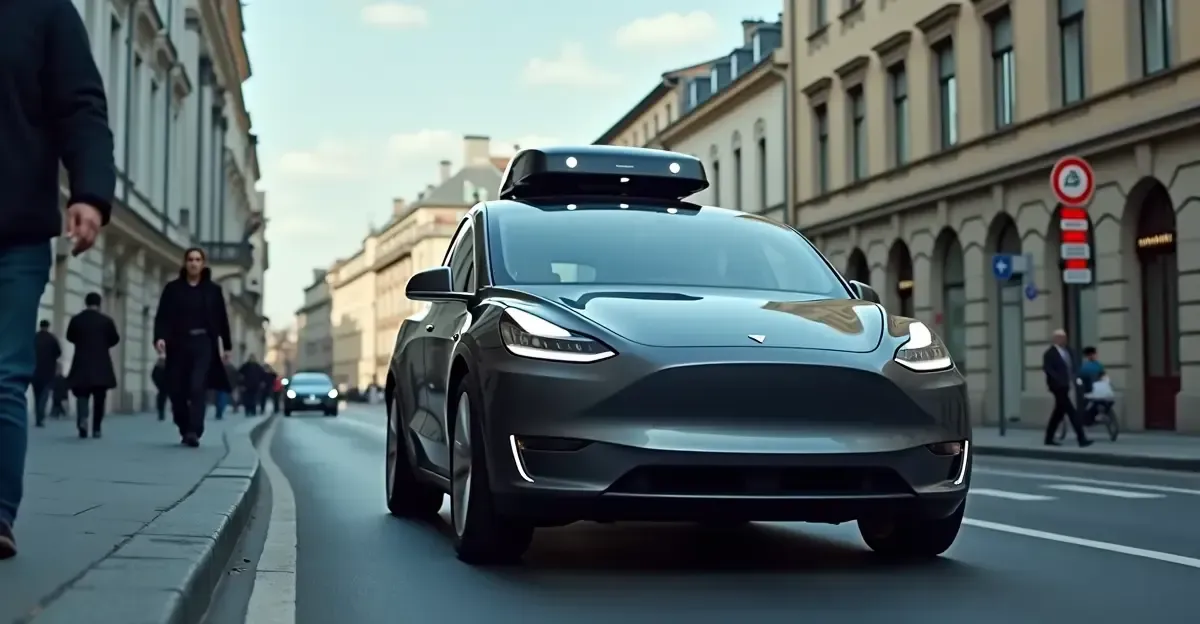
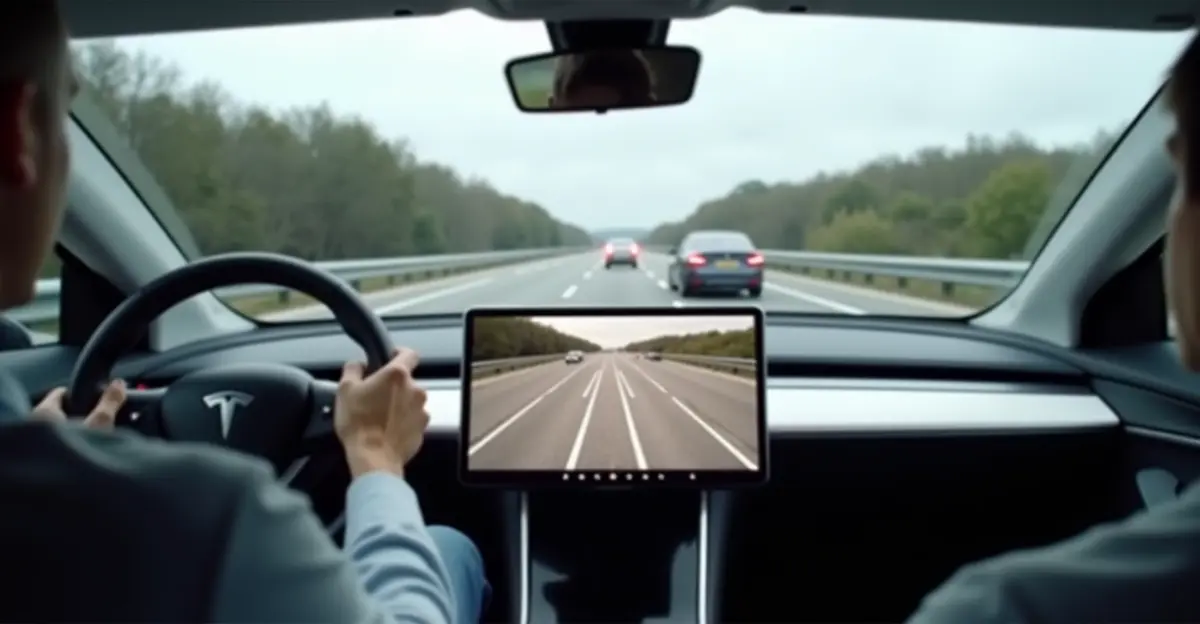
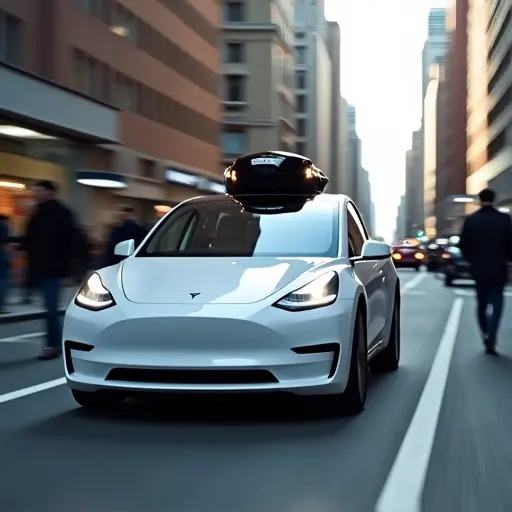
Tesla's Full Self-Driving (FSD) Supervised system represents a significant advancement in driver-assistance technology, though it's important to understand that it's not truly autonomous. The system, which received Dutch regulatory approval in April 2026 after an 18-month testing period, is classified as a Level 2 driver-assistance system according to SAE International standards. This means drivers must remain attentive with hands on the wheel and eyes on the road at all times, ready to take control immediately when needed. The autonomous vehicle regulations in Europe differ substantially from those in the United States, requiring pre-approval with stricter safety standards rather than the self-certification approach used in America.
Dutch Regulatory Breakthrough: RDW's Historic Approval
The Netherlands Vehicle Authority (RDW) made automotive history in April 2026 by granting Tesla European type approval for its FSD Supervised system, marking the first such authorization in the European Union. This approval followed extensive testing covering 1.6 million kilometers on European roads and test tracks over 18 months. The RDW emphasized that FSD Supervised falls under UN Regulation R-171 for Driver Control Assistance Systems and explicitly stated that it's not an autonomous driving system. 'The driver remains legally responsible and must be able to take over immediately at all times,' the RDW clarified in its official statement. This regulatory milestone could potentially pave the way for broader EU adoption, though each member state must individually recognize the approval nationally.
Volvo's Enthusiastic Response: 'Geweldig' Development
Alwin Bakkenes, Head of Global Software Engineering at Volvo Cars, expressed enthusiastic support for the Dutch approval during a recent visit to the Netherlands. 'It's geweldig (terrific) that the technology in the Netherlands has been approved,' Bakkenes told BNR Nieuwsradio. 'That means other brands will follow.' The Dutch-born executive, who oversees software development for Volvo's entire vehicle lineup, sees this regulatory breakthrough as validation for the entire industry's autonomous driving ambitions. Bakkenes leads Volvo's software engineering team from the company's headquarters in Göteborg, Sweden, where he's been instrumental in developing the Volvo EX60 autonomous features and other advanced driver-assistance systems.
Volvo's Competing Technology: Navigate Pilot Assist
While praising Tesla's achievement, Volvo is simultaneously advancing its own autonomous driving technology. The upcoming Volvo EX60 electric SUV will feature Navigate Pilot Assist, a Level 2+ system that initially allows hands-off driving on highways with the requirement that drivers remain attentive and ready to intervene. The system utilizes Nvidia Drive AGX Orin processors and will eventually expand to other road types as development progresses. Volvo plans to equip vehicles with additional side-facing cameras to enhance environmental scanning capabilities. 'We operate in more than eighty markets, so we're in discussions with many authorities,' Bakkenes explained regarding regulatory approval for Volvo's system. 'But we will certainly roll out this technology in the Netherlands as well.'
Understanding Autonomous Driving Levels
To properly contextualize these developments, it's essential to understand the SAE International classification system for autonomous driving:
| Level | Description | Examples |
|---|---|---|
| Level 0 | No automation - driver performs all tasks | Basic vehicles without ADAS |
| Level 1 | Driver assistance - single system support | Adaptive cruise control |
| Level 2 | Partial automation - vehicle controls steering and acceleration simultaneously | Tesla FSD Supervised, Volvo Navigate Pilot Assist |
| Level 3 | Conditional automation - vehicle handles most tasks but requires human override | Mercedes-Benz Drive Pilot |
| Level 4 | High automation - operates without human intervention in specific conditions | Waymo driverless taxis |
| Level 5 | Full automation - no human intervention needed in any conditions | Not yet commercially available |
Industry Implications and Future Outlook
The Dutch approval of Tesla's FSD system represents more than just a regulatory milestone—it signals a potential shift in European automotive technology adoption. Industry analysts predict that this development could accelerate autonomous driving technology deployment across the continent, with other manufacturers likely to seek similar approvals for their systems. According to Goldman Sachs estimates, up to 10% of global new car sales could feature Level 3 autonomous capabilities by 2030. The European automotive safety standards are among the world's strictest, making this approval particularly significant for the global autonomous driving industry. As Bakkenes noted, Volvo currently focuses on Level 2+ technology but doesn't rule out eventually advancing to Level 3 systems where drivers could take their eyes off the road under specific conditions.
Frequently Asked Questions (FAQ)
What exactly did the RDW approve for Tesla?
The RDW approved Tesla's Full Self-Driving (FSD) Supervised system as a Level 2 driver-assistance system under UN Regulation R-171. This allows Tesla to deploy the technology in the Netherlands, with drivers required to maintain attention and readiness to take control at all times.
Is Tesla's FSD system truly autonomous?
No, Tesla's FSD Supervised is classified as Level 2 automation, meaning it's an advanced driver-assistance system that requires continuous human supervision. The RDW explicitly stated it's not an autonomous driving system.
When will Volvo's Navigate Pilot Assist be available?
Volvo's Navigate Pilot Assist will debut with the EX60 electric SUV, initially offering hands-off highway driving capabilities. The company plans to expand the system to other road types through future software updates.
Can other EU countries use Tesla's FSD now?
Currently, the approval is valid only in the Netherlands. Other EU member states must individually recognize the RDW's approval through their national regulatory processes before Tesla can deploy FSD in those countries.
What's the difference between EU and US autonomous driving regulations?
The European Union requires pre-approval with extensive testing and strict safety standards, while the United States uses a self-certification approach where manufacturers declare their systems meet safety requirements.
Follow Discussion