


 Deutsch
 English
 Español
 Français
 Nederlands
 Português


 Share
Share




What is Tesla's Full Self-Driving (Supervised) System?
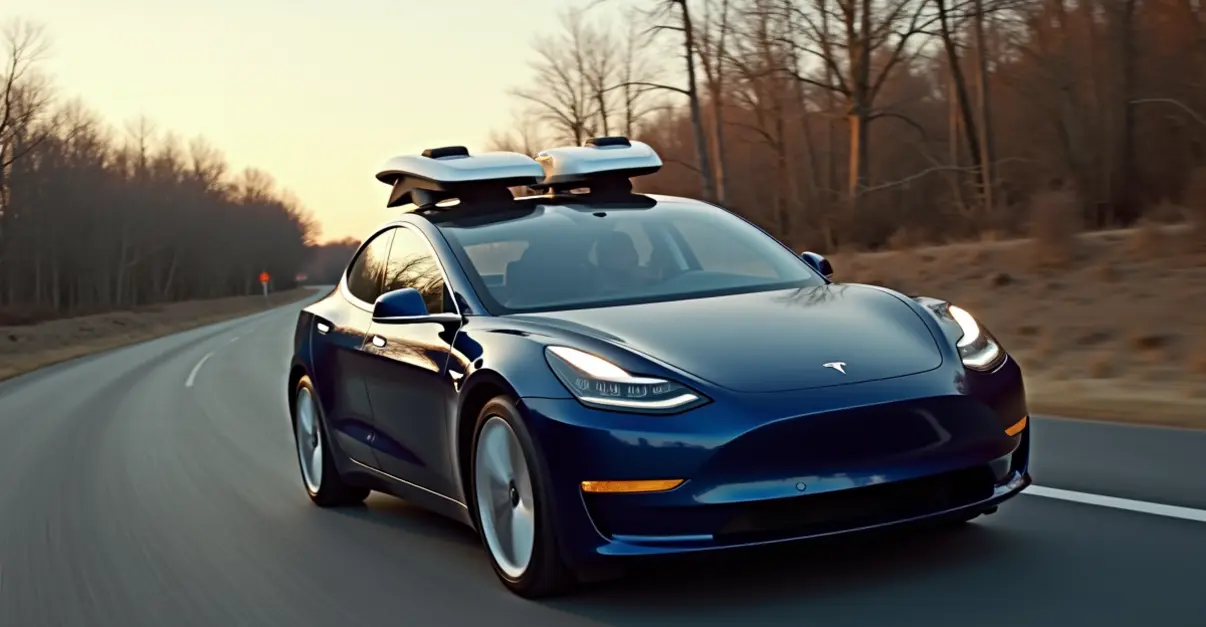
Tesla's Full Self-Driving (FSD) Supervised system represents a significant advancement in driver assistance technology that has recently received European type approval from the Netherlands Vehicle Authority (RDW). This Level 2 autonomous driving system, which became operational in the Netherlands in April 2026, allows Tesla vehicles to navigate complex road environments while requiring constant human supervision. The RDW has implemented the strictest monitoring regime to date for this technology, requiring weekly data reporting from Tesla instead of the legally mandated annual reports.
RDW's Enhanced Monitoring Regime Explained
The RDW (Rijksdienst voor het Wegverkeer), the Netherlands Vehicle Authority, has established what it calls "the heaviest supervision regime so far" for Tesla's FSD Supervised system. According to Bernd van Nieuwenhoven, manager of type approvals at RDW, the authority monitors Tesla vehicles equipped with this software "almost in real-time." While European regulations only require annual reporting through ISMR (in-service monitoring and reporting), the RDW has imposed additional requirements mandating "at least once per week" data sharing from Tesla.
'Where the law requires reporting once per year, the RDW has ensured that reports are made at least once per week,' said Van Nieuwenhoven in an interview with BNR. 'That data is shared properly with us.'
Key Monitoring Requirements
- Weekly Reporting: Tesla must share data with RDW at least weekly, far exceeding the annual legal requirement
- Real-time Monitoring: The RDW tracks vehicles "almost in real-time" to ensure safety compliance
- Driver Responsibility: Despite the name, FSD Supervised is NOT a self-driving system - drivers remain legally responsible
- Attention Monitoring: The system includes a Driver Monitoring System (DMS) that continuously tracks driver attention
Testing and Approval Process
The approval process for Tesla's FSD Supervised system involved extensive testing over 18 months. RDW testers drove approximately 13,000 kilometers on Dutch public roads, supplemented by test data from other EU countries. 'If you look at it at European level, it's about 1.8 million kilometers of test data driven,' explained Van Nieuwenhoven. This comprehensive testing approach reflects the European autonomous vehicle regulations that prioritize safety over rapid deployment.
European vs. US Versions
It's crucial to understand that the European version of FSD Supervised differs substantially from the US version. European regulations require:
| Feature | European Version | US Version |
|---|---|---|
| Approval Process | Pre-approval required before deployment | Self-certification allowed |
| Driver Monitoring | Continuous eye-tracking sensors required | Steering wheel torque monitoring |
| Safety Requirements | Stricter EU safety standards | Different regulatory framework |
| Software Version | Modified for European infrastructure | North American optimization |
Current Status and European Expansion
As of April 2026, Tesla's FSD Supervised system operates exclusively in the Netherlands, with approximately 44,000 potentially eligible vehicles. The system automatically disables when crossing into neighboring countries like Belgium or Germany. However, the RDW believes the technology deserves broader European approval. 'But we believe this deserves European-wide approval,' emphasized Van Nieuwenhoven.
The system costs €99 per month or €7,500 for a one-time purchase, making it accessible to European Tesla owners who have been waiting for advanced autonomous capabilities. Despite the advanced technology, RDW officials report no incidents or accidents since deployment. 'There is still nothing strange happened,' noted Van Nieuwenhoven, though he emphasized that driver errors, such as vehicles stopping at traffic lights not intended for them or entering bicycle paths, are considered driver responsibility rather than software failures.
Safety Implications and Driver Responsibility
The RDW emphasizes that despite the "Full Self-Driving" name, these vehicles are NOT autonomous. Drivers must maintain constant attention and be prepared to intervene immediately. The Driver Monitoring System (DMS) continuously engages drivers in the driving task, and the system will temporarily disable if insufficient attention is detected. This approach aligns with broader autonomous vehicle safety standards being developed across Europe.
Frequently Asked Questions
Is Tesla FSD Supervised truly self-driving?
No. FSD Supervised is a Level 2 driver assistance system that requires constant human supervision. The driver remains legally responsible at all times and must be ready to take control immediately.
How does the RDW monitor Tesla vehicles?
The RDW requires Tesla to share data at least weekly, far exceeding the annual legal requirement. They monitor vehicles "almost in real-time" and have imposed additional safety requirements beyond standard regulations.
Can I use FSD Supervised in other European countries?
Currently, the system only works in the Netherlands. When crossing borders into Belgium or Germany, the software automatically disables. The RDW is working toward European-wide approval through the European Commission.
What happens if the driver doesn't pay attention?
The Driver Monitoring System tracks driver attention continuously. If insufficient attention is detected, the system will temporarily lock out, requiring the driver to resume full control.
How much testing was done before approval?
The approval followed 18 months of testing involving 13,000 kilometers on Dutch roads and approximately 1.8 million kilometers of European test data from multiple countries.
Follow Discussion