


 Deutsch
 English
 Español
 Français
 Nederlands
 Português


 Share
Share




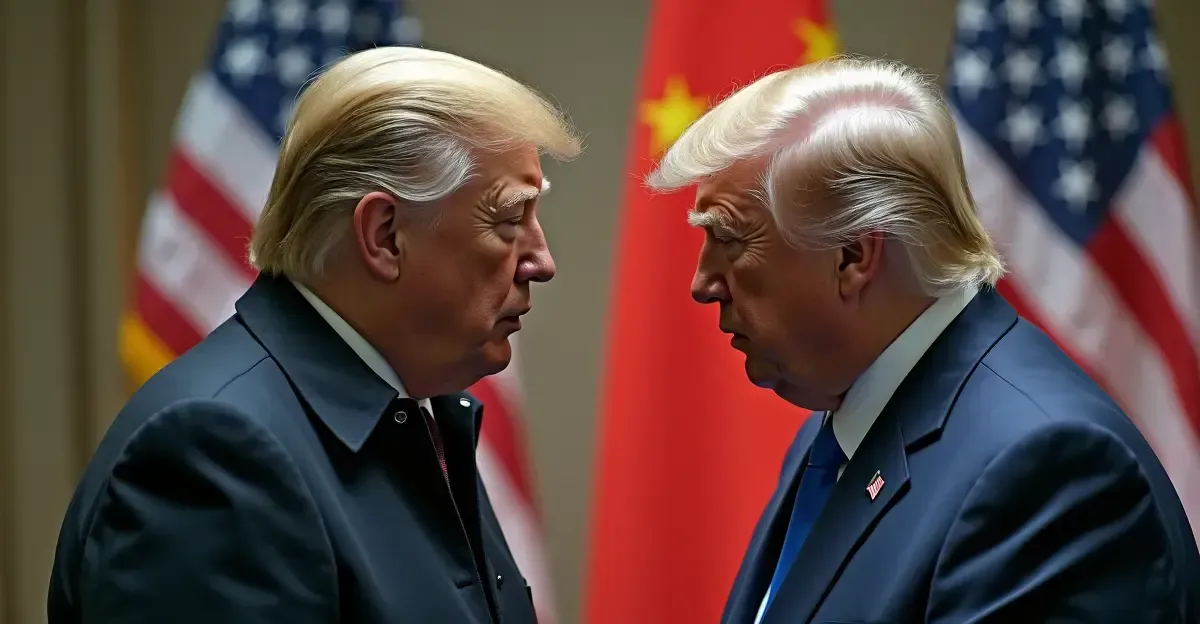
The race for AI supremacy between the United States and China has reached a pivotal moment. On September 24, 2026, Chinese President Xi Jinping and U.S. President Donald Trump met in Washington, where artificial intelligence was high on the agenda. Both economic superpowers see AI dominance as essential for economic growth and national security, and neither wants to fall behind.
What Is AI and Why Does It Matter?
AI, or artificial intelligence, is an umbrella term for computer systems that perform tasks requiring significant computing power. With that power, AI can recognize patterns, analyze situations, and create new products faster than older technologies. Both Washington and Beijing view AI as critical to economic competitiveness and national security, partly out of fear of losing ground or becoming dependent on the other's technology. The global AI arms race is reshaping trade, security, and innovation.
US vs China: Two Different AI Strategies
America's Market-Driven Approach
In the United States, the market leads. The government aims to create conditions for innovation rather than over-regulate, with an attitude of 'try it, test it, mistakes are allowed.' Speed is prioritized to stay ahead of China. 'Whoever wins AI, wins,' Trump has said. This was evident when AI developer Anthropic called for guardrails earlier in 2026 to prevent government misuse of its technology. The Pentagon dropped Anthropic and opened a tender to competitors, costing the company a €200 million contract. Meanwhile, U.S. export controls on advanced chips and chipmaking equipment—including ASML's EUV machines—aim to keep China's computing power behind. Chinese experts estimate U.S. AI companies are up to six months ahead in computing power.
China's State-Guided, Open-Source Push
China takes a more practical, state-guided approach. Beijing encourages AI applications that immediately benefit society, such as healthcare, education, and financial fraud detection. Large companies drive innovation under strong government steering, with subsidies and investments tied to official plans. China also promotes open-source AI models—such as those from DeepSeek—so developers worldwide can use them, spreading Chinese influence and providing learning feedback. Restrictions are imposed only when usage threatens the Communist Party. The rise of Chinese open-source AI models has made them defaults in Southeast Asia, the Middle East, and Africa. As a result, China leads in open-weight model deployment and AI patent filings.
Where the US Leads, Where China Leads
| Metric | United States | China |
|---|---|---|
| Global AI computing power | ~73% | ~14% |
| Frontier model lead | ~18 months (narrowing) | Months behind, closing |
| Open-weight model downloads | Behind | Leads (DeepSeek, Qwen) |
| 2026 AI spending | ~$764 billion | ~$102 billion |
| AI publications (2024) | ~12% | ~27% |
What Can We Expect from the Washington Summit?
Tech companies that recently renewed calls for safer AI with guardrails and a slower pace will likely not get their way. Trump considers it inopportune to squander the U.S. lead, while Xi dismisses such calls as a disguised attempt to slow Chinese innovation. Still, Washington and Beijing are taking small steps toward AI safety communication. Last weekend, U.S. Treasury Secretary Bessent and Chinese Vice Premier He agreed to establish an AI safety mechanism. The Chinese Communist Party newspaper wrote that AI should become 'a new area for China-US cooperation.' This mirrors the broader US-China AI safety dialogue that has emerged despite trade tensions.
FAQ: US-China AI Supremacy Race
Who is winning the AI race between the US and China?
There is no clear winner. The US leads in frontier model capability and computing power, while China leads in open-source model adoption, AI patents, and rapid application deployment.
How do US and Chinese AI strategies differ?
The US favors a market-driven, fast-innovation approach with minimal regulation; China uses strong government steering, subsidies, and open-source promotion to integrate AI into society.
What role do export controls play?
The US restricts advanced chips and chipmaking equipment—such as ASML's EUV machines—to slow China's computing power. Chinese experts say the US is up to six months ahead in compute.
Will the Trump-Xi summit change AI competition?
The summit may lead to limited AI safety cooperation, but neither leader supports slowing innovation, so full collaboration remains unlikely.
What is China's main concern about AI?
Beijing's primary concern is that AI development does not threaten the Communist Party, so restrictions are imposed only when usage conflicts with government interests.

Follow Discussion