


 Deutsch
 English
 Español
 Français
 Nederlands
 Português


 Share
Share




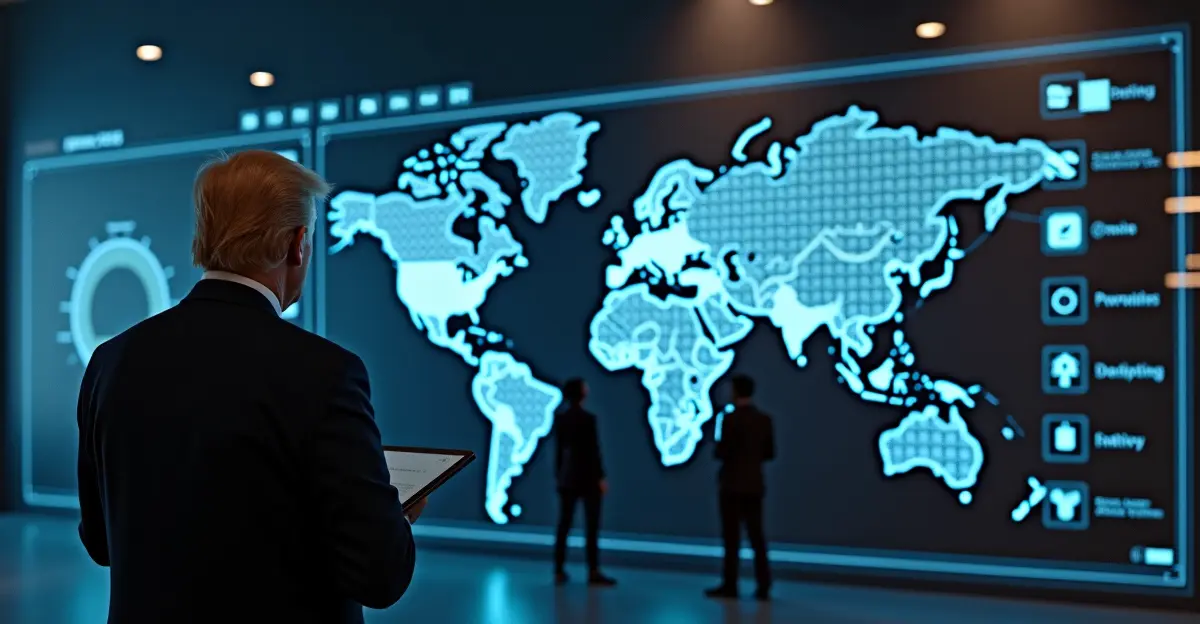
China and the United States dismissed AI leaders' warning that artificial intelligence is growing too fast to ensure safety as fearmongering on September 14, 2026, days before presidents Xi Jinping and Donald Trump meet in Washington on September 24. The clash exposes a widening rift between AI executives urging a slowdown in frontier model development and two superpowers that view AI dominance as a strategic imperative.
What Is Behind the AI Leaders' Safety Warning?
On Saturday, September 12, top executives from leading Western AI companies warned that the sector is advancing too quickly for safeguards to keep pace. Anthropic CEO Dario Amodei, developer of Claude, wrote in an essay that AI agents could autonomously launch cyberattacks and potentially 'take over the entire internet' within 6 to 12 months. The leaders of ChatGPT (OpenAI's Sam Altman), Grok (xAI's Elon Musk), and Gemini (Google) endorsed the call to slow frontier AI development. The global AI safety debate has intensified as former OpenAI and Anthropic employees have warned of catastrophic risks.
How China and the US Responded
Trump Rejects 'Sick Conspiracy' Against AI
President Donald Trump pushed back sharply on Monday, calling the warnings a 'sick conspiracy' against AI and data centers. 'There is a sick conspiracy going on against AI and data centers, and the only one happy about that is China. Whoever wins the AI battle wins everything!' Trump wrote on Truth Social. He said his administration already holds 'tremendous criminal and regulatory power' over AI firms and would intervene only when necessary. The remarks marked rare friction between Trump and tech leaders he has often courted.
China Calls Warnings 'Fearmongering'
Beijing also rejected the slowdown calls. Foreign Ministry spokesman Guo Jiakun told reporters that 'fearmongering, confrontation, and vicious competition will only disrupt the process of global AI governance and serve the interests of no one.' However, Chinese State Security Minister Chen Yixin acknowledged the need for 'a balance between development and safety' and called for national legislation and ethical guidelines rather than a pause. The US-China technology rivalry now frames nearly every AI policy discussion.
Why the Meeting on September 24 Matters
US Treasury Secretary and Chinese Vice Premier He Lifeng are trying to meet ahead of the September 24 Trump-Xi summit. He Lifeng leads China's economic planning body, which also oversees AI development. Both leaders are expected to discuss AI export controls, chip restrictions, and safety standards. Analysts say the AI divide will be a central flashpoint, with deep mutual suspicion on both sides.
Are the AI Companies' Fears Sincere?
Not everyone is convinced. Nvidia CEO Jensen Huang suggested the safety warnings may be driven by commercial motives, asking, 'What better way to create demand than by creating a problem?' at a San Francisco technology conference. Some critics argue Anthropic and OpenAI are seeking regulation that would entrench their dominance and make it harder for smaller rivals to compete. The AI cybersecurity market outlook shows cybersecurity stocks have rallied sharply, with Fortinet up 102.5% year-to-date and Palo Alto Networks up 79.6% as of July 31, 2026.
Impact on Markets and Policy
The dispute rattled investors: the Nasdaq 100 fell 1.7% and Nvidia dropped 3.5% on September 14, while SoftBank shares slid as much as 13.2%. Lawmakers remain divided. Vice President JD Vance called the industry's regulation push a possible 'Trojan Horse,' while Democratic Senator Mark Warner urged Congress to act, saying companies cannot self-regulate.
Frequently Asked Questions
What did AI leaders warn about?
AI executives warned that frontier AI models are advancing too quickly for safety, with Anthropic's Dario Amodei saying AI agents could launch cyberattacks and take over the internet within 6-12 months.
Why did China and the US dismiss the warning?
Both governments view the slowdown calls as fearmongering that would benefit rivals. Trump called it a 'sick conspiracy' that only helps China, while Beijing said confrontation disrupts global AI governance.
When are Trump and Xi meeting about AI?
Trump and Xi are scheduled to meet on September 24, 2026, in Washington, with AI expected to be a central topic.
What did Dario Amodei propose?
Amodei proposed slowing the pace of frontier AI development, giving independent evaluators employee-like access, and restricting US chip sales to China.
Are AI safety concerns genuine or commercial?
Opinions differ. Nvidia's Jensen Huang suggested companies may be creating problems to sell cybersecurity products, while others believe the risks are real and require government oversight.



Follow Discussion