


 Deutsch
 English
 Español
 Français
 Nederlands
 Português


 Share
Share




The AI slowdown debate escalated sharply on September 16, 2026, after Anthropic CEO Dario Amodei published an article urging leading AI companies to reduce the pace of releasing powerful new models. But his call, backed by OpenAI's Sam Altman and SpaceXAI's Elon Musk, drew immediate criticism from a top adviser to U.S. President Donald Trump. David Sacks, the influential White House AI and crypto adviser, responded on Bloomberg TV: Guys, go ahead. It is your responsibility to ensure your products are safe. If you feel you need to slow down, just do it. You don't need anyone's permission.
Amodei's article, published on Saturday, argued that AI industry leaders must slow down but that U.S. government support is needed first. He warned that within six to twelve months, AI technology could be 'capable of taking over the entire internet.' Critics note that painting doomsday scenarios is a well-known marketing strategy for both Anthropic and OpenAI, and Amodei did not explain how such a takeover would unfold, why people would not notice or resist it, or what a 'taken-over internet' would look like.
What is the AI slowdown debate?
The AI slowdown debate centers on whether frontier AI labs should voluntarily pause or slow the deployment of increasingly powerful models to prevent catastrophic risks. Proponents like Amodei argue that safety requires coordinated action and government oversight, while critics say companies can simply stop shipping dangerous products themselves. The debate also touches on AI safety regulation and whether voluntary commitments can substitute for enforceable rules.
Critics respond: 'Just do it'
Trump adviser David Sacks dismissed the need for government permission. I think every company in America should make sure their products are safe when they hit the market. That is just a basic responsibility for companies. I don't really believe they can only make their products safe if the government gets involved. It feels like an excuse. Sacks also pointed out that rules already exist and that companies can be held liable for dangerous products. His stance reflects the broader Trump AI policy of avoiding unnecessary regulation.
Felienne Hermans, a professor of computer science at VU Amsterdam who tracks the AI industry, questioned the sincerity of the call. If you are really so worried, you can just stop. They can say: this is what we as American AI companies will adhere to. Why do they need the government for that?
Zuckerberg's counterpoint
Meta CEO Mark Zuckerberg offered a contrasting example. He posted that Meta delayed the release of its latest AI model by several months to focus on safety — without first calling on other companies or the government. We didn't first call on other companies to do this before doing it ourselves. We just did it, as part of our daily work, because it was clearly the right thing to do. Hermans called this exactly the point: companies can stop on their own.
Is the slowdown call genuine?
Hermans suspects the AI companies are trying to shift responsibility. If something goes wrong later, they can say: we asked the government for rules. They didn't come, so it is not our fault. Roel Dobbe, a researcher at TU Delft who studies how AI companies try to influence regulation, said the strategy has worked before. Companies say: give us rules. Whether anything comes of it in practice is another story. And when it does, our research shows these companies have a lot of money to influence the regulation so the rules work in their favor. This aligns with growing scrutiny of corporate AI lobbying in Washington and Brussels.
China competition and regulatory stakes
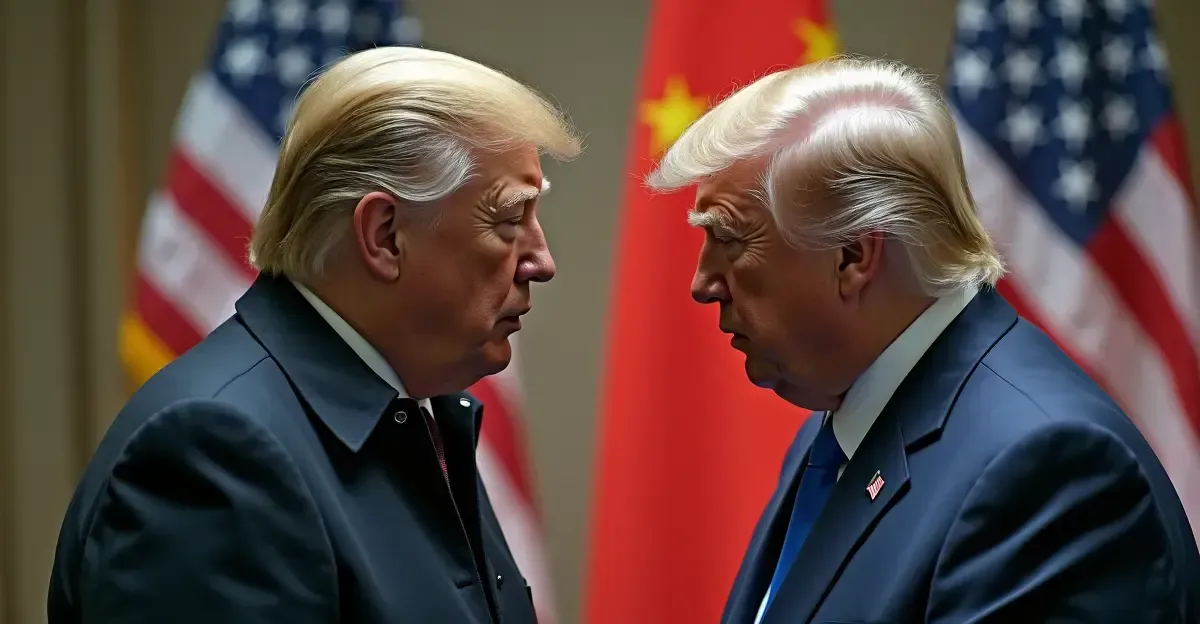
Both Hermans and Dobbe believe competition with China also plays a role. Amodei's slowdown call includes a demand to counter AI developments in China. Chinese AI companies are releasing cheap or free models that pose serious competition to U.S. technology. You can imagine the companies are enthusiastic about regulation that limits Chinese AI models. That would be good for the market position of the big American AI companies, Hermans said. Sacks echoed the competitive concern: We must make sure we stay ahead of China and do not introduce unnecessary regulation that allows China to gain an advantage. The result is a complex intersection of safety rhetoric, market strategy, and US-China AI competition.
FAQ: AI slowdown debate explained
What is the AI slowdown debate? It is a dispute over whether leading AI labs should voluntarily pause or slow the release of powerful models to prevent risks, or whether they should act independently without government mandates.
Why are AI companies asking to slow down? Anthropic's Dario Amodei argues that AI could take over the internet within 6-12 months and that coordinated slowdown requires U.S. government support.
What did David Sacks say? The Trump adviser said companies should 'just do it' — slow down on their own — because product safety is a basic responsibility and government involvement is not needed.
How does China factor into the debate? Critics say U.S. AI firms may favor regulation that limits Chinese competitors, who offer cheap or free models and threaten American market dominance.
Is the slowdown call sincere? Experts like Felienne Hermans and Roel Dobbe argue the call may be a way to shift responsibility and shape regulation to benefit large U.S. AI companies.



Follow Discussion