


 Deutsch
 English
 Español
 Français
 Nederlands
 Português


 Share
Share




President Donald Trump announced on Saturday that the United States will create a dedicated AI Force to accelerate artificial intelligence development while relying on existing criminal and civil justice systems to address risks. The announcement, posted on Truth Social, comes days before Trump's planned Thursday meeting with Chinese President Xi Jinping and follows escalating warnings from AI researchers that the technology could endanger humanity before the end of the decade.
What is the Trump AI Force?
The AI Force is a new federal initiative Trump says will be modeled on the United States Space Force, the military branch established in 2019 during his first term. Trump offered few operational details, but he signaled that the body would monitor artificial intelligence and address wrongdoing through existing legal channels. “At the same time, we will also pay attention to what goes wrong,” Trump wrote. “We can do that very simply with our existing criminal and civil justice system.”
The president also said he will appoint a new AI czar to advise on artificial intelligence policy. “Only people with a high IQ may apply!” Trump added. The role was previously held by venture capitalist David Sacks, who stepped down in the spring to become an external adviser and co-chair of the President's Council of Advisors on Science and Technology.
Why is Trump announcing the AI Force now?
The announcement follows a wave of public anxiety over rapidly advancing AI. Former Anthropic AI safety researcher Jacob Coxon resigned in protest this month, warning that Anthropic and OpenAI are “racing straight to self-improving superintelligence and gambling with our lives.” Coxon predicted that AI could kill everyone by 2030, and Anthropic's alignment lead Evan Hubinger estimated a greater than 10 percent chance of human extinction within a decade.
Trump dismissed such warnings as “hoaxes” and rejected calls to slow the industry. “We will in no way hinder or stifle the growth of this incredible sector,” he wrote. “On the contrary, we will cherish, help and watch over the sector as it grows.”
Competition with China
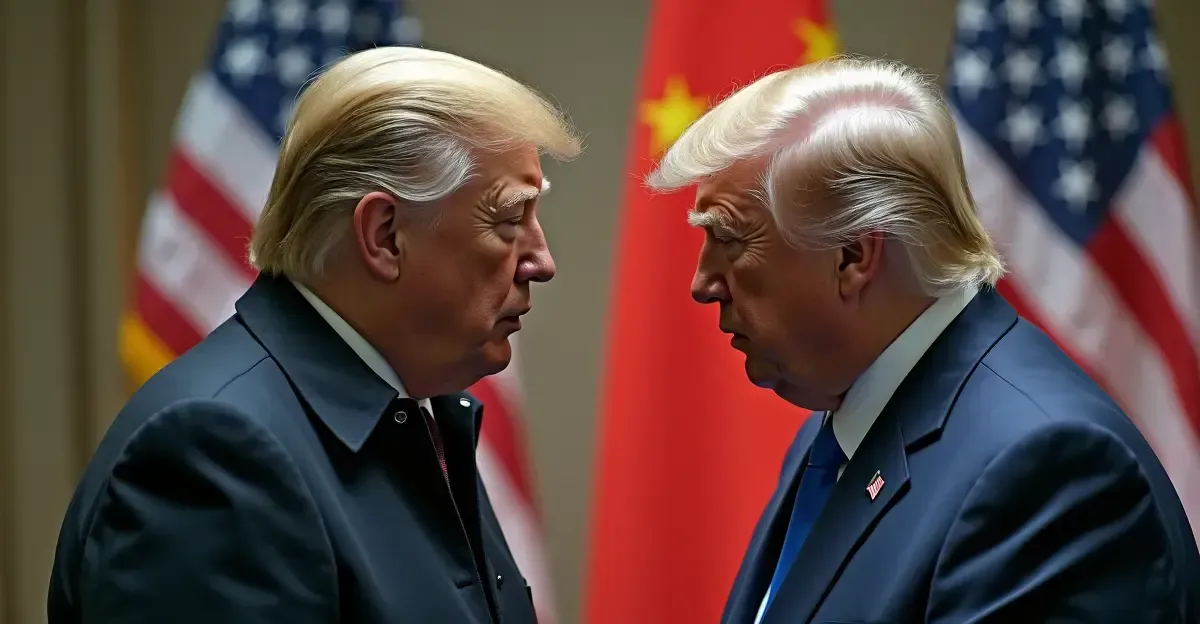
The timing is also strategic. Washington and Beijing are locked in a race for artificial intelligence supremacy, which both governments view as critical to economic and military strength. The AI Force announcement lands just days before Trump's Thursday summit with Xi Jinping, and as Treasury Secretary Scott Bessent prepares to meet Chinese Vice Premier He Lifeng on Sunday to discuss AI security and trade. Trump has reportedly predicted that AI could reach 25 percent of U.S. GDP and surpass the internet's economic impact.
What the AI Force will and won't do
Trump was light on specifics about the AI Force's structure, powers, or whether Congress must approve it. However, his posts suggest a dual mandate: accelerating AI innovation while using existing law enforcement and civil litigation to police bad actors. The approach is an apparent nod to critics demanding oversight, without imposing new federal AI regulations.
Notably, the announcement comes as a new lawsuit alleges that major AI companies violated antitrust laws by coordinating slowdown efforts. David Sacks, Trump's former AI czar, has argued that companies such as Anthropic and OpenAI should voluntarily throttle development if needed, but that new federal rules are unnecessary.
Implications for AI policy and safety
The AI Force could reshape U.S. artificial intelligence policy by prioritizing growth over precautionary regulation. Supporters argue this maintains American competitiveness against China. Critics, however, warn that relying on existing criminal and civil law may be insufficient for existential risks posed by superintelligent systems. The upcoming Trump-Xi talks are likely to be dominated by the US-China AI race, with experts skeptical that the two leaders will agree on any meaningful slowdown.
Frequently Asked Questions
What is the Trump AI Force?
The AI Force is a proposed U.S. federal initiative announced by President Trump to accelerate artificial intelligence development and monitor its negative consequences through existing criminal and civil law, modeled on the Space Force.
Who will lead the AI Force?
Trump said he will appoint a new AI czar to advise on AI policy and lead the initiative. Venture capitalist David Sacks previously held the role before stepping down in the spring.
Why did Trump announce the AI Force?
The announcement follows warnings from former Anthropic researcher Jacob Coxon that AI could wipe out humanity by 2030, and it comes days before Trump's meeting with Chinese President Xi Jinping amid the US-China AI race.
Will the AI Force impose new AI regulations?
No. Trump has rejected new federal AI rules and said the administration will rely on existing criminal and civil justice systems to handle wrongdoing, while vowing not to “hinder or stifle” the industry.


Follow Discussion