


 Deutsch
 English
 Español
 Français
 Nederlands
 Português


 Share
Share




In March 2026, Iranian drone strikes damaged three Amazon Web Services (AWS) data centers in the United Arab Emirates and Bahrain, marking the first time commercial hyperscale cloud infrastructure has been explicitly targeted as a kinetic military objective in modern warfare. This watershed event exposes a critical vulnerability: AI infrastructure is rapidly being classified as strategic national assets, yet remains physically concentrated in geopolitically exposed regions. As nations race to build sovereign AI compute capacity and data localization frameworks, the attack raises urgent questions about the security architecture of global cloud supply chains, the militarization of digital infrastructure, and whether hyperscalers can continue operating in contested zones without becoming de facto military targets.
The Attack: What Happened on March 1-2, 2026
On March 1, 2026, as part of a broader retaliatory campaign following coordinated U.S.-Israeli strikes on Iran (Operations Epic Fury and Roaring Lion), Iran's Islamic Revolutionary Guard Corps (IRGC) launched waves of drones and ballistic missiles at targets across the Gulf region. Among the targets were two AWS data center facilities in the UAE's ME-CENTRAL-1 region and a third facility in Bahrain's ME-SOUTH-1 region. Despite the UAE intercepting 541 drones and 165 ballistic missiles, 35 drones penetrated defenses, directly striking the data centers.
The attacks caused structural damage, fires, power outages, and water damage from fire suppression systems. AWS confirmed that multiple availability zones went offline for over 24 hours, disrupting core services including Amazon EC2, S3, DynamoDB, Lambda, and RDS. More than 109 services were degraded or knocked out entirely. Affected customers included delivery platform Careem, payment companies Alaan and Hubpay, banking providers ADCB and Emirates NBD, and enterprise software provider Snowflake. AWS recommended customers migrate workloads to alternate regions as recovery efforts continued.
Why Data Centers Became Military Targets
The strikes represent a fundamental shift in the nature of modern conflict. Iran explicitly justified the attacks by claiming that AWS facilities supported U.S. military and intelligence activities, including AI workloads for the Pentagon's $9 billion Joint Warfighting Cloud Capability (JWCC) contract and the NSA's $10 billion 'WildandStormy' contract. While AWS hosts a wide range of commercial and government clients, the presence of classified military workloads on shared infrastructure effectively transformed commercial data centers into legitimate military targets under Iran's operational calculus.
This development validates a concept that security analysts have warned about for years: when commercial data centers house military operations, they inherit the target profile of those operations. The militarization of digital infrastructure has been a growing concern, but the March 2026 strikes turned theoretical risk into physical reality. As one analysis from EPINOVA notes, hyperscale data centers represent "highly concentrated points of systemic digital dependence," making them attractive targets for adversaries seeking maximum disruption with minimal effort.
The Vulnerability of Hyperscale Cloud Architecture
The attack exposed a critical design flaw in modern cloud infrastructure: standard redundancy architectures assume failure from hardware faults, power outages, or natural disasters—not coordinated kinetic attacks. AWS's ME-CENTRAL-1 region lost two of three availability zones simultaneously, defeating the multi-AZ redundancy that forms the backbone of cloud reliability promises. Traditional disaster recovery plans proved inadequate when entire geographic regions become contested zones.
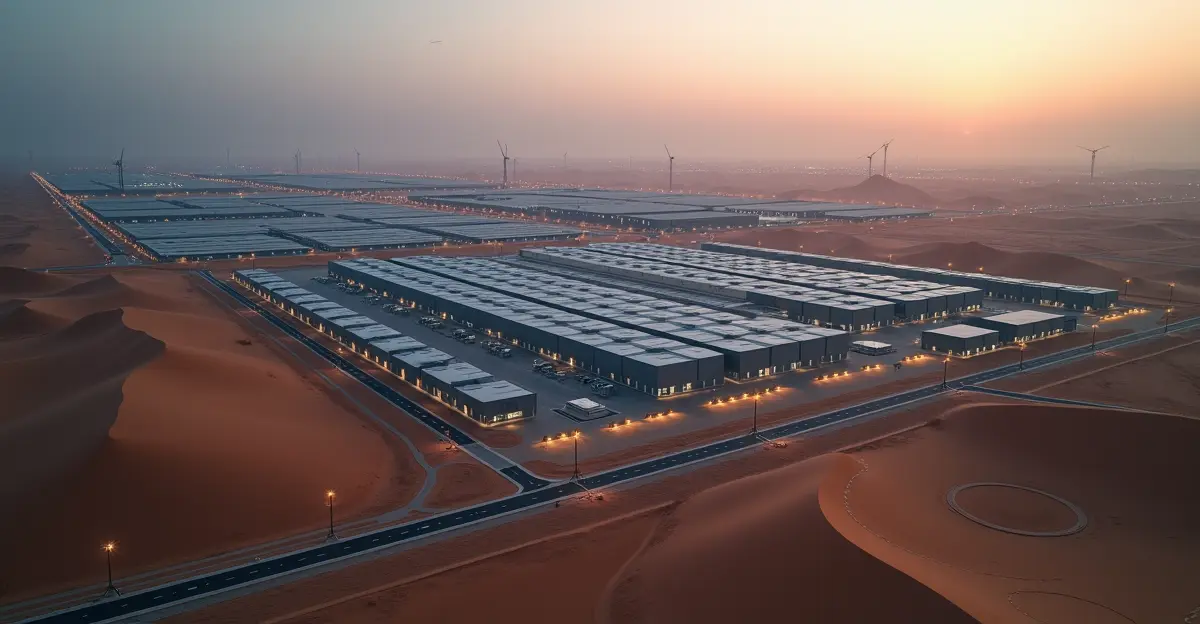
The concentration of cloud infrastructure in geopolitically sensitive areas compounds this vulnerability. The Middle East has become a major hub for hyperscale data center investment, with AWS alone planning a $5.3 billion data center in Saudi Arabia. However, the March 2026 strikes have forced a fundamental reassessment of site selection criteria. Coastal facilities in the UAE and Bahrain face heightened vulnerability to drone and missile attacks, while Saudi Arabia's vast geography offers greater potential for strategic dispersal.
Economic and Geopolitical Fallout
The immediate economic impact was severe. Beyond the direct damage to AWS facilities, the broader conflict—including Iran's closure of the Strait of Hormuz—sent oil prices surging approximately 20% and triggered global stock market declines. The data center attacks compounded these disruptions by crippling digital services across the Gulf region, affecting banking, payments, logistics, and enterprise operations.
The strikes have fundamentally reshaped the risk calculus for cloud infrastructure investment. Construction costs for new data centers are projected to rise 15-20% due to a new "security premium" for anti-drone systems, reinforced structures, and military-grade hardening. The industry is pivoting from efficiency-focused hyperscale campuses to hardened "bunker" data centers for critical workloads, supported by distributed edge networks. This shift mirrors the sovereign AI compute strategies being adopted by nations worldwide, as governments seek to reduce dependence on foreign-controlled cloud infrastructure.
Expert Perspectives on the New Reality
Security analysts and industry experts have been unequivocal in their assessment. "The era of data centers as neutral civilian assets has ended," wrote one analyst at Humai Blog. "When commercial data centers house classified military operations, they inherit the target profile of those operations." This sentiment is echoed across the industry, with AWS itself advising customers to adopt multi-region, multi-cloud resilience strategies as a matter of operational necessity.
The Pentagon's response has been equally decisive. The fiscal 2027 budget request includes over $70 billion for drones and anti-drone systems—a massive increase from $13.4 billion for autonomous systems and $3.1 billion for counter-drone capabilities in fiscal 2026. The Defense Department also published the JIATF 401 Guide for Physical Protection of Critical Infrastructure in January 2026, providing official guidance for safeguarding essential facilities against physical security threats.
FAQ: Understanding the 2026 AWS Data Center Attacks
What exactly happened in March 2026?
On March 1-2, 2026, Iranian drone strikes directly hit two AWS data centers in the UAE and damaged a third in Bahrain. The attacks were part of Iran's retaliation for U.S.-Israeli strikes on Iranian military targets. This marked the first confirmed kinetic military attack on a major hyperscale cloud provider's infrastructure.
Why were AWS data centers targeted?
Iran claimed the facilities supported U.S. military and intelligence activities, including AI workloads for Pentagon and NSA contracts. The presence of classified military workloads on shared commercial infrastructure transformed the data centers into legitimate military targets under Iran's operational doctrine.
What services were affected?
Over 109 AWS services were disrupted, including EC2, S3, DynamoDB, Lambda, and RDS. Affected customers included Gulf-region banks (ADCB, Emirates NBD), payment platforms (Careem, Alaan, Hubpay), and enterprise software providers (Snowflake).
How is the industry responding?
The industry is pivoting toward hardened, sovereign-controlled infrastructure with military-grade physical security. Construction costs are rising 15-20% for anti-drone systems and reinforced structures. Multi-region, multi-cloud resilience strategies are becoming standard recommendations.
What does this mean for AI infrastructure?
The attacks underscore the vulnerability of concentrated AI compute infrastructure. Nations are accelerating sovereign AI initiatives, with Deloitte predicting over $100 billion in sovereign AI compute commitments in 2026. The share of AI compute managed outside the U.S. and China is projected to double from 10% to 20% by 2030.
Conclusion: A Watershed Moment for Cloud Security
The March 2026 drone strikes on AWS data centers represent a paradigm shift in the security landscape for global cloud infrastructure. The distinction between civilian and military digital infrastructure has been blurred, perhaps irrevocably. As nations race to build sovereign AI capabilities and data localization frameworks, the physical security of cloud infrastructure must be reimagined from the ground up. The era of trusting geographic neutrality and commercial status for protection is over. The global cloud supply chain now operates in a contested environment where data centers are battlefields, and the stakes could not be higher.





Follow Discussion