


 Deutsch
 English
 Español
 Français
 Nederlands
 Português


 Share
Share




AI Infrastructure as Critical National Security Assets: The 2026 Drone Attack Watershed
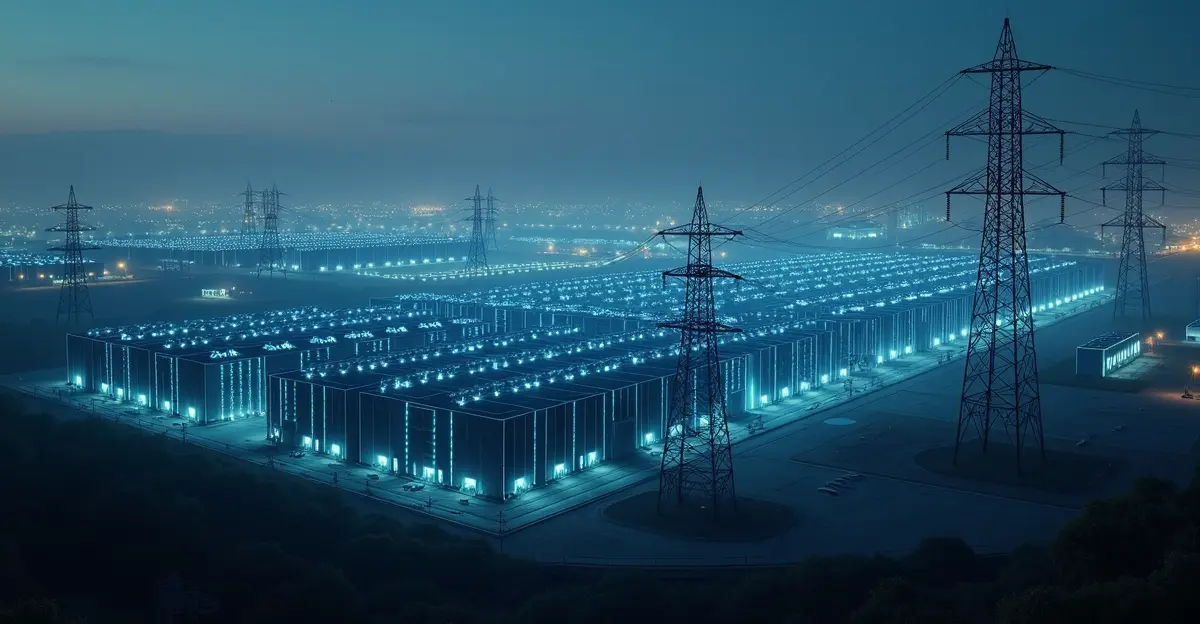
The March 2026 Iranian drone attacks on Amazon Web Services data centers in the United Arab Emirates and Bahrain represent a watershed moment in modern conflict, fundamentally transforming how nations view artificial intelligence infrastructure. These coordinated strikes, which targeted commercial hyperscale facilities powering regional banking, enterprise software, and AI systems, mark the first time commercial data centers became explicit kinetic targets in warfare. This incident coincides with AI data centers now consuming more electricity than 30 countries combined and projected to account for 6.7-12% of US national electricity consumption by 2028, creating an unprecedented intersection of energy security, economic stability, and national defense.
What is AI Infrastructure as Critical National Security?
AI infrastructure encompasses the physical and digital systems required to develop, train, and deploy artificial intelligence models at scale. This includes hyperscale data centers, specialized AI chips, high-bandwidth networks, and the massive energy generation required to power these facilities. The March 2026 attacks demonstrated that these assets have evolved from neutral commercial real estate to strategic national assets comparable to electricity grids, ports, or oil pipelines. According to the World Economic Forum analysis, AI infrastructure now requires the same level of protection and resilience planning as traditional critical infrastructure due to its role as a GDP multiplier with potential to raise global GDP by 1.3-4% over the next decade.
The March 2026 Attacks: A Strategic Watershed
On March 3, 2026, Iranian Shahed drones struck two AWS facilities in the UAE and one in Bahrain, causing structural damage, power disruptions, and fire suppression system failures. The attacks occurred amid escalating regional tensions following U.S.-Israel joint strikes on Iran that killed Supreme Leader Ayatollah Ali Khamenei. Major services affected included delivery platform Careem, payment companies Alaan and Hubpay, banking providers ADCB and Emirates NBD, and enterprise software provider Snowflake. AWS advised customers to migrate workloads to alternate regions while recovery efforts continued.
The Iranian Islamic Revolutionary Guard Corps claimed these facilities supported enemy military operations, though evidence of direct military use remained uncertain. What became clear was that the Gulf region's concentration of hyperscale data centers—with companies like Microsoft, Google, and Oracle investing billions in AI infrastructure—created vulnerable strategic targets. Unlike fortified military installations, commercial data centers prioritize efficiency and accessibility over defense, making them susceptible to relatively low-cost drone attacks.
Energy Demands Intersect with Security Concerns
The Power Consumption Crisis
As of March 2026, US data centers consume approximately 176 TWh annually—4.4% of the nation's total power—with consumption increasing 150% over five years. Four major tech companies (Amazon, Google, Meta, Microsoft) control 42% of US data center capacity and are driving unprecedented power demand through massive AI infrastructure investments totaling over $330 billion. This has caused retail electricity prices to rise 42% since 2019, with capacity market prices spiking nearly tenfold in some regions.
Geographic Vulnerabilities
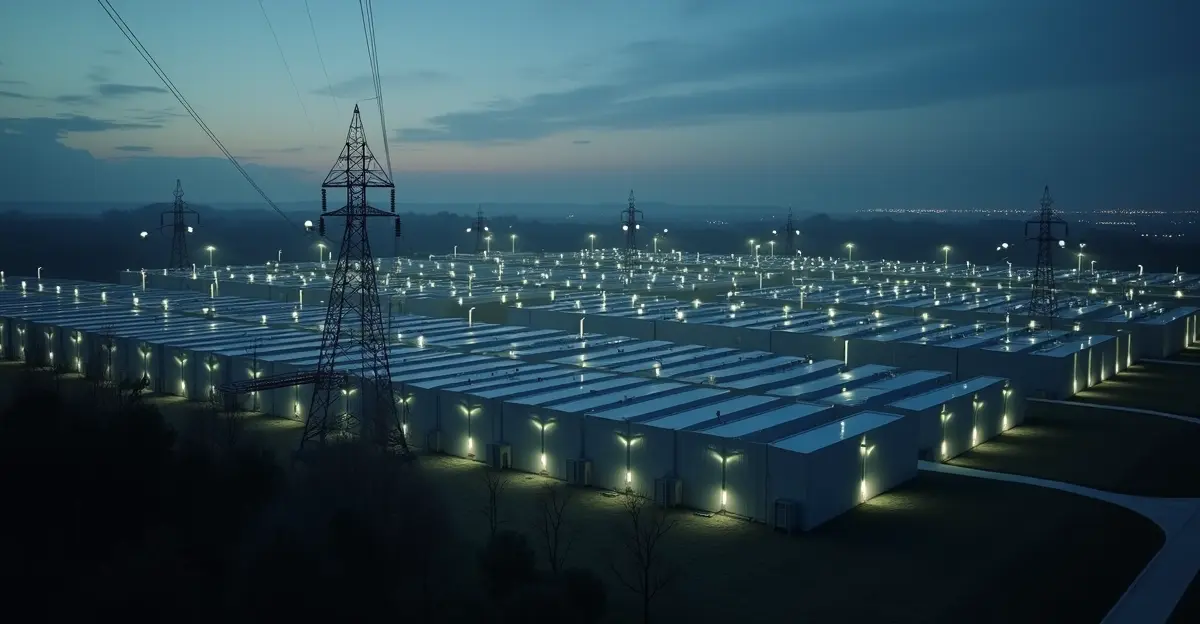
The crisis is particularly acute in Virginia, Texas, and Illinois, where data centers consume substantial portions of state electricity. Northern Virginia hosts the world's largest concentration of data center capacity, consuming over 5 GW of power—equivalent to the output of five nuclear reactors. This geographic concentration creates both energy security risks and physical security vulnerabilities, as demonstrated by the 2025 energy grid attacks that highlighted interdependencies between digital and physical infrastructure.
The Emerging Doctrine of Digital Sovereignty
The attacks have accelerated a global shift toward 'digital sovereignty' in infrastructure placement and protection. This doctrine emphasizes three key principles:
- Infrastructure Control: Nations are developing frameworks to ensure critical AI infrastructure remains under national jurisdiction and protection
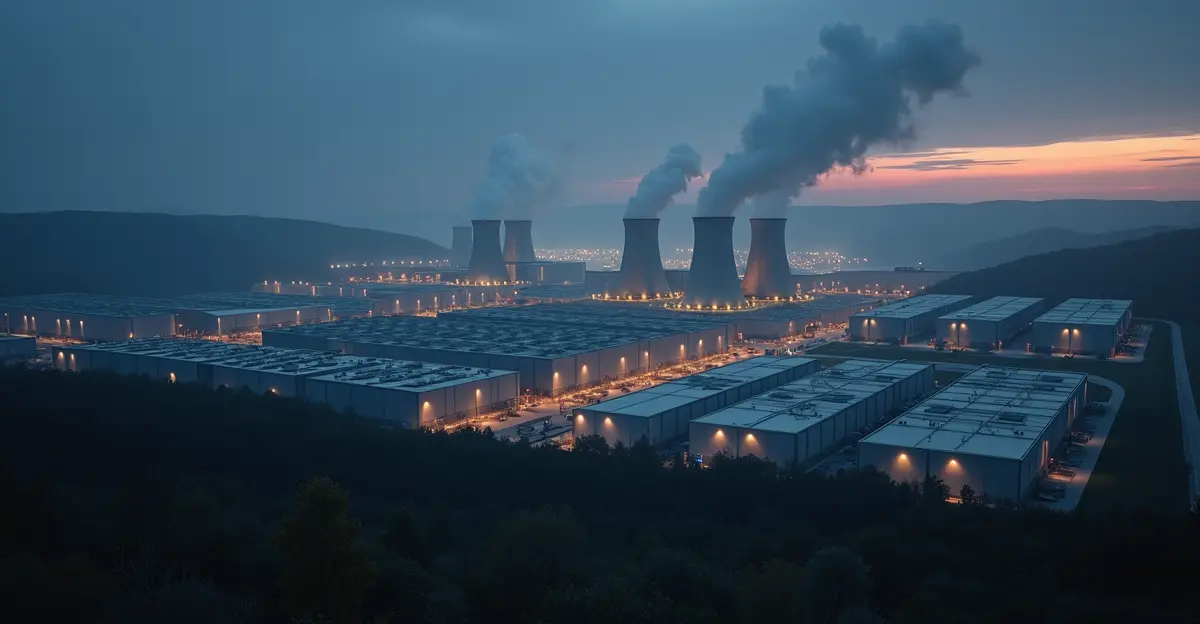
- Energy Independence: Companies are turning to nuclear power solutions, including Microsoft's landmark deal to restart Three Mile Island, as renewable energy alone cannot meet AI's escalating power demands
- Strategic Dispersion: Governments are incentivizing geographic diversification of data centers away from vulnerable regions and toward more secure domestic locations
According to research from the Digital Sovereignty Control Framework, military organizations must maintain control over sensitive defense assets in an evolving threat landscape, protecting against unauthorized access, ransomware, and supply-chain attacks while preserving operational autonomy.
Economic Consequences and Global Implications
The vulnerability of AI infrastructure carries profound economic implications. With AI projected to raise global GDP by 1.3-4% over the next decade, any disruption to these systems threatens not just individual companies but entire national economies. The March 2026 attacks caused:
- Widespread banking system disruptions across the Gulf region
- Global oil price spikes following Iran's closure of the Strait of Hormuz
- Stock market declines worldwide as investors recognized the systemic risks
- Accelerated migration of critical workloads to more secure regions
The International Monetary Fund forecasts steady global economic growth in 2026, with AI advancements playing a crucial role in offsetting trade-related challenges. However, this growth depends on securing the underlying infrastructure against both physical and cyber threats.
New Protection Frameworks and Military Integration
Governments worldwide are developing new frameworks for protecting AI infrastructure as critical national assets. These include:
| Protection Measure | Implementation | Examples |
|---|---|---|
| Military-Grade Physical Security | Deployment of anti-drone systems, perimeter defense, and hardened construction standards | US Department of Defense partnerships with hyperscale providers |
| Cyber Resilience Mandates | Regulatory requirements for redundancy, backup systems, and rapid recovery capabilities | EU Digital Operational Resilience Act extensions |
| Energy Security Integration | Direct connections to secure power generation and microgrid capabilities | Microsoft's nuclear power agreements |
| Geographic Risk Assessment | Government oversight of data center locations based on geopolitical risk analysis | UK Critical National Infrastructure redesignation |
These measures represent a fundamental shift from viewing data centers as commercial facilities to treating them as strategic assets requiring integrated military-civilian protection. The US-China technology competition has further accelerated this trend, with both nations investing heavily in securing their AI infrastructure against potential conflict scenarios.
Expert Perspectives on the New Security Paradigm
'The March 2026 attacks represent a paradigm shift in how we think about critical infrastructure,' says Dr. Elena Rodriguez, cybersecurity director at the Atlantic Council. 'We can no longer separate digital infrastructure from physical security. AI data centers are now as strategically important as oil refineries or power plants, and they require equivalent protection.'
'The energy demands alone make these facilities national security concerns,' adds Michael Chen, energy analyst at the International Energy Agency. 'When a single data center campus consumes more power than a medium-sized city, its protection becomes a matter of grid stability and national economic security.'
FAQ: AI Infrastructure and National Security
Why are AI data centers considered critical national infrastructure?
AI data centers power essential economic functions, consume massive energy resources, and support military and intelligence operations. Their disruption can cause cascading failures across multiple sectors, making them strategically equivalent to traditional critical infrastructure like power grids or transportation networks.
How much electricity do AI data centers consume?
As of 2026, US data centers consume approximately 176 TWh annually—4.4% of national electricity—with consumption increasing 150% over five years. Globally, data centers consume more electricity than 30 countries combined, with projections suggesting they could account for 6.7-12% of US electricity by 2028.
What protection measures are being implemented?
Governments are deploying anti-drone systems, implementing military-grade physical security, mandating cyber resilience standards, integrating energy security measures, and conducting geographic risk assessments for new data center locations.
How does digital sovereignty affect AI infrastructure?
Digital sovereignty emphasizes maintaining national control over critical AI infrastructure, ensuring data residency, computational independence, and protection against foreign interference or attack during geopolitical tensions.
What are the economic implications of vulnerable AI infrastructure?
With AI projected to raise global GDP by 1.3-4% over the next decade, infrastructure vulnerabilities threaten not just individual companies but entire national economies, potentially reversing significant economic gains from AI adoption.
Conclusion: The New Arms Race in AI Infrastructure Security
The March 2026 drone attacks have fundamentally altered the strategic calculus around AI infrastructure, forcing governments and corporations to recognize these facilities as critical national security assets. As AI continues to drive economic growth while consuming unprecedented energy resources, the protection of this infrastructure has become a new frontier in national security. The emerging arms race isn't just about developing more powerful AI systems, but about securing the physical and digital infrastructure that makes AI possible against an evolving threat landscape of kinetic attacks, cyber operations, and energy disruptions.
The convergence of massive energy demands, economic importance, and military relevance has created a perfect storm where AI infrastructure protection has become as crucial as the AI capabilities themselves. Nations that successfully secure their AI infrastructure while maintaining innovation momentum will gain significant strategic advantages in the coming decade, while those that fail to adapt risk economic disruption and national security vulnerabilities in an increasingly AI-driven world.

Follow Discussion