


 Deutsch
 English
 Español
 Français
 Nederlands
 Português


 Share
Share




The AI-Driven Trade Revolution: How Semiconductors and Data Infrastructure Are Redefining Global Commerce in 2026
In a fundamental structural shift reshaping international economic dynamics, AI-related trade has emerged as the primary growth engine for global commerce in 2026, with semiconductors and data-center equipment accounting for one-third of global trade expansion according to McKinsey's latest research. This technological trade dominance represents a dramatic departure from traditional trade patterns, creating parallel supply chains and reconfiguring geopolitical relationships as nations compete for technological supremacy in the artificial intelligence era.
What is the AI Trade Revolution?
The AI trade revolution refers to the unprecedented surge in international commerce driven by artificial intelligence infrastructure development. Unlike previous technological shifts that gradually integrated into existing trade patterns, the AI boom has created entirely new trade corridors focused on semiconductor manufacturing equipment, data center components, and specialized computing hardware. According to Federal Reserve research, AI-related trade drove nearly half of merchandise trade growth in the first half of 2025 despite representing only about 15% of total trade, highlighting its disproportionate impact on global commerce.
The Semiconductor and Data Center Surge
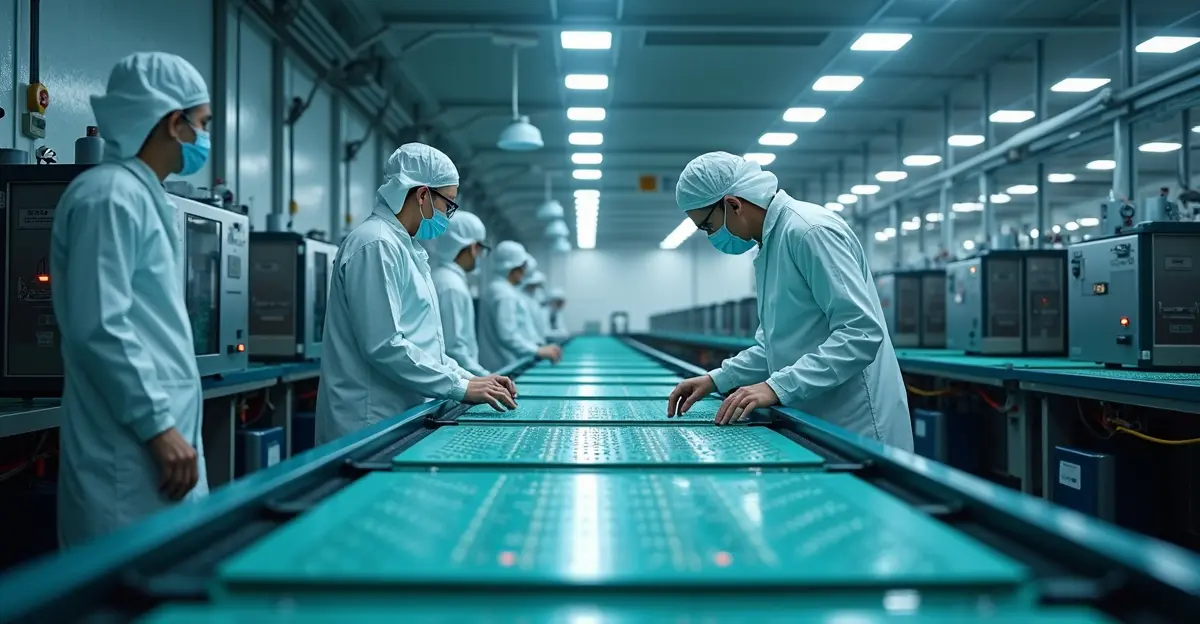
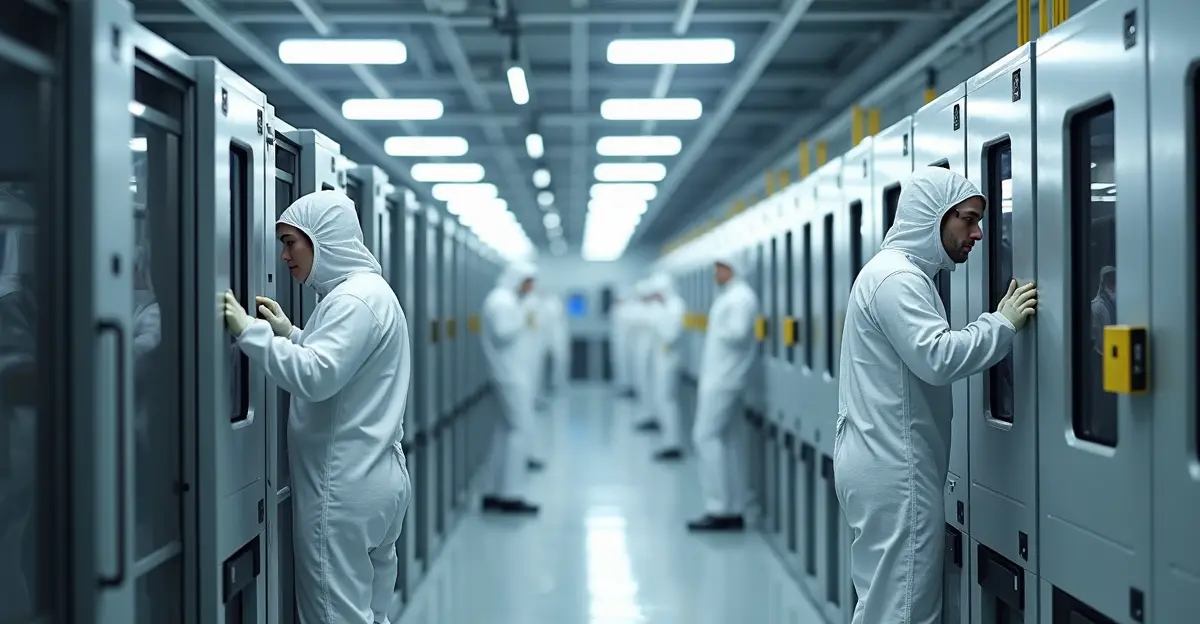
The most dramatic manifestation of this revolution is in semiconductor and data center equipment trade, which has become the primary driver of global commerce expansion. Gartner forecasts worldwide semiconductor revenue will exceed $1.3 trillion in 2026, reflecting the industry's central role in powering AI infrastructure. The surge is primarily tied to equipment for semiconductor manufacturing and data center construction, with U.S. data-center spending expected to exceed half a trillion dollars in 2025 alone.
Geopolitical Realignment of Trade Flows
The most dramatic change in global trade patterns is a 30% decline in US-China bilateral trade due to tariffs, creating what analysts describe as a 'supply chain divorce' between the world's two largest economies. The average US tariff rate on Chinese goods has jumped from 2.4% to 22%, fundamentally altering trade dynamics. This represents a permanent structural shift where trade increasingly flows along geopolitical rather than purely economic lines, creating parallel semiconductor ecosystems and a more fragmented but potentially more resilient global trading system.
China's Transformation: Factory to the Factories
China is undergoing a fundamental transformation from exporting finished consumer goods to becoming a 'factory to the factories,' supplying intermediate components like smartphone parts, processors, memory chips, and lithium-ion batteries to manufacturing hubs in Southeast Asia and other emerging economies. According to McKinsey Global Institute research, while China's consumer goods exports declined 2% last year, intermediate goods exports rose 9%. This shift represents a strategic adaptation to geopolitical pressures and changing global demand patterns, positioning China as a critical global supply chain component supplier rather than a final goods manufacturer.
Emerging Market Expansion and Strategic Implications
Southeast Asia has emerged as the primary beneficiary of supply chain diversification with 14% export growth—more than double the global average—as the region serves as manufacturing hubs that assemble Chinese components into final products for Western markets. India now supplies 40% of US smartphone imports that previously came from China, reflecting the dramatic reconfiguration of global manufacturing networks. These emerging markets are experiencing unprecedented growth as they position themselves within the new global trade architecture shaped by AI infrastructure demands.
Corporate Resilience Strategies
Companies are responding to this new trade landscape by fundamentally restructuring operations. According to Thomson Reuters research, 72% of trade professionals identify U.S. tariff volatility as the most impactful regulatory change, with supply chain management becoming the dominant strategic priority for 68% of professionals—nearly double from the previous year. Companies are implementing several key strategies:
- Geographically diversifying supply chains (54% of companies)
- Renegotiating supplier contracts (57%)
- Nearshoring manufacturing operations (51%)
- Absorbing tariff costs rather than passing them to customers (39%)
- Exploring AI or blockchain solutions for supply chain optimization (40%, up from just 6% in 2024)
Trade departments are gaining unprecedented strategic influence, with 43% reporting enhanced procurement decision power and 37% more involved in executive decisions, reflecting the critical importance of navigating this complex new trade environment.
Energy and Infrastructure Challenges
The AI infrastructure boom presents significant energy challenges, with US data centers projected to use 6.7-12% of national electricity by 2028. This massive energy consumption requirement is creating new trade patterns in energy commodities and renewable energy infrastructure components, further complicating global supply chain dynamics. The intersection of energy security and technological infrastructure represents one of the most critical challenges for policymakers and corporate leaders navigating the AI trade revolution.
Future Outlook and Strategic Recommendations
The AI-driven trade revolution represents a permanent structural shift in global commerce that will continue to reshape international economic relationships through the remainder of the decade. Companies must prioritize several strategic imperatives:
- Geopolitical Alignment: Supply chain decisions must consider geopolitical factors alongside traditional cost optimization metrics
- Resilience Over Efficiency: Building redundant, geographically diverse supply chains is becoming more important than pure efficiency
- Technology Integration: Leveraging AI and blockchain for supply chain visibility and risk management
- Strategic Partnerships: Developing deeper relationships with suppliers in geopolitically aligned regions
Frequently Asked Questions
What percentage of global trade growth comes from AI-related trade?
AI-related trade, particularly semiconductors and data-center equipment, accounts for approximately 33% of global trade expansion in 2026 according to McKinsey research.
How much has US-China trade declined due to tariffs?
US-China bilateral trade has declined by approximately 30% due to tariffs, with the average US tariff rate jumping from 2.4% to 22%.
What is China's 'factory to the factories' transformation?
China is shifting from exporting finished consumer goods to supplying intermediate components to manufacturing hubs in Southeast Asia and other emerging economies, with intermediate goods exports rising 9% while consumer goods exports declined 2%.
Which regions are benefiting most from supply chain diversification?
Southeast Asia has emerged as the primary beneficiary with 14% export growth, while India now supplies 40% of US smartphone imports that previously came from China.
How are companies adapting to the new trade environment?
Companies are geographically diversifying supply chains (54%), renegotiating supplier contracts (57%), nearshoring manufacturing (51%), and exploring AI/blockchain solutions (40%) to navigate tariff volatility and supply chain complexity.


Follow Discussion