


 Deutsch
 English
 Español
 Français
 Nederlands
 Português


 Share
Share




The Strategic Calculus Behind US AI Export Controls: Balancing National Security and Economic Interests
The United States has entered a critical phase in its technology competition with China, implementing increasingly sophisticated export controls on advanced AI chips and semiconductor technologies throughout 2025. These measures represent a complex strategic calculus attempting to balance national security imperatives against economic interests, with January 2025 seeing intensified enforcement against illegal exports and policy adjustments that reflect the high-stakes nature of AI dominance. The US semiconductor industry competitiveness now faces unprecedented challenges as policymakers navigate between restricting China's military AI capabilities and maintaining America's technological leadership edge.
What Are US AI Export Controls?
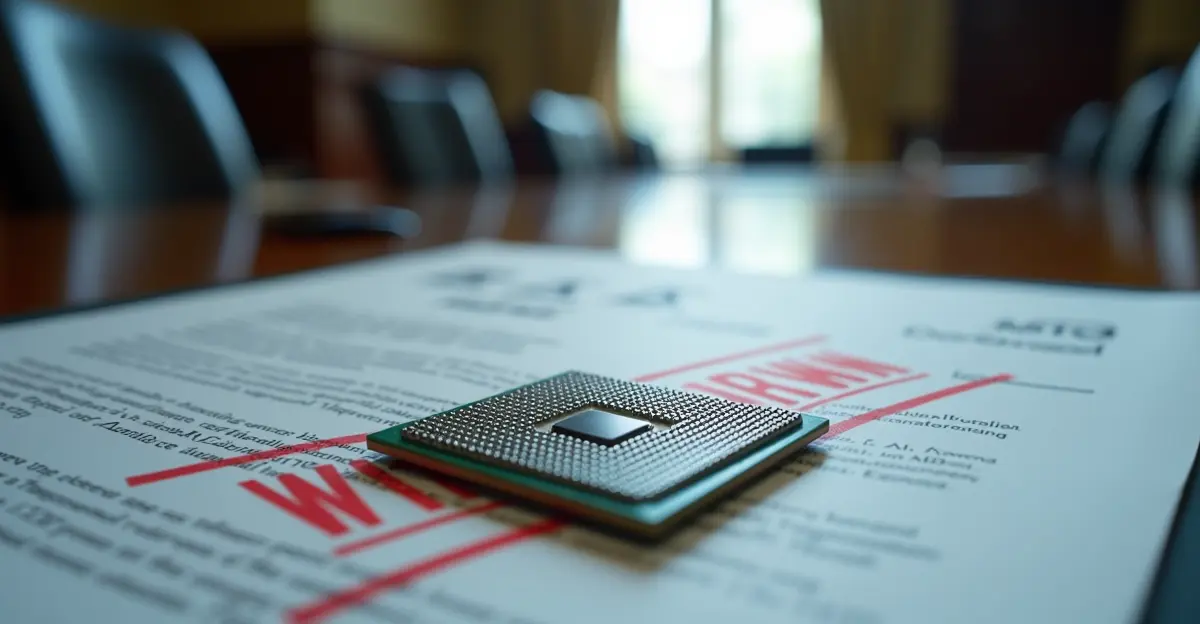
US AI export controls are regulatory measures implemented by the Department of Commerce's Bureau of Industry and Security (BIS) to restrict the transfer of advanced computing technologies, particularly artificial intelligence chips and semiconductor manufacturing equipment, to geopolitical competitors like China. These controls originated with the October 2022 restrictions but have evolved significantly through multiple updates, including December 2024 rules adding 140 companies to the Entity List and January 2025 measures strengthening foundry due diligence requirements. The regulations target technologies that could enhance China's military modernization, surveillance capabilities, and AI development that might threaten US national security interests.
January 2025 Policy Developments and Enforcement Actions
The beginning of 2025 marked a significant escalation in both policy refinement and enforcement. In January, federal prosecutors charged four individuals with illegally smuggling approximately $3.9 million worth of Nvidia AI chips to China, including about 400 A100 GPUs and attempts to export newer H200 and H100 chips. This enforcement action revealed sophisticated smuggling operations using front companies and transshipment through third countries like Thailand and Malaysia. Simultaneously, the Commerce Department implemented new rules expanding licensing requirements for AI-related technologies and strengthening restrictions on advanced computing semiconductors.
Key January 2025 Regulatory Changes
- Enhanced foundry due diligence requirements for semiconductor manufacturers
- Expanded licensing requirements for AI technologies with potential military applications
- Tightened controls over semiconductor manufacturing equipment exports
- Increased scrutiny of foreign-produced items for supercomputer end uses
- Strengthened enforcement against circumvention through third countries
The National Security vs. Economic Competitiveness Dilemma
The fundamental tension in US AI export policy lies in balancing two competing objectives: preventing China from acquiring technologies that could enhance its military capabilities while maintaining the US semiconductor industry's global competitiveness and innovation leadership. According to a CSIS analysis, the success of US export control strategy depends heavily on allies' enforcement capacity and willingness to act, not just legal authority. The global AI development ecosystems are becoming increasingly bifurcated, with China pursuing technological self-sufficiency while US companies face restricted access to one of the world's largest technology markets.
Economic Impact on US Semiconductor Industry
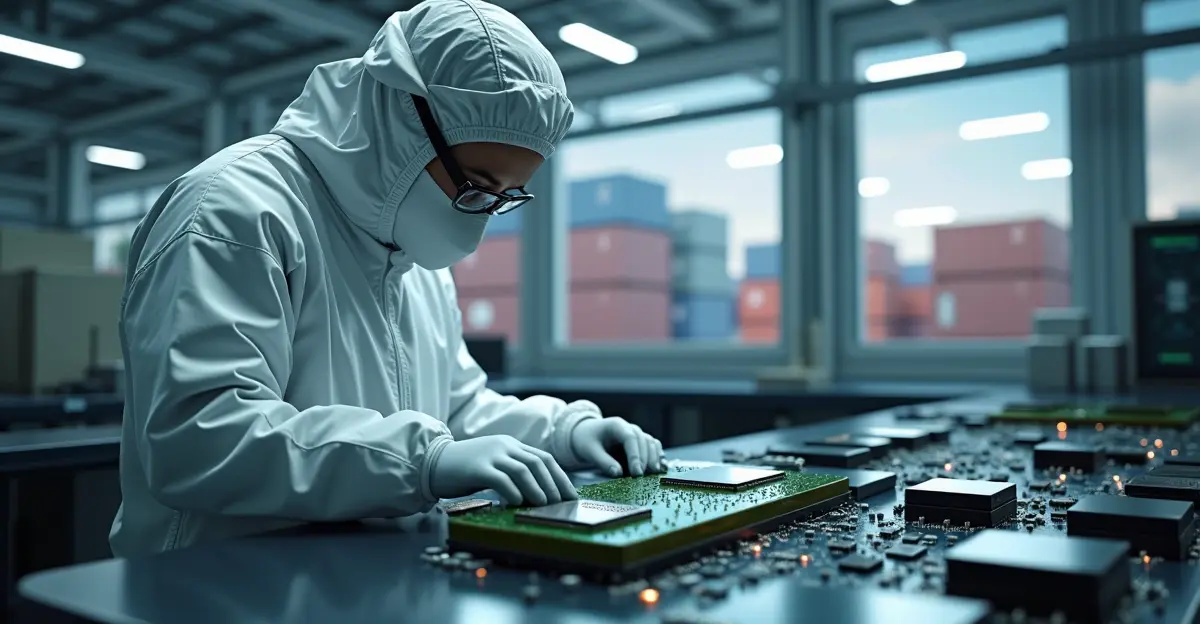
The export controls have created significant challenges for American semiconductor companies. Nvidia, AMD, and other chipmakers have reported substantial revenue impacts from restricted China sales, while simultaneously facing increased competition from China's domestic chip development efforts. However, some analysts argue that these controls may inadvertently accelerate China's technological independence, potentially creating stronger long-term competitors in the global semiconductor market.
China's Countermeasures and Technological Self-Sufficiency
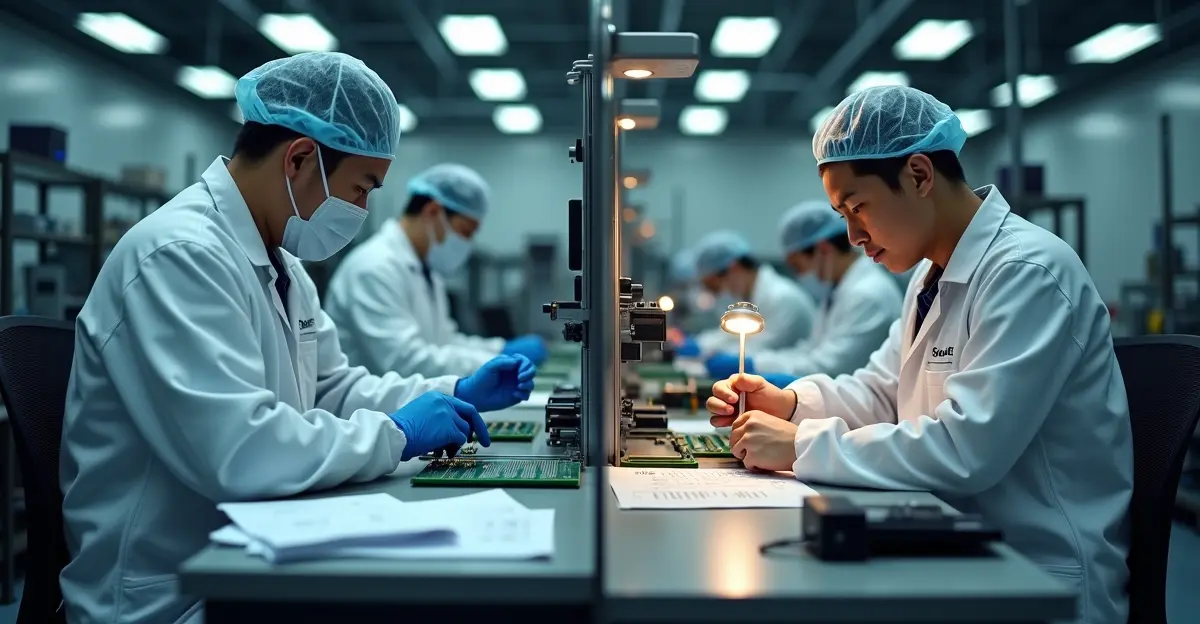
China has responded to US export controls with an aggressive push for semiconductor self-sufficiency. According to industry reports, SMIC has achieved 7nm production and is trialing 5nm chips using DUV lithography instead of restricted EUV equipment. Huawei's HiSilicon division is scaling production of Ascend AI accelerators, with plans to double output to 600,000 units in 2025 and reach 1.6 million by 2026. China's semiconductor equipment self-sufficiency reached 13.6% by 2024, reflecting significant progress in reducing dependence on foreign technology.
China's AI Strategy: Quantity Over Quality?
While individual Chinese chips like Huawei's Ascend series cannot match Nvidia's performance, China compensates by connecting hundreds of chips into high-performance clusters. The CloudMatrix 384 system uses 384 Ascend 910C chips to rival Nvidia's systems, leveraging China's abundant cheap energy from massive investments in solar, wind, and nuclear infrastructure. This approach, supported by government subsidies reducing electricity costs for data centers using domestic chips, represents a distinct technological self-sufficiency efforts pathway that could reshape global AI development patterns.
Geopolitical Consequences: Bifurcating Technology Supply Chains
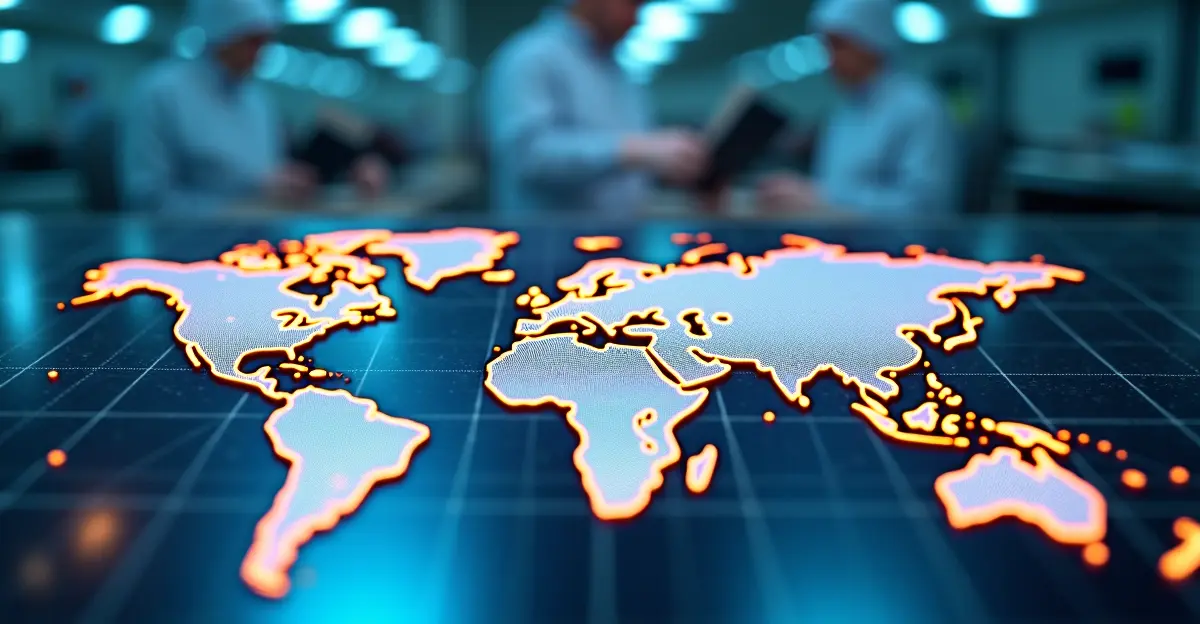
The US export controls are accelerating the bifurcation of global technology supply chains, creating parallel ecosystems with different standards, components, and innovation pathways. This fragmentation has significant implications for global technological cooperation, research collaboration, and market dynamics. According to a RAND Corporation analysis, the US has established a three-tier country system for AI technology diffusion, with Tier 1 (US and 18 key partners) facing no restrictions, Tier 2 (most nations) with controlled access, and Tier 3 (arms-embargoed countries) with continued restrictions.
Impact on Global Innovation Patterns
The bifurcation of technology ecosystems could lead to divergent innovation trajectories, with China focusing on applications optimized for its domestic chips and software stack, while the US and allies advance different technological pathways. This divergence may create compatibility challenges and reduce the global interoperability of AI systems, potentially slowing overall technological progress while increasing geopolitical tensions.
Expert Perspectives on Policy Effectiveness
Experts remain divided on whether current policies effectively achieve their stated objectives. Some analysts argue that the regulations create dangerous precedents, with one Council on Foreign Relations analysis describing the policy as "strategically incoherent and unenforceable." The analysis notes that allowing chips 13 times more powerful than previously permitted while capping exports at 50% of US shipments creates significant enforcement challenges, especially regarding preventing Chinese military access to advanced AI capabilities.
"No policy can simultaneously be permissive, implementable, enforceable, and protective of US national security," the CFR analysis concludes, arguing that the simplest effective policy would be to deny all AI chip exports to China.
Long-Term Effects on Technological Leadership
The long-term implications of US AI export controls extend beyond immediate national security concerns to fundamental questions about technological leadership and innovation ecosystems. While the controls may temporarily slow China's AI advancement, they also incentivize accelerated domestic development that could eventually produce competitive alternatives to US technology. The geopolitical consequences of bifurcating technology supply chains may reshape global technology standards and create parallel innovation ecosystems with different strengths and weaknesses.
FAQ: US AI Export Controls Explained
What are the main goals of US AI export controls?
The primary goals are to prevent China from acquiring advanced AI technologies that could enhance its military capabilities, maintain US technological leadership, and protect national security interests while balancing economic competitiveness.
How have the controls evolved in 2025?
January 2025 saw strengthened restrictions on advanced computing semiconductors, enhanced foundry due diligence requirements, expanded licensing for AI technologies, and intensified enforcement against illegal exports, including a major smuggling case involving $3.9 million in Nvidia chips.
What is China doing to counter these restrictions?
China is aggressively pursuing semiconductor self-sufficiency through domestic chip production (SMIC achieving 7nm), scaling AI accelerator manufacturing (Huawei's Ascend chips), developing alternative technologies using DUV lithography, and creating massive chip clusters to compensate for individual chip performance limitations.
How do export controls affect US semiconductor companies?
US chipmakers face restricted access to China's large market, potential revenue losses, and increased competition from China's domestic development efforts, while also dealing with complex compliance requirements and enforcement risks.
Are the current policies effective?
Expert opinions are divided. Some argue the policies create enforcement challenges and may accelerate China's technological independence, while others believe they are necessary for national security despite economic costs.
Conclusion: Navigating the Technology Competition Landscape
The strategic calculus behind US AI export controls represents one of the most complex policy challenges of our technological era. As January 2025 developments demonstrate, the United States continues to refine its approach, balancing national security imperatives against economic interests in an increasingly bifurcated global technology landscape. The effectiveness of these controls will depend not only on US enforcement capabilities but also on allied cooperation, China's technological responses, and the long-term evolution of global innovation patterns. What remains clear is that the competition for AI dominance will continue to shape geopolitical dynamics and technological development for years to come.


Follow Discussion