


 Deutsch
 English
 Español
 Français
 Nederlands
 Português


 Share
Share




The Strategic Calculus Behind Trump's Semiconductor Export Control Reversal
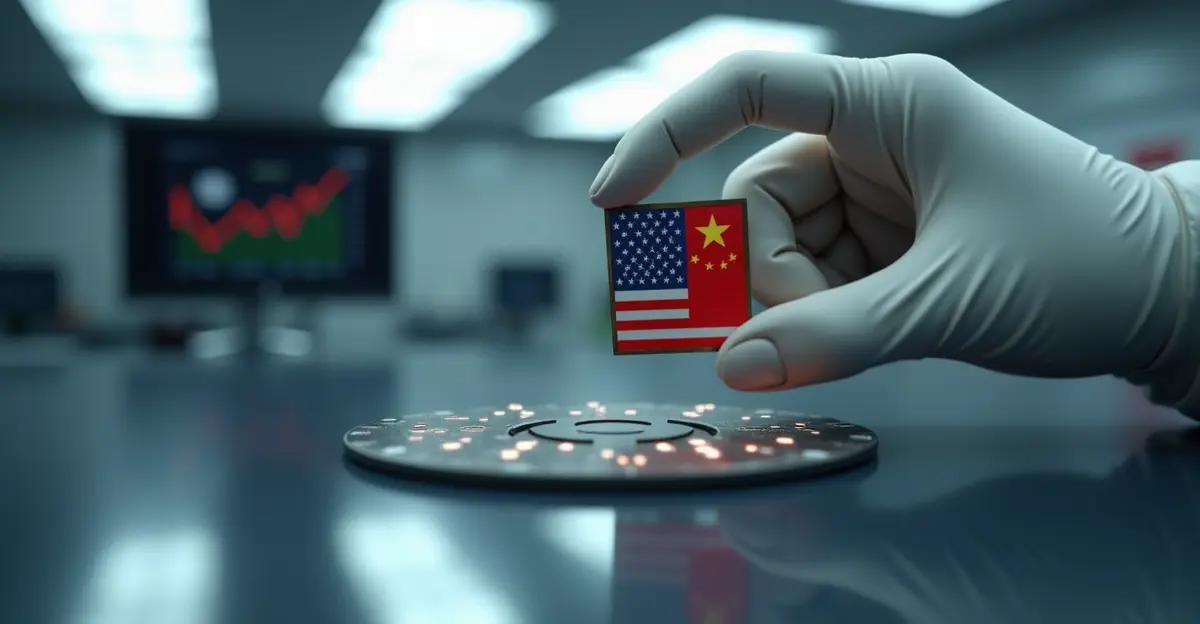
In a dramatic policy shift that has reshaped the global technology landscape, President Donald Trump announced on December 8, 2025, the reversal of advanced semiconductor export controls to China, specifically allowing NVIDIA's H200 AI chips to be sold to approved Chinese customers with a 25% revenue surcharge to the U.S. government. This decision represents a fundamental rethinking of America's approach to technology competition with China, balancing national security concerns against economic realities and evolving assessments of AI development timelines. The policy reversal comes after years of escalating restrictions that began with the Biden administration's 2022 export controls, which aimed to prevent China's military from accessing sensitive semiconductor technology.
What is the Semiconductor Export Control Policy?
Semiconductor export controls are government regulations restricting the sale of advanced computer chips and manufacturing equipment to specific countries, primarily China, due to national security concerns. These controls originated from the 2022 Biden administration policies that targeted China's ability to develop advanced computing and semiconductor manufacturing capabilities. The regulations specifically affected chips with certain performance thresholds, manufacturing equipment below 16/14nm nodes, and items destined for supercomputer or semiconductor development in China. The U.S.-China technology competition has been fundamentally shaped by these controls, creating a bifurcated global semiconductor market.
Geopolitical Factors Driving the Policy Shift
The December 2025 reversal reflects several key geopolitical calculations. First, assessments of AI development timelines have shifted, with many experts noting a plateauing of superintelligence progress. According to the Stanford HAI AI Index 2025 Report, while AI capabilities continue to advance, the exponential growth curve toward artificial general intelligence (AGI) appears to be moderating. This changing assessment has altered the national security calculus, reducing the perceived urgency of maintaining absolute technological superiority.
Second, the policy acknowledges China's progress in developing domestic semiconductor capabilities despite export restrictions. Chinese companies like SMIC have made significant advances, and the previous bans had accelerated China's push for self-sufficiency. As noted in the semiconductor supply chain analysis, complete technological decoupling was proving increasingly difficult and potentially counterproductive.
Economic Pressures on U.S. Semiconductor Firms
The economic rationale for the policy reversal is substantial. According to a November 2025 ITIF report, U.S. semiconductor firms faced potential losses of approximately $77 billion in sales in a full decoupling scenario, with revenue declines already impacting major companies. NVIDIA had reported $5.5 billion in lost revenue from China restrictions, while AMD faced $800 million in declines. These economic pressures created significant lobbying efforts from the semiconductor industry, which argued that export controls were harming American competitiveness and innovation.
The new tariff-based approach represents a compromise: allowing sales while capturing revenue for the U.S. government. The 25% surcharge on H200 chip sales follows previous agreements where NVIDIA and AMD paid 15% of China sales revenue to the government. This approach addresses both economic concerns and national security interests through customer vetting processes.
Strategic Implications for U.S.-China Technology Competition
The policy reversal has immediate implications for the global semiconductor market and U.S.-China relations. By allowing H200 exports while restricting more advanced Blackwell and Rubin architecture chips, the administration maintains a technological gap while addressing economic pressures. This selective approach reflects a more nuanced understanding of the AI development timeline and China's technological capabilities.
Chinese AI companies like ByteDance, Alibaba, and Baidu had been seeking access to H200 chips for training larger language models, as the previously available H20 chips were deliberately limited in capabilities. The policy provides these companies with improved computing resources while maintaining restrictions on the most advanced technologies that could pose greater national security risks.
Evolving Semiconductor Supply Chain Landscape
The December 2025 decision reflects broader shifts in the global semiconductor supply chain. The previous export controls had forced companies to develop "China-compliant" versions of AI chips with capped capabilities and navigate complex regulatory environments. Major manufacturers like TSMC, Samsung, and SK Hynix had lost their Validated End-User status, requiring complex licensing for China operations.
The policy reversal acknowledges the reality of global supply chain interdependence while attempting to maintain strategic advantages. As noted in industry analyses, the bifurcated market created by export controls was becoming increasingly unsustainable, with companies facing significant compliance costs and market fragmentation.
Broader Tensions: Economic Interests vs. National Security
The Trump administration's decision highlights the fundamental tension between economic interests and national security objectives in an increasingly multipolar technological ecosystem. While the Biden-era restrictions prioritized national security through technological containment, the 2025 reversal represents a pragmatic adjustment that acknowledges economic realities.
Experts are divided on the long-term implications. Some warn, as noted in The Atlantic analysis, that this move could eliminate America's compute power advantage and give China a lifeline in the AI race without extracting meaningful concessions. Others argue that the revenue-sharing model and continued restrictions on the most advanced chips represent a balanced approach that supports American jobs while maintaining security through customer vetting.
Expert Perspectives on the Policy Shift
Industry leaders have responded positively to the decision. NVIDIA praised the move, stating it "strikes a balance that supports American jobs and competitiveness while maintaining national security through vetting of approved commercial customers." The announcement followed Trump's recent meeting with NVIDIA CEO Jensen Huang, indicating close consultation with industry stakeholders.
However, national security experts express concern. "This decision threatens America's AI dominance, which currently relies on its monopoly over advanced computer chips," warned one analyst. "While the U.S. leads in AI due to chip superiority, China matches or exceeds America in other AI inputs like engineering talent and data." The policy reflects ongoing debates about the appropriate balance between economic competitiveness and security in the technology regulation framework.
FAQ: Trump's Semiconductor Export Control Reversal
What specific chips are affected by the December 2025 policy change?
The policy allows NVIDIA to export H200 AI chips to China with a 25% revenue surcharge. These chips feature NVIDIA's previous-generation Hopper architecture with 141GB HBM3e memory and 4.8TB/s bandwidth. More advanced Blackwell-based GPUs (B100, B200, GB200) remain fully restricted.
Why did Trump reverse the semiconductor export controls?
The reversal addresses multiple factors: changing assessments of AI development timelines (plateauing superintelligence progress), economic pressures on U.S. semiconductor firms facing billions in lost revenue, China's progress in domestic semiconductor development despite restrictions, and the recognition that complete technological decoupling is increasingly difficult.
How does the 25% surcharge work?
The U.S. government receives 25% of revenue from H200 chip sales to China, continuing Trump's pattern of securing revenue shares from chip sales. This follows previous agreements where NVIDIA and AMD paid 15% of China sales revenue to the government.
What are the national security implications?
Experts are divided. Some argue it maintains security through customer vetting while addressing economic concerns; others warn it could eliminate America's compute power advantage and help Chinese AI firms close the gap with American competitors.
How will this affect global semiconductor markets?
The policy will likely reduce market fragmentation, ease compliance burdens for companies, and provide Chinese AI firms with improved computing resources while maintaining restrictions on the most advanced technologies.
Future Outlook and Conclusion
The December 2025 semiconductor export control reversal represents a significant pivot in U.S. technology policy toward China. By adopting a tariff-based approach rather than outright bans, the Trump administration has created a more nuanced framework that attempts to balance competing interests. The policy acknowledges the reality of global technological interdependence while maintaining strategic advantages through selective restrictions.
As the global semiconductor industry continues to evolve, this decision will likely influence future policy approaches to technology competition. The success of this balanced approach will depend on effective implementation of customer vetting processes, continued monitoring of technological developments, and ongoing assessment of national security risks in the context of economic realities.



Follow Discussion