


 Deutsch
 English
 Español
 Français
 Nederlands
 Português


 Share
Share




U.S. AI Chip Export Policy: From Containment to Monetization Explained
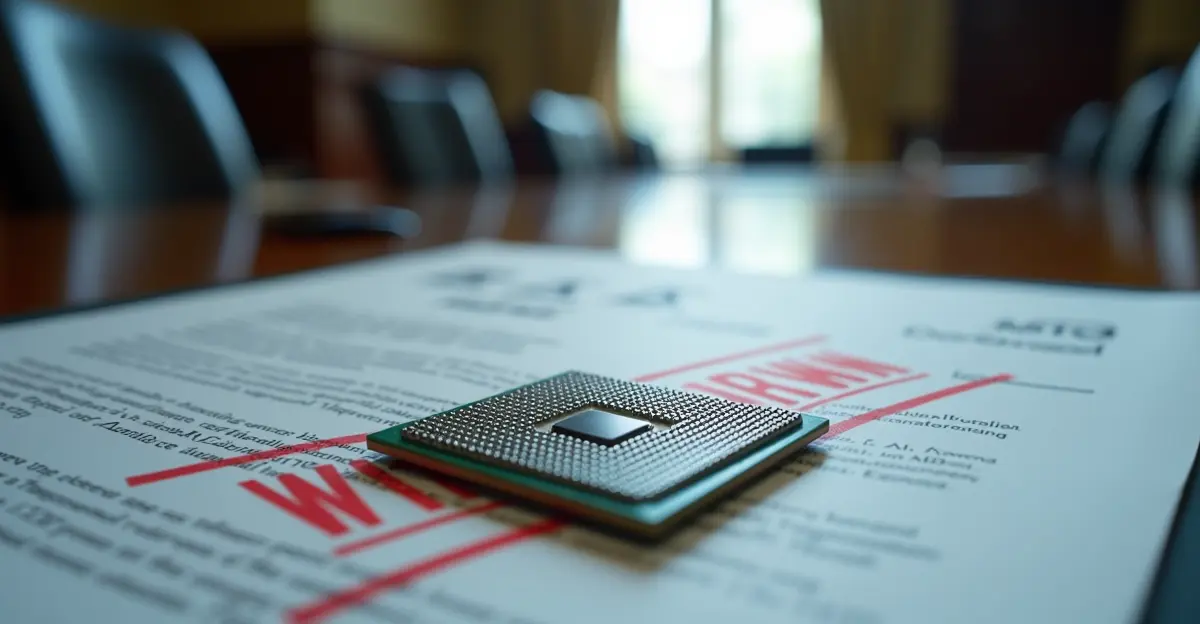
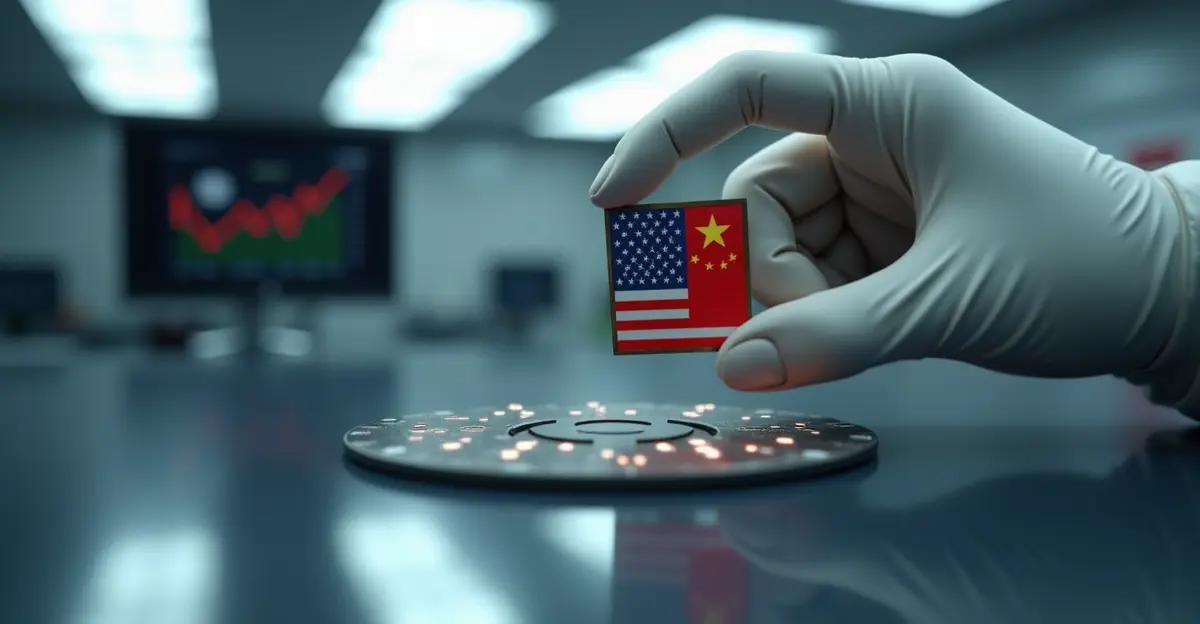
The United States administration's January 2025 policy shift on AI chip exports to China represents a fundamental rethinking of technology export strategy, moving from strict containment to a revenue-sharing monetization model. This strategic pivot allows companies like Nvidia and AMD to resume sales of certain AI processors to China under an unprecedented condition: the U.S. government receives 15% of the revenue from those sales. This development comes at a critical moment in the AI arms race as China continues to advance its domestic semiconductor capabilities despite previous restrictions.
What is the 15% Revenue-Sharing Policy?
The new policy, confirmed by White House officials in January 2025, allows export of downgraded versions of AI processors—Nvidia's H20 and AMD's MI308 chips—after earlier restrictions blocked even these less powerful chips. Under the arrangement, semiconductor companies must pay 15% of their China chip sale revenue to the United States government, potentially yielding over $3 billion from Nvidia's estimated $23 billion in Chinese sales alone. This revenue-sharing deal represents an unconventional approach where corporations are paying the government a share of export revenue, which is not typical practice in export control regimes.
The Effectiveness of Previous Export Controls
Since October 2022, the United States has implemented extensive export controls targeting China's ability to access and develop advanced computing and semiconductor manufacturing items. These controls added certain advanced and high-performance computing chips to the Commerce Control List and expanded license requirements for items destined for supercomputer or semiconductor development in China. However, the effectiveness of these measures has been mixed.
According to Harvard Kennedy School analysis published in July 2025, while U.S. export controls have created challenges for China's AI development, they have also strengthened China's incentive to develop a 'good-enough' domestic AI stack prioritizing controllability over peak performance. The semiconductor export controls have evolved from whether China can buy U.S. AI chips to whether it can rely on the U.S. AI stack as a stable input, pushing Beijing toward greater technological self-reliance.
China's Parallel Semiconductor Progress
Despite international restrictions, China is making significant progress in its semiconductor self-sufficiency drive, achieving breakthroughs in mature and moderately advanced chip technologies. Key developments include SMIC's 7nm and 5nm-class chips using DUV lithography instead of restricted EUV equipment, Huawei's Ascend AI accelerator series with ambitious production targets, and CXMT's advances in memory technology including HBM development. The domestic push is creating a parallel AI ecosystem with Chinese companies like Huawei developing alternatives to Nvidia's CUDA framework.
China aims to achieve 50% self-sufficiency by 2025, though it faces substantial challenges including U.S. export controls, talent gaps, and technological dependencies in advanced processes like lithography. The industry has achieved high self-sufficiency in some production areas (photoresist stripping, cleaning, etching, CMP) but remains reliant on foreign technology for critical processes like metrology and lithography.
Strategic Implications of the Policy Shift
The move from containment to monetization represents a pragmatic adaptation to technological and economic realities. Proponents argue that the previous blanket bans were increasingly ineffective as China developed workaround solutions, while the revenue-sharing model allows the U.S. to benefit financially from continued technological leadership. However, critics warn this turns national security export controls into a revenue generator, with some lawmakers calling it a 'dangerous misuse' that undermines security.
The arrangement is linked to broader trade negotiations with China over rare-earth minerals and resembles previous corporate approval structures that provide financial returns to Washington. While companies regain access to China's $100 billion AI market, the arrangement raises constitutional questions about export taxes and sets a precedent where 'national security has a price.'
Geopolitical Consequences for U.S. Alliances
The policy shift has significant implications for U.S. alliances and technology standards. Key allies like the Netherlands, Germany, South Korea, Japan, and Taiwan control critical chokepoints in the semiconductor supply chain, making unilateral U.S. action insufficient. According to a CSIS report analyzing the legal authority of U.S. allies to implement AI and semiconductor export controls against China, success depends not just on legal authority but also on allies' enforcement capacity and willingness to act.
The global AI governance landscape is becoming increasingly fragmented, with China pursuing a systems-level approach rather than chip-for-chip competition. Huawei is developing the Atlas 900 A3 SuperPoD as a domestic alternative to Nvidia's GB200 NVL72, creating technological bifurcation that impacts global supply chains.
Long-Term Implications for Global AI Governance
The revenue-sharing model could fundamentally reshape global AI governance and technological spheres of influence. As artificial intelligence reshapes global power dynamics, China's strategic investments in AI, including its open-source LLM DeepSeek, are expanding its technological influence and potentially setting future global standards. The U.S. faces a crucial choice between leading AI development or ceding influence to authoritarian actors.
The $15 trillion economic impact of AI by 2030 creates powerful incentives for both cooperation and competition. The U.S.-China technology competition is creating parallel technological ecosystems with different standards, governance models, and ethical frameworks. This bifurcation raises fundamental questions about the future of global innovation and whether technological decoupling will accelerate.
Expert Perspectives on the Policy Shift
Industry analysts and policy experts offer mixed assessments of the revenue-sharing approach. Some see it as a pragmatic recognition that complete technological containment is impossible in a globalized economy, while others view it as a dangerous erosion of national security safeguards. 'This arrangement essentially puts a price tag on national security,' warned one congressional staffer familiar with the negotiations. 'Once you establish that security has a monetary value, you create perverse incentives that could undermine long-term strategic objectives.'
Conversely, trade policy experts note that the revenue-sharing model creates a sustainable funding mechanism for U.S. semiconductor research and development. 'The 15% revenue stream could generate billions for reinvestment in domestic chip manufacturing and AI research,' observed a former Commerce Department official. 'This represents a more sophisticated approach than simple prohibition.'
FAQ: U.S. AI Chip Export Policy Shift
What exactly changed in January 2025?
The U.S. administration shifted from a presumption of denial for AI chip exports to China to a case-by-case licensing approach with a 15% revenue-sharing requirement for approved sales.
Which companies are affected by this policy?
Primarily Nvidia and AMD, though the framework could extend to other semiconductor companies exporting advanced AI chips to China.
How much revenue could this generate for the U.S. government?
Estimates suggest over $3 billion annually from Nvidia's Chinese sales alone, with additional revenue from AMD and potentially other companies.
Does this policy apply to all AI chips?
No, it applies specifically to downgraded versions of advanced processors (Nvidia's H20 and AMD's MI308) that were previously restricted but now allowed under the revenue-sharing arrangement.
What are the national security concerns?
Critics argue that monetizing export controls creates incentives to prioritize revenue over security and could accelerate China's AI capabilities through continued access to advanced chips.
Future Outlook and Conclusion
The January 2025 policy shift represents a significant evolution in U.S. technology export strategy, acknowledging both the limitations of pure containment and the economic realities of global semiconductor markets. As China continues its drive toward semiconductor self-sufficiency, the U.S. faces complex trade-offs between security, economic interests, and technological leadership.
The revenue-sharing model may establish a new paradigm for managing strategic technology exports in an increasingly multipolar world. However, its long-term success will depend on careful implementation, allied coordination, and continuous assessment of its impact on both national security and technological competition. The AI governance frameworks emerging from this period will likely shape global technological standards for decades to come.




Follow Discussion