


 Deutsch
 English
 Español
 Français
 Nederlands
 Português


 Share
Share




The Strategic Shift: How Trump's AI Chip Export Policy Reversal Reshapes US-China Tech Competition
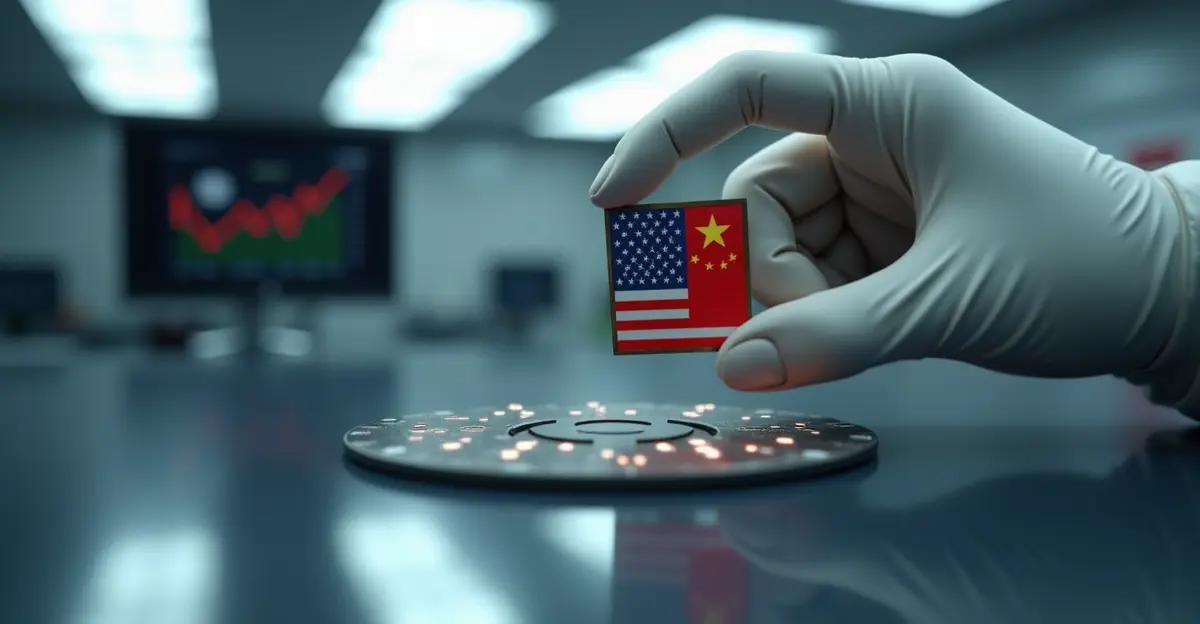
In a dramatic policy reversal that fundamentally transforms the nature of US-China technological competition, the Trump administration has lifted Biden-era export controls on advanced AI chips to China, implementing instead an unprecedented 15% revenue-sharing model. This strategic pivot, announced in July 2025, represents a fundamental reimagining of national security policy, shifting from containment to monetization in the global semiconductor arena. The move allows American chipmakers Nvidia and AMD to resume shipments of their H20 and MI308 processors to China while requiring them to pay 15% of their Chinese revenue directly to the US Treasury, creating what experts call a new era of 'techno-economic statecraft.'
What is the 15% Revenue-Sharing Model?
The 15% revenue-sharing model represents a radical departure from traditional export control regimes. Under this arrangement, Nvidia and AMD can sell their specially-designed AI chips to Chinese customers, but must remit 15% of their revenue from these sales to the US government. According to financial analysts at Bernstein, this could translate to approximately $3.45 billion annually for the US Treasury based on projected $23 billion in 2025 sales for Nvidia's H20 chips alone. The model applies specifically to chips like Nvidia's H20 and AMD's MI308 processors, which are designed to meet Chinese market needs while staying within performance thresholds that address national security concerns.
From Containment to Monetization: A Policy Evolution
The Trump administration's reversal marks a significant evolution from the Biden-era approach established in October 2022. The previous administration implemented comprehensive export controls targeting China's access to advanced computing chips, chip-making equipment, and semiconductor manufacturing technology. These controls were designed to restrict China's military capabilities and technological advancement, representing what many analysts called a 'containment strategy' in the US-China technology war.
The new approach fundamentally changes this dynamic. Rather than prohibiting sales entirely, the administration has created what critics call a 'pay-to-play' system where security concerns are monetized. 'This transforms export controls from national security tools into bargaining chips for economic negotiations,' noted a Fortune analysis of the policy shift. The arrangement maintains a 'green-zone' system where lower-powered chips can flow freely while more advanced GPUs remain restricted, creating a tiered approach to technology exports.
Immediate Market Impact and Industry Response
The policy reversal has immediate consequences for the global semiconductor market. Nvidia, which derives approximately 13% of its revenue from China and serves half of the world's AI developers based there, can now resume shipments that were halted by the April 2025 ban. AMD similarly regains access to a critical market for its MI308 processors. Both companies have reportedly accepted the 15% revenue cut as preferable to complete exclusion from China's vast AI hardware market, though the arrangement significantly impacts their profitability margins.
The semiconductor industry's response has been mixed. While chipmakers welcome renewed market access, concerns persist about the long-term implications. 'While the 15% revenue cut impacts profitability, both companies view it as preferable to complete exclusion from China's vast AI hardware market,' according to ET Edge Insights. The arrangement comes as China continues its push toward domestic semiconductor self-sufficiency by 2027, creating a complex competitive landscape for American chipmakers.
National Security Implications and Legal Questions
The revenue-sharing model has sparked intense debate among national security experts and lawmakers. Critics argue that charging fees doesn't eliminate security risks and may violate the US Constitution's prohibition on export taxes. Some security analysts warn that the approach undermines the integrity of export control regimes by signaling that security principles are negotiable for economic gain.
Legal experts have raised questions about the arrangement's classification. 'The deal has sparked criticism from security experts and lawmakers who argue that charging fees doesn't eliminate security risks and may violate the US Constitution's prohibition on export taxes,' reported the BBC. The unprecedented nature of the revenue-sharing agreement could face WTO challenges and establish concerning precedents for future technology exports.
Global Supply Chain Consequences
The policy shift occurs within a broader context of semiconductor supply chain realignment. The Trump administration has simultaneously pursued aggressive tariff policies, including proposed tariffs ranging from 10% to over 100% on key semiconductor-producing nations like Taiwan, South Korea, and Japan. These measures threaten to increase costs throughout the global supply chain, potentially leading to higher prices for end users in AI, consumer electronics, and automotive sectors.
European allies are closely watching the US policy shift, with concerns that it could encourage similar revenue-sharing arrangements that undermine collective pressure on Beijing. The fragmentation of global technology markets represents a significant challenge for multinational corporations navigating increasingly complex regulatory environments. The semiconductor supply chain resilience has become a critical concern for governments worldwide as they balance economic interests with security considerations.
Strategic Consequences for Technological Sovereignty
The revenue-sharing model represents more than just a policy change—it signals a fundamental rethinking of technological sovereignty in an era of great power competition. By monetizing access to critical technologies, the US is essentially creating a new form of economic leverage in the tech competition with China. This approach could potentially encourage other nations to pursue similar arrangements, transforming global technology trade into a system of revenue-sharing agreements rather than outright restrictions.
The long-term implications for AI development trajectories are profound. China's AI industry remains deeply dependent on American GPUs despite its ambitious domestic production goals. The revenue-sharing arrangement provides China with continued access to vital compute capacity while generating substantial revenue for the US government. This creates a paradoxical situation where the US simultaneously funds its own technological development through Chinese purchases while maintaining some level of control over the technology flow.
Future of Export Control Regimes
The Trump administration's approach could fundamentally reshape international export control frameworks. Traditional multilateral regimes like the Wassenaar Arrangement may face challenges as countries pursue bilateral revenue-sharing deals. The precedent set by the 15% model could encourage other nations to negotiate similar arrangements for critical technologies, potentially fragmenting the global regulatory landscape.
As the artificial intelligence regulation landscape evolves, the revenue-sharing model represents a novel approach to managing technology diffusion. However, experts warn that this approach could undermine the normative foundations of export control regimes that have developed over decades. The balance between economic interests and security concerns has never been more complex, with the revenue-sharing model representing just one approach to navigating this challenging terrain.
FAQ: Understanding the AI Chip Policy Shift
What exactly changed in the AI chip export policy?
The Trump administration reversed the April 2025 ban on AI chip exports to China, replacing it with a 15% revenue-sharing model where Nvidia and AMD pay 15% of their Chinese chip sales revenue to the US Treasury.
Which chips are affected by this policy?
The policy specifically covers Nvidia's H20 processors and AMD's MI308 chips designed for the Chinese market, while maintaining restrictions on more advanced GPUs through a tiered 'green-zone' system.
How much revenue could this generate for the US government?
Based on Bernstein estimates of $23 billion in 2025 sales for Nvidia's H20 chips in China, the 15% revenue share could generate approximately $3.45 billion annually for the US Treasury.
What are the national security concerns with this approach?
Critics argue that monetizing security concerns undermines export control principles and signals that security is negotiable for economic gain, potentially weakening long-term national security.
How does this affect China's semiconductor self-sufficiency goals?
The policy provides China continued access to advanced AI chips while it pursues domestic production targets by 2027, creating complex dependencies and competitive dynamics in the global semiconductor market.
Conclusion: A New Era of Techno-Economic Statecraft
The Trump administration's 15% revenue-sharing model for AI chip exports to China represents a watershed moment in US technology policy. By shifting from containment to monetization, the administration has created a novel approach to managing the complex intersection of national security, economic interests, and technological competition. While the immediate benefits include restored market access for American chipmakers and substantial revenue for the US government, the long-term consequences for global technology governance, supply chain resilience, and strategic competition remain uncertain. As the global semiconductor industry navigates this new landscape, the revenue-sharing model may well become a template for future technology export arrangements in an increasingly fragmented technological world.





Follow Discussion