


 Deutsch
 English
 Español
 Français
 Nederlands
 Português


 Share
Share




What Are the BIS January 2025 Export Controls?
The Bureau of Industry and Security (BIS), a key agency within the U.S. Department of Commerce, implemented sweeping export control updates in mid-January 2025 that represent a significant escalation in technology competition between the United States and China. These comprehensive regulations target artificial intelligence technology, advanced semiconductors, connected vehicles, and biotechnology, establishing new thresholds and restrictions that will reshape global innovation ecosystems. The measures, which took effect between January 13-15, 2025, mark a new phase in technology decoupling and strategic competition, affecting everything from AI model development to automotive supply chains.
Key Regulatory Changes and Their Strategic Implications
AI Technology Controls: The 1026+ Computational Operations Threshold
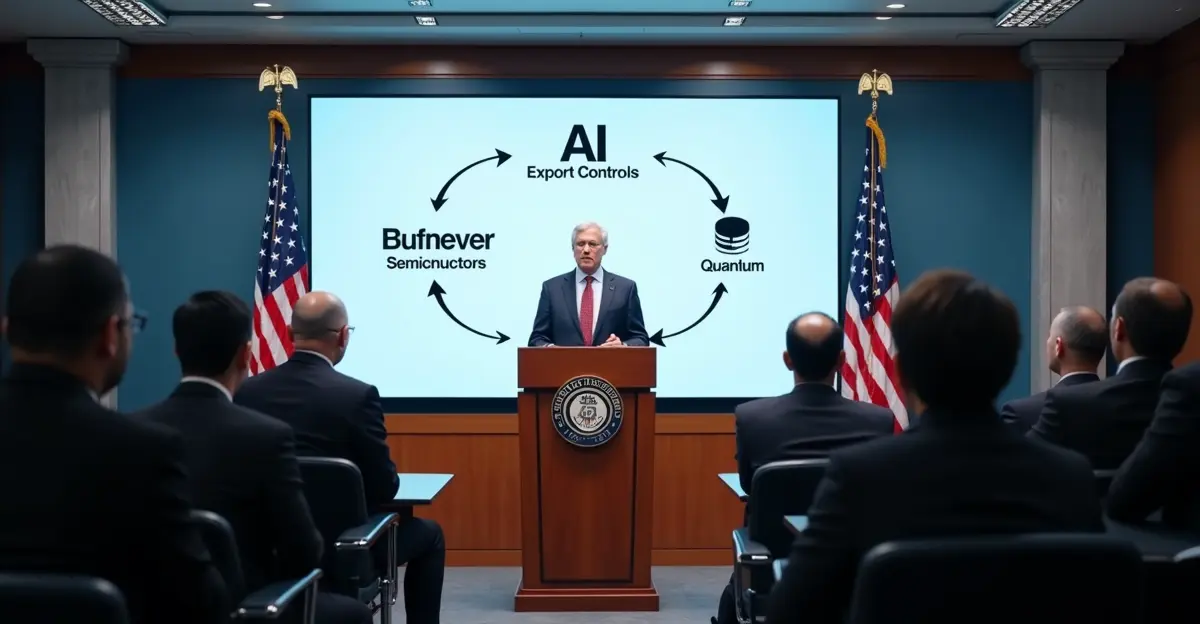
On January 13, 2025, BIS introduced groundbreaking controls on artificial intelligence technology through its 'Framework for Artificial Intelligence Diffusion' rule. The most significant provision establishes that AI models trained with 1026 or more computational operations now require export authorization. This threshold specifically targets the most advanced large language models and AI systems, creating a new regulatory category for cutting-edge AI development. The framework also implements controls on AI model weights—the core parameters that define how AI systems function—and applies the Foreign-Direct Product Rule to prevent circumvention through third countries. According to legal analysis from Sidley Austin, these measures represent "a significant expansion of export controls into the AI domain."
Connected Vehicle Supply Chain Restrictions
On January 14, 2025, the Biden administration announced decisive actions to protect America from national security risks posed by connected vehicle technology from China and Russia. The Department of Commerce issued a final rule prohibiting hardware and software transactions linked to these countries for connected vehicles, with phased implementation starting with Model Year 2027 vehicles. As detailed in a White House fact sheet, the rule targets vehicle connectivity systems including Wi-Fi, Bluetooth, cellular, and satellite communications, as well as automated driving systems. This move addresses concerns about foreign adversary access to connected systems that could enable cyber espionage, data collection, and potential disruption of U.S. critical infrastructure.
Entity List Adjustments: Strategic Partnerships vs. National Security
The January 15, 2025, entity list updates reveal a nuanced approach to balancing national security with strategic partnerships. BIS removed three Indian entities from the list while adding 11 Chinese entities engaged in military and AI advancement activities. This strategic differentiation reflects the U.S. government's effort to strengthen cooperation with India as part of broader Indo-Pacific strategy initiatives while maintaining pressure on Chinese technological development. The entity list, maintained by BIS, imposes additional license requirements and restrictions on exports, reexports, and transfers of items subject to the Export Administration Regulations (EAR) to listed entities.
Advanced Semiconductor Due Diligence Requirements
Also on January 15, BIS enhanced due diligence requirements for advanced semiconductor manufacturing, particularly affecting foundries and packaging companies. These new requirements mandate more rigorous screening of customers and end-uses for sensitive semiconductor technologies. The measures aim to prevent diversion of advanced chips to unauthorized military or surveillance applications, building on previous semiconductor export controls implemented in 2022 and 2023. According to industry experts, these enhanced requirements will particularly impact companies operating in the global semiconductor supply chain that serve both commercial and potential military customers.
Impact on Global Innovation Ecosystems
The January 2025 BIS regulations represent a new phase in technology decoupling that will have profound effects on global innovation ecosystems. By establishing specific computational thresholds for AI models (1026+ operations), the U.S. is creating a regulatory framework that distinguishes between commercial AI development and potentially dangerous advanced capabilities. This approach mirrors earlier strategies in quantum computing regulation but applies them to the rapidly evolving AI sector.
The connected vehicle restrictions, with their phased implementation starting in Model Year 2027, create immediate pressure on automotive manufacturers to reconfigure supply chains away from Chinese and Russian components. This will accelerate existing trends toward regionalization of automotive electronics manufacturing and could spur innovation in alternative sourcing strategies. The biotechnology controls, which regulate high-tech lab instruments like flow cytometers and LC/MS systems for proteomics, represent an expansion of export controls into emerging scientific fields with potential dual-use applications.
Expert Perspectives and Industry Reactions
Industry analysts have noted that these regulations represent a more sophisticated approach to export controls than previous blanket restrictions. "The 1026 computational operations threshold creates a clear line that distinguishes between commercial AI development and potentially dangerous advanced capabilities," noted one technology policy expert. "This is more targeted than previous approaches and reflects lessons learned from semiconductor export controls."
Automotive industry representatives have expressed concern about the connected vehicle restrictions, particularly the timeline for compliance. "The Model Year 2027 implementation date gives manufacturers some runway, but completely reconfiguring supply chains for connectivity systems will be challenging," said an automotive trade association representative. The phased approach—with software restrictions taking effect for Model Year 2027 and hardware restrictions for Model Year 2030—provides some adjustment time but creates uncertainty for long-term planning.
Potential Retaliatory Measures and Global Response
China has already signaled potential retaliatory measures, with state media criticizing the regulations as "unilateral technological hegemony." Analysts expect China to accelerate its indigenous innovation programs in response, potentially through increased funding for domestic semiconductor and AI development. The removal of Indian entities from the entity list while adding Chinese ones may also influence China's diplomatic approach to technology competition in the Global South.
European and Asian allies are closely monitoring these developments, as the extraterritorial application of U.S. export controls affects global supply chains. Some partners may seek exemptions or special licensing arrangements, while others might develop parallel regulatory frameworks. The biotechnology controls, in particular, have raised concerns in the international scientific community about potential impacts on collaborative research.
FAQ: BIS January 2025 Export Controls
What is the 1026 computational operations threshold for AI models?
The BIS January 2025 regulations establish that AI models trained with 1026 or more computational operations require export authorization. This threshold targets the most advanced large language models and AI systems, creating a new regulatory category for cutting-edge AI development.
When do the connected vehicle restrictions take effect?
The connected vehicle restrictions have a phased implementation: software restrictions take effect for Model Year 2027 vehicles, while hardware restrictions apply to Model Year 2030 vehicles. This gives automotive manufacturers time to reconfigure supply chains away from Chinese and Russian components.
Why were Indian entities removed from the entity list while Chinese entities were added?
The entity list adjustments reflect a strategic differentiation: removing Indian entities strengthens U.S.-India cooperation as part of broader Indo-Pacific strategy, while adding Chinese entities maintains pressure on Chinese technological development in military and AI advancement sectors.
How do the advanced semiconductor due diligence requirements work?
The enhanced due diligence requirements mandate more rigorous screening of customers and end-uses for sensitive semiconductor technologies, particularly affecting foundries and packaging companies. These measures aim to prevent diversion of advanced chips to unauthorized military or surveillance applications.
What biotechnology equipment is affected by the new regulations?
The biotechnology controls regulate high-tech lab instruments including flow cytometers and liquid chromatography/mass spectrometry (LC/MS) systems for proteomics research, representing an expansion of export controls into emerging scientific fields with potential dual-use applications.
Conclusion: A New Phase in Technology Competition
The BIS January 2025 export controls represent a sophisticated, multi-faceted approach to managing technology competition in an era of strategic rivalry. By establishing clear thresholds (like the 1026 computational operations for AI), implementing phased restrictions (for connected vehicles), and making strategic entity list adjustments, the U.S. is attempting to balance national security concerns with the realities of global innovation ecosystems. These regulations will accelerate trends toward supply chain regionalization, spur indigenous innovation in affected countries, and reshape the global landscape for AI, semiconductor, and automotive technology development. As the implementation of these controls unfolds throughout 2025 and beyond, their full impact on global tech competition will become clearer, potentially setting precedents for how democratic nations regulate emerging technologies in an age of strategic competition.
Sources
Bureau of Industry and Security, "Framework for Artificial Intelligence Diffusion" (January 15, 2025); White House Fact Sheet on Connected Vehicle Technology (January 14, 2025); Sidley Austin Legal Analysis on AI Export Controls (January 2025); Mayer Brown Analysis on Connected Vehicle Regulations (January 2025); CSIS Technology Competition Initiative; Federal Register Notices (January 2025).


Follow Discussion