


 Deutsch
 English
 Español
 Français
 Nederlands
 Português


 Share
Share




AI Analysis Questions Authenticity of Two Jan van Eyck Paintings
A groundbreaking AI analysis has cast serious doubt on the authenticity of two paintings long attributed to the Flemish master Jan van Eyck. The Swiss company Art Recognition has analyzed two nearly identical versions of Saint Francis of Assisi Receiving the Stigmata—one housed at the Philadelphia Museum of Art and the other at the Musei Reali in Turin—and found strong evidence suggesting neither was painted by van Eyck himself.
Striking Results from AI Analysis
The AI analysis concluded that the Turin version is 86% likely not by van Eyck, while the Philadelphia version shows an even higher 91% probability of being inauthentic. 'The negative result suggests both paintings came from his workshop,' says art historian Noah Charney, who spoke to The Guardian. 'This would mean the original, largely painted by van Eyck, has been lost.'
These findings are particularly significant because Jan van Eyck (c. 1390–1441) is considered one of the most important figures of the Northern Renaissance, with only about 20 paintings universally accepted as his work. The two disputed paintings, both depicting Saint Francis kneeling as he receives Christ's wounds, have been prized possessions of their respective museums for decades.
How AI Authentication Works
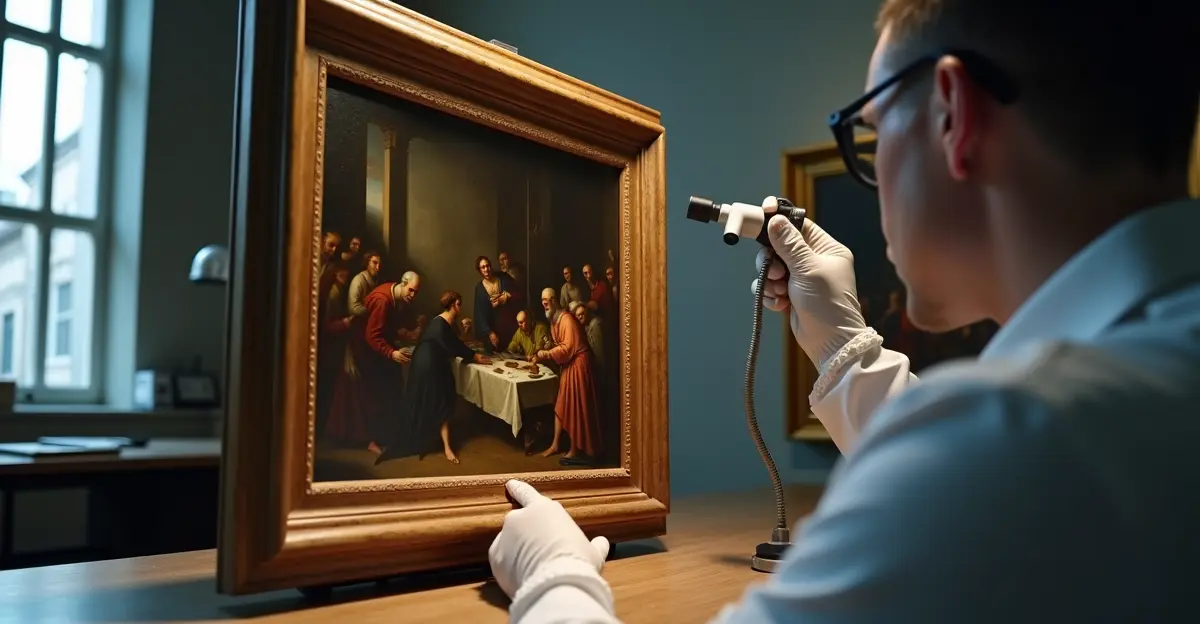
Art Recognition uses sophisticated algorithms trained on verified works by specific artists to detect subtle patterns in brushstrokes, color application, and compositional elements. 'The algorithm responds only to what is visible,' explains Eric Postma, professor of artificial intelligence at Tilburg University and unpaid scientific advisor to Art Recognition. 'All visual structures in the digital reproduction of the painting can be used by the algorithm to recognize the master's hand.'
However, Postma acknowledges limitations: 'You can imagine thinking a part of a painting wasn't painted by, for example, Van Gogh, only to discover it was retouched by someone else. So it's always good to double-check.' This caution is particularly relevant for centuries-old works that may have undergone multiple restorations.
Scholarly Debate and Criticism
The AI findings have sparked controversy among art historians. While some experts see value in the technology, others question its methodology. Leading van Eyck scholar Maximiliaan Martens from Ghent University has raised fundamental concerns, noting that van Eyck's brushstrokes are barely visible even under microscopic examination, making AI detection problematic. Additionally, with only about 25 authenticated van Eyck paintings in existence, the dataset may be too small for reliable AI training.
Critics also point out that the physical condition of paintings and centuries of restoration work could distort AI analysis. 'The challenge is always to get the best of both worlds,' says Postma. 'Where are people good and where are machines good? Machines are excellent at extracting very subtle patterns from paintings that can predict authenticity. But people are better at seeing the broader context.'
Implications for Museums and Art World
For the Philadelphia Museum of Art and Musei Reali in Turin, the AI analysis presents both challenges and opportunities. While the findings don't definitively prove inauthenticity, they strongly suggest the need for further investigation using traditional methods like pigment analysis, dendrochronology (tree-ring dating), and provenance research.
The controversy highlights the growing role of AI in art authentication. Companies like Art Recognition are increasingly being consulted by museums, auction houses, and collectors, though most experts agree AI should complement rather than replace traditional authentication methods. As Postma notes, 'All those things together ultimately determine the judgment.'
This case represents a significant moment in the intersection of technology and art history, raising important questions about how we authenticate cultural heritage in the digital age while respecting centuries of scholarly tradition.




Follow Discussion