


 Deutsch
 English
 Español
 Français
 Nederlands
 Português


 Share
Share




NTSB Confirms Bird Strike as Cause of 2025 Hudson River Helicopter Crash
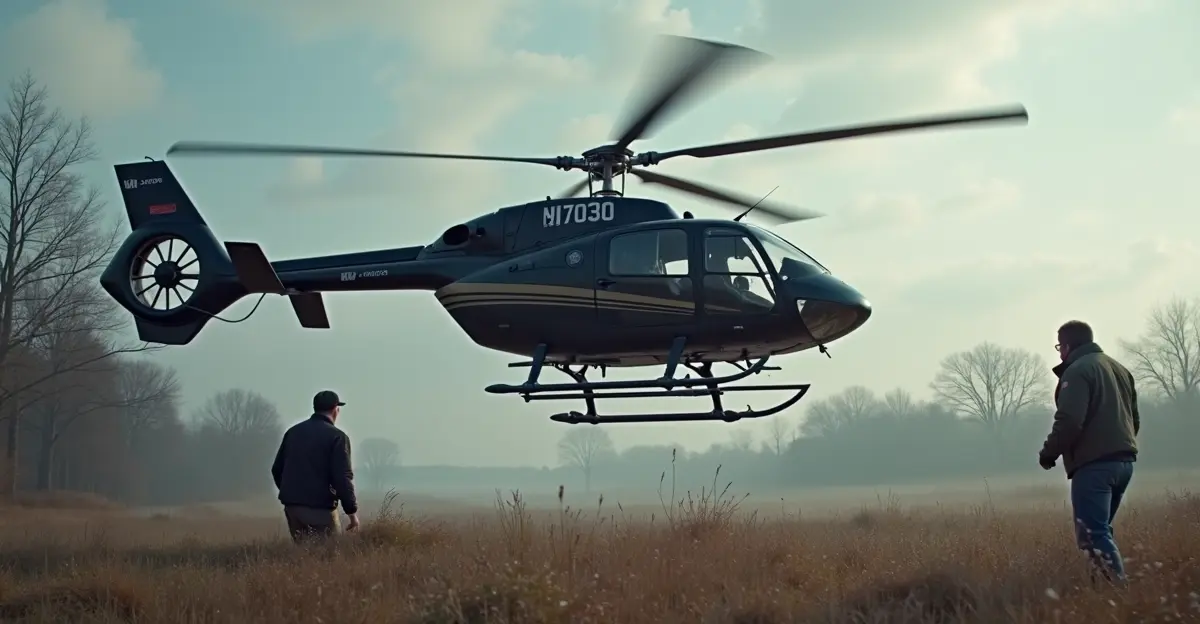
The National Transportation Safety Board (NTSB) has determined that a bird strike most likely caused the deadly tourist helicopter crash into New York's Hudson River in April 2025, which killed all six people on board. Investigators found remains of Canada geese, brant geese, and a great black-backed gull embedded in the wreckage of the Bell 206L-4 helicopter, according to documents released on July 16, 2026.
The crash occurred on April 10, 2025, approximately 17 minutes after the helicopter departed from a heliport in lower Manhattan for a sightseeing tour along the New York City skyline. The victims included pilot Seankese Johnson, 36, a U.S. Navy veteran, and a family of five from Barcelona, Spain: Siemens executive Agustin Escobar, his wife Merce Camprubi Montal, and their three children aged 4, 8, and 10. The family was celebrating the birthday of their middle child.
What Happened During the Crash?
Witnesses reported seeing a large flock of geese suddenly take flight near the Hudson River just before the helicopter began to break apart midair. Surveillance footage captured the aircraft separating into three distinct sections — the fuselage, the main rotor system, and the tail boom — before plummeting upside down into the water. One witness told investigators: 'The geese were large and there were many of them. When I heard a bang against the helicopter, I immediately thought of a bird strike.'
The Smithsonian Institution's Feather Identification Lab analyzed biological samples, known as snarge, recovered from the wreckage. The analysis confirmed the presence of multiple bird species, including the Canada goose, which can weigh up to nine kilograms (20 pounds). A collision with such a bird at typical helicopter cruising speeds generates enormous impact forces, capable of severing rotor blades and destroying critical structural components.
Why Are Helicopters Vulnerable to Bird Strikes?
Helicopters are particularly susceptible to bird strike damage because their rotor systems operate at high speeds and are exposed to impact. Unlike fixed-wing aircraft, helicopters lack the structural redundancy to withstand catastrophic rotor failure. According to FAA regulations, rotorcraft must be designed to ensure continued safe flight after impact with a 2.2-pound bird, but the Canada geese involved in this incident weighed significantly more.
Aviation experts note that low-altitude urban flight corridors, like those used by New York City tour helicopters, overlap with major bird migration routes along the Hudson River. The Hudson River helicopter tour safety debate has intensified since the crash, with New Jersey's governor calling for additional restrictions on nonessential helicopter flights over the waterway.
Could the Crash Have Been Prevented?
The NTSB investigation revealed that a toggle switch for a bird strike prevention light system was missing from the helicopter's overhead panel. However, the system was voluntary for daytime operations, and investigators have not determined whether its presence would have altered the outcome. The pilot, who had 788 flight hours of experience, was cleared of any operational fault. Aviation safety expert John Cox told the Associated Press: 'The pilot likely had no chance to avoid the birds, as they are difficult to predict and pilots cannot always see them in time.'
The crash has prompted renewed scrutiny of the helicopter tourism industry in New York City. The operating company, New York Helicopter Charter Inc. (doing business as New York Helicopter Tours), ceased all operations shortly after the incident, and the FAA suspended its license. Lawmakers in New York and New Jersey have since introduced legislation aimed at enhancing helicopter safety regulations, including potential mandatory bird detection systems and stricter flight path restrictions. Similar to the 2025 Hudson River helicopter crash legislation, advocates are pushing for comprehensive reform.
Impact on Helicopter Tourism and Safety Regulations
The NTSB's findings have reignited calls for a ban or severe restriction on nonessential helicopter flights over New York City. Critics argue that the combination of dense bird populations, low-altitude operations, and the high number of tourist flights creates an unacceptable risk. The NYC helicopter tour ban debate has gained traction among local officials and community groups who have long opposed the noise and safety hazards of sightseeing flights.
New York Governor Kathy Hochul and New Jersey Governor Phil Murphy have both expressed support for enhanced safety measures. A bill introduced in the New York State Legislature would require all commercial helicopter operators to install bird strike avoidance technology and adhere to stricter maintenance protocols. The FAA is also reviewing its certification standards for helicopter bird strike resistance, which have remained largely unchanged since the 1970s.
Frequently Asked Questions
What caused the Hudson River helicopter crash?
The NTSB determined that a bird strike — a collision with a flock of Canada geese, brant geese, and a great black-backed gull — most likely caused the helicopter to break apart midair and crash into the Hudson River.
How many people died in the crash?
All six people on board died: the pilot and a family of five from Spain — parents and their three children aged 4, 8, and 10.
Was the pilot at fault?
No. Aviation experts and the NTSB have indicated that the pilot, Seankese Johnson, was likely unable to avoid the birds due to their sudden appearance and the difficulty of detecting birds at low altitudes.
What species of birds were involved?
The Smithsonian's Feather Identification Lab identified remains from Canada geese, brant geese, and a great black-backed gull on the wreckage.
What safety changes have been proposed since the crash?
Proposed changes include mandatory bird strike avoidance lights, stricter flight path restrictions, enhanced pilot training for wildlife encounters, and a potential ban on nonessential helicopter flights over New York City.
Sources
- NTSB Investigation Report ERA25MA171
- Smithsonian Institution Feather Identification Lab Analysis
- FAA Wildlife Strike Database
- Associated Press reporting on aviation expert John Cox
- New York State Legislative Bill on Helicopter Safety



Follow Discussion