


 Deutsch
 English
 Español
 Français
 Nederlands
 Português


 Share
Share




Deadly Bus Accident in Pakistan Claims 40 Lives
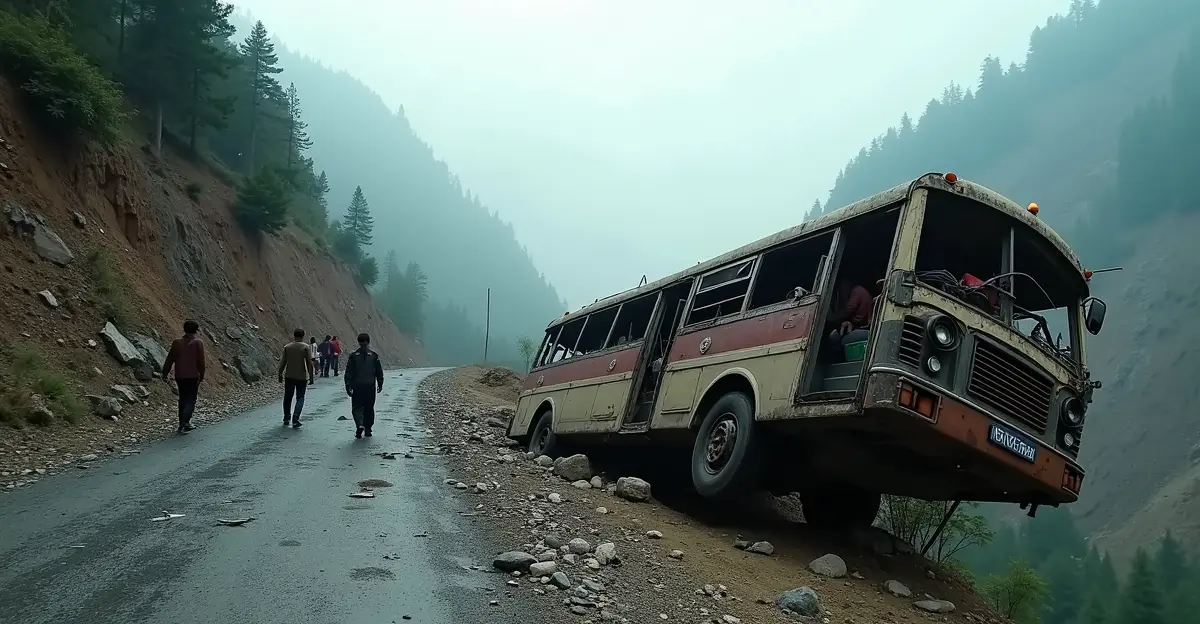
A passenger bus plunged into a rocky ravine in southwestern Pakistan on July 3, 2026, killing at least 40 people and injuring eight others. The overcrowded bus was traveling from Quetta to Peshawar when the driver lost control near the remote area of Dhana Sar, close to the border of Balochistan and Khyber-Pakhtunkhwa provinces. According to local officials, the vehicle was carrying 48 passengers — significantly more than its capacity — after stopping to pick up passengers from a broken-down bus earlier on the route.
This tragic incident underscores the persistent dangers of road travel in Pakistan, where poorly maintained roads, reckless driving, and overloaded vehicles frequently lead to catastrophic accidents.
How the Accident Unfolded
The bus departed Quetta with 36 passengers but became dangerously overloaded when it stopped to assist passengers from another bus that had broken down. Survivors reported that some passengers protested the overcrowding, leading to an argument. According to an injured survivor, a passenger grabbed the driver by the neck, causing him to lose control and veer off the highway. The bus fell approximately 70–80 feet (21–24 meters) into a deep, rocky ravine.
Rescue teams from both Balochistan and Khyber-Pakhtunkhwa provinces rushed to the scene but faced severe challenges due to the rugged mountainous terrain. Using cutters and heavy machinery, they worked for hours to extract victims from the wreckage. The injured were transported to the District Headquarters Hospital in Zhob, while the deceased were taken to nearby morgues for identification.
Official Response and Investigation
Pakistan's President Asif Ali Zardari and Prime Minister Shehbaz Sharif expressed deep condolences to the victims' families and directed authorities to provide full medical care to the injured. Balochistan Chief Minister Sarfraz Bugti ordered an investigation led by the provincial transport secretary to determine the exact cause of the crash. Early reports indicate that speeding and overcrowding were major contributing factors, but a formal inquiry is ongoing.
Khyber-Pakhtunkhwa Chief Minister Sohail Afridi also expressed grief and assured support for the affected families. The Sherani Deputy Commissioner, Hazrat Wali Kakar, confirmed the death toll and praised rescue workers for their efforts under difficult conditions.
This is one of the deadliest road accidents in recent years, and we are doing everything possible to assist the victims and their families. — Hazrat Wali Kakar, Deputy Commissioner of Sherani
Road Safety Crisis in Pakistan
Road accidents are alarmingly common in Pakistan. The World Health Organization estimates approximately 28,000 annual road traffic deaths in the country — roughly five times higher than official reporting, indicating severe under-reporting. The economic cost of road crashes is estimated at $12 billion USD annually, equivalent to 3% of Pakistan's GDP.
Key risk factors include:
- Poor road infrastructure: Many highways, especially in mountainous regions, lack safety barriers, proper signage, and maintenance.
- Reckless driving: Speeding, overtaking on dangerous curves, and driver fatigue are widespread.
- Overcrowding: Buses and vans frequently carry passengers far beyond their capacity.
- Weak enforcement: Traffic laws are poorly enforced, and vehicle inspections are often inadequate.
- Vulnerable road users: Motorcyclists account for 75% of incidents, and pedestrians for 41% of fatalities.
In May 2026, a minibus crashed into a parked bus in northwestern Pakistan, killing 17 people. The recent spike in bus accidents in Pakistan has renewed calls for stricter safety regulations and investment in road improvements.
Impact on Local Communities
The victims were mostly laborers and families traveling to Peshawar for work or to visit relatives. Many families gathered at hospitals in Zhob and Dera Ismail Khan, anxiously awaiting news of their loved ones. The tragedy has left multiple communities in mourning, with local officials announcing compensation for the families of the deceased.
Balochistan, Pakistan's largest but least developed province, suffers from inadequate road networks and limited access to emergency medical services. The lack of road safety infrastructure in Balochistan has been a longstanding concern for human rights groups and transportation experts.
FAQ: Pakistan Bus Accident 2026
How many people died in the Pakistan bus crash?
At least 40 people were killed and eight others injured when a passenger bus plunged into a ravine on July 3, 2026.
Where did the bus accident happen?
The crash occurred in the Dhana Sar area, near the border of Balochistan and Khyber-Pakhtunkhwa provinces in southwestern Pakistan.
What caused the bus to crash?
According to survivor accounts, the bus was overcrowded and speeding. An argument broke out when a passenger grabbed the driver's neck, causing him to lose control and fall into the ravine. An official investigation is underway.
How common are road accidents in Pakistan?
Road accidents are very common. The WHO estimates 28,000 annual road traffic deaths in Pakistan, with poor roads, reckless driving, and weak enforcement as major causes.
What is being done to improve road safety?
The government has announced an investigation into this incident. Experts recommend investing $550 million annually in road improvements, which could save approximately 9,000 lives per year. Stricter enforcement of traffic laws and vehicle inspections are also urgently needed.
Sources
- Associated Press (AP)
- Al Jazeera
- Dawn News
- CBS News
- World Health Organization (WHO)
- Asian Transport Observatory


Follow Discussion