


 Deutsch
 English
 Español
 Français
 Nederlands
 Português


 Share
Share




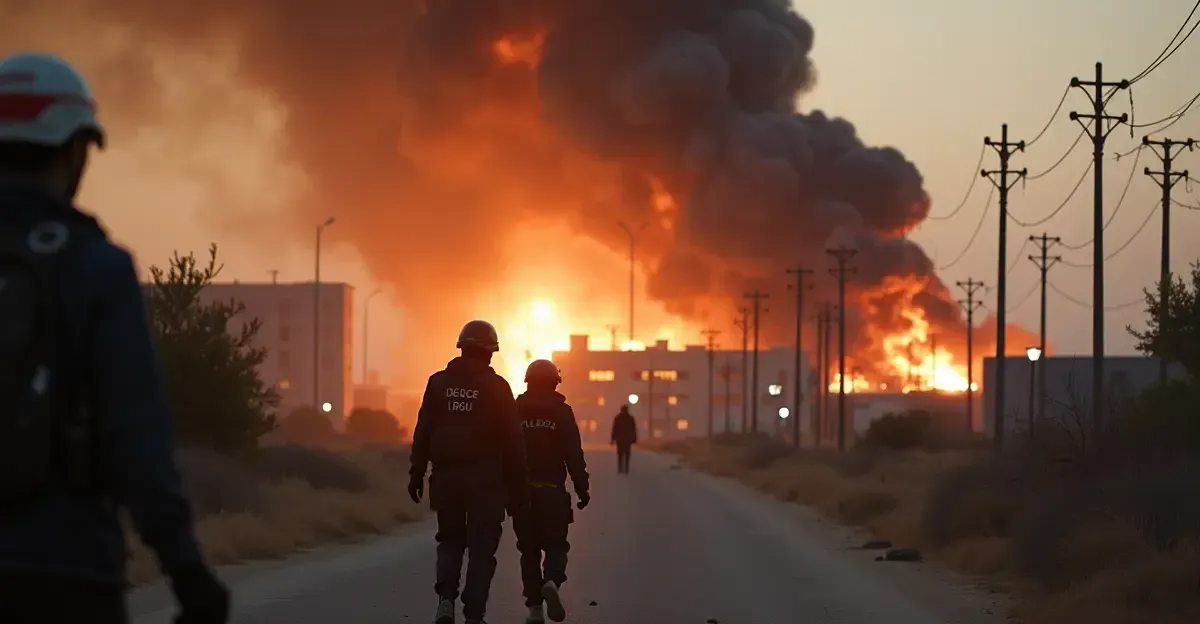
At least 35 civilians were killed and dozens wounded when the Sudanese army launched a drone strike on a civil court in North Darfur on Sunday, in what rights groups are calling a grave breach of international humanitarian law. The attack on the court in Al‑Zawiya Gara village, an area controlled by the paramilitary Rapid Support Forces (RSF), is the latest mass‑casualty incident in a war that has already claimed at least 59,000 lives and triggered the world’s largest humanitarian crisis.
What Happened in the Darfur Court Attack?
According to the independent monitoring group Emergency Lawyers, Sudanese army drones struck the headquarters of the traditional civil court around 1:00 pm local time while a court session was in progress. The group, which documents atrocities committed by all sides in the conflict, said the strike killed 35 people and injured many others. In a statement posted on X (formerly Twitter), Emergency Lawyers condemned the targeting of a civilian facility that “fulfils a judicial and social role in the region” and called for an immediate investigation.
“Directing attacks against civilians and civilian objects constitutes a grave violation of international humanitarian law,” the statement read. The Sudanese army did not respond to requests for comment. The attack on civilian infrastructure has drawn comparisons to other recent incidents in which markets, health facilities and residential areas were struck.
Drone Warfare: The Deadly Signature of Sudan’s Civil War
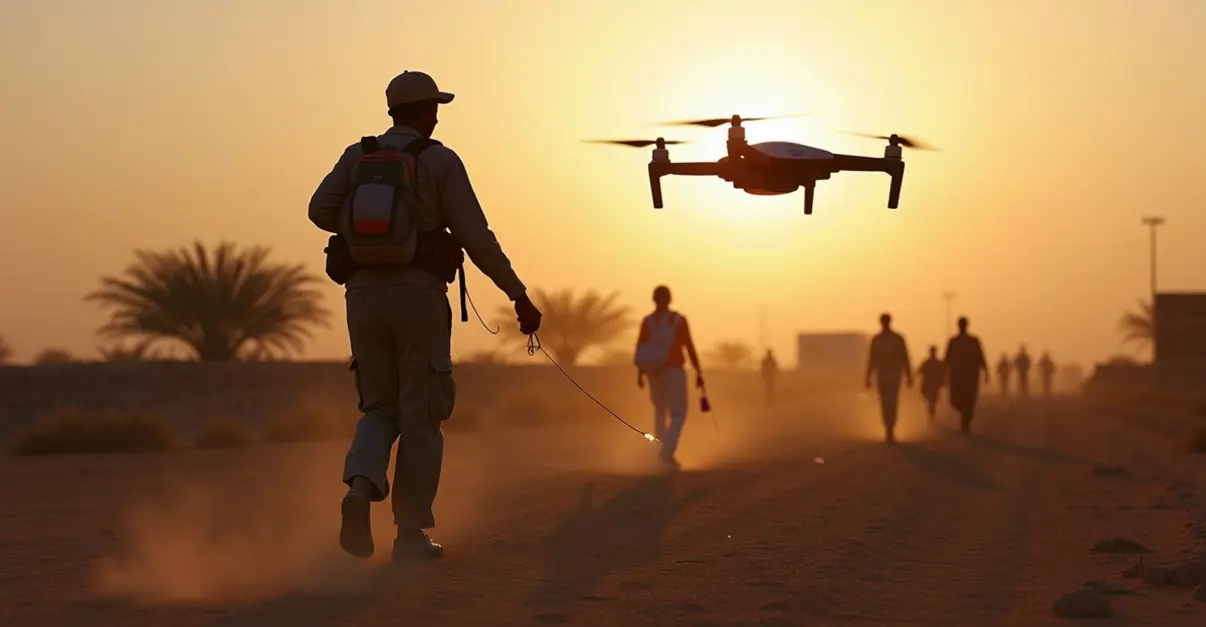
Drone strikes have become the leading cause of death in Sudan’s three‑year‑old conflict. United Nations data shows that in the first four months of 2026 alone, drones were responsible for 80 percent of all documented civilian deaths – more than 880 fatalities, according to the UN Human Rights Office. Children have been particularly vulnerable: 245 child casualties were recorded in the first 90 days of the year, 78 percent of them caused by drones.
Both the Sudanese Armed Forces (SAF) and the RSF have weaponised cheap, commercially available drones, turning them into precision strike tools. Analysts at the Centre for Information, Strategy and Emergency Studies (CISES) note that the geography of drone warfare is expanding rapidly – from traditional battlefields in Kordofan and Darfur to new fronts in Blue Nile, White Nile and the Khartoum suburbs. “Civilian exposure is the central concern,” a recent CISES report warned, pointing to at least 28 market attacks and 12 health‑facility strikes in the first quarter of 2026. The escalation of drone warfare is reshaping the conflict’s tempo and its humanitarian consequences.
Strategic Battles: The Fight for El Obeid
While the drone attack in North Darfur grabbed headlines, the ground war remains focused on El Obeid, a strategic city that sits on the key supply route between Khartoum and Darfur. For months the RSF had El Obeid surrounded on three sides, choking off food, water and medical supplies. Last week, however, the Sudanese army recaptured the Al Sadarat highway, reopening a direct supply corridor for the first time in months. The breakthrough allows troops, fuel and humanitarian aid to reach the city more quickly and complicates the RSF’s push towards El Obeid.
Nevertheless, the humanitarian situation in the city remains dire. RSF drone strikes continue to target civilian areas, and aid organisations warn that the partial lifting of the siege has not yet translated into meaningful relief for the population. The battle for strategic cities like El Obeid underscores how military gains rarely translate into immediate humanitarian dividends in this protracted war.
Humanitarian Catastrophe: Famine and Displacement
The UN and humanitarian groups describe Sudan’s crisis as the worst in the world. More than 33.7 million people – two‑thirds of the population – need life‑saving assistance. Some 9.5 million are internally displaced, and 29 million face severe food shortages. In 2025, the Integrated Food Security Phase Classification (IPC) officially declared famine in several parts of the country. Aid organisations say the true death toll from the war is likely far higher than the confirmed figure of 59,000 because many areas remain inaccessible to monitors.
FAQ
What caused the war in Sudan?
The conflict erupted in April 2023 after a power struggle between the Sudanese Armed Forces, led by General Abdel Fattah al‑Burhan, and the paramilitary Rapid Support Forces, commanded by Mohamed Hamdan Dagalo (Hemedti). The two factions had jointly staged a coup in 2021 but fell out over plans to integrate the RSF into the regular army.
Why are drones causing so many civilian deaths?
Both sides have deployed cheap commercial drones fitted with explosives. These drones are hard to intercept and are often used against populated areas, markets and infrastructure. The UN says drones accounted for 80 percent of civilian deaths in the first four months of 2026.
What is the humanitarian situation in Sudan today?
Sudan is experiencing the world’s largest humanitarian crisis. Over 33 million people need aid, 9.5 million are displaced, and famine has been declared in multiple regions. Food, water, medicine and fuel are scarce, and the health system has largely collapsed.
Has anyone been held accountable for war crimes in Sudan?
Despite extensive documentation by groups like Emergency Lawyers and the UN, no senior military or RSF commander has been held accountable. The International Criminal Court is investigating alleged war crimes and crimes against humanity, but progress is slow.
How can I help people affected by the Sudan crisis?
Reputable organisations such as the International Committee of the Red Cross, Médecins Sans Frontières (Doctors Without Borders), and the UN World Food Programme are providing emergency relief. Donations to these groups help deliver food, medical care and shelter to those displaced by the conflict.

Follow Discussion