


 Deutsch
 English
 Español
 Français
 Nederlands
 Português


 Share
Share




The United States military has conducted a new wave of airstrikes on suspected drug smuggling vessels in the eastern Pacific Ocean, killing six people over a three-day period. The latest attack, carried out on June 21, 2026, left two dead and six survivors, according to U.S. Southern Command. This brings the total number of people killed in the campaign since September 2025 to more than 210, with over 60 strikes conducted.
Background: The Escalating Campaign
Since the Trump administration declared an "armed conflict" with Latin American drug cartels in September 2025, the U.S. military has aggressively targeted vessels suspected of transporting narcotics in the Caribbean Sea and the eastern Pacific Ocean. The campaign, led by U.S. Southern Command (USSOUTHCOM), relies on intelligence claims that the boats are operating on known drug smuggling routes. However, the U.S. has not publicly provided evidence that the vessels were carrying drugs at the time of the attacks. This has drawn sharp criticism from human rights organizations and legal experts, who argue the strikes may constitute extrajudicial executions under international law.
The US Southern Command airstrikes have become a cornerstone of the administration's broader strategy to combat drug trafficking, which also includes the deployment of military forces to Latin America under the Shield of the Americas coalition.
Details of the Latest Strikes
June 21 Attack
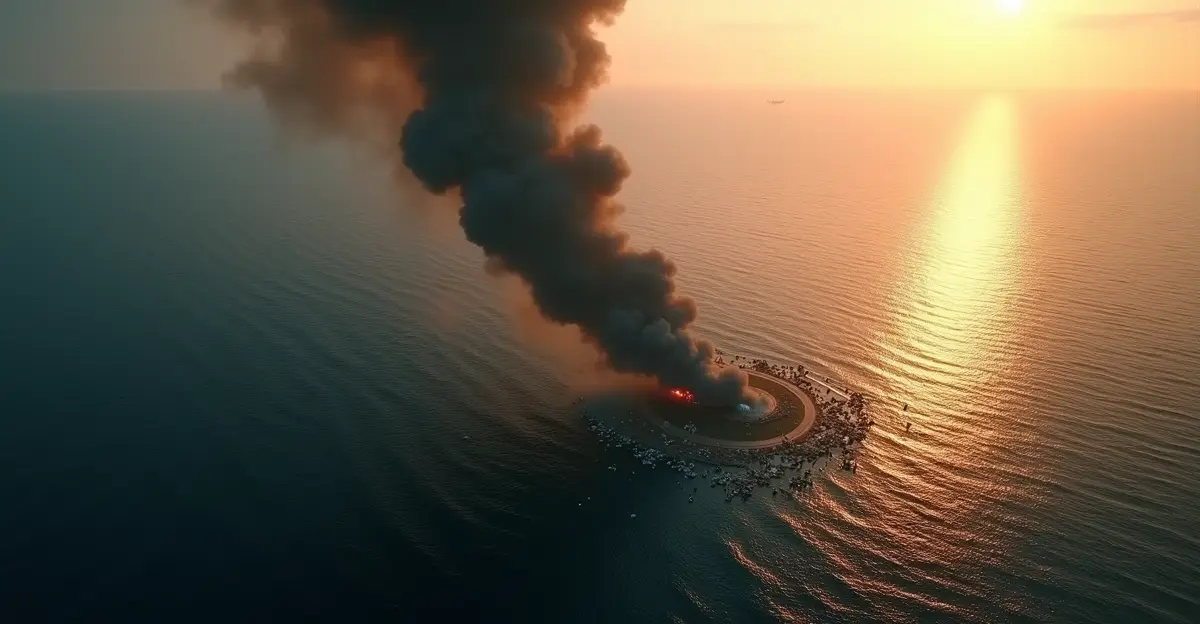
On June 21, a U.S. airstrike targeted a boat in the eastern Pacific, killing two men and leaving six survivors. USSOUTHCOM released footage of the attack on social media, showing the vessel being struck and exploding. The fate of the survivors remains unknown. The military stated that the boat was on a "known drug trafficking route" but did not provide any evidence of contraband onboard.
Earlier Attacks This Week
Earlier in the week, the U.S. carried out two additional strikes. On June 18, an attack killed three people, and on June 16, one person was killed and two survived. These attacks have pushed the total death toll above 210 since the campaign began, according to the Associated Press. The U.S. has not released the identities of any of the victims.
Legal and Human Rights Concerns
Human Rights Watch (HRW) and Amnesty International have repeatedly condemned the strikes, calling them unlawful. In a March 2026 report, HRW stated that the U.S. campaign amounts to "a sustained pattern of unlawful use of force" and "extrajudicial executions." The organization argues that since the U.S. is not in an armed conflict with drug cartels under international humanitarian law, lethal force is only justified when strictly necessary to protect life. The groups have called for an immediate halt to the strikes and a congressional investigation.
Legal experts have also raised concerns about "double-tap" strikes, where survivors of an initial attack are targeted in a follow-up strike. In one incident, lawmakers questioned whether such tactics constitute a war crime. The Pentagon's watchdog is reviewing whether proper targeting frameworks were followed, but not the legality of the strikes themselves.
The controversy over US drug boat strikes has intensified as the death toll continues to climb without public accountability.
Trump Administration's Stance
President Trump has defended the campaign, stating that the U.S. is in a "war" with drug cartels. In a recent post on Truth Social, Trump claimed that U.S. forces had killed the leader of a major Venezuelan drug gang, Niño Guerrero, in a coordinated operation with Venezuelan authorities. No details were provided about the operation, and the Venezuelan government confirmed the attack occurred in the state of Bolívar. Trump has framed the maritime strikes as part of a broader effort to dismantle cartel networks that funnel fentanyl and other drugs into the United States.
Impact and Implications
The escalating death toll and lack of transparency have strained relations with Latin American countries. Mexico, in particular, has expressed concern over U.S. military operations in the region. Critics argue that the strikes are ineffective, noting that the majority of fentanyl enters the U.S. through land borders, not by sea. The US-Mexico relations under Trump have been further complicated by these unilateral military actions.
Meanwhile, the U.S. continues to release dramatic footage of the strikes on social media, which the administration uses to project strength. However, human rights advocates warn that the campaign is setting a dangerous precedent for the use of lethal force outside of traditional armed conflict.
Frequently Asked Questions
What is the U.S. military's justification for these strikes?
The U.S. claims the strikes target drug trafficking vessels on known smuggling routes, citing intelligence that the boats are operated by designated terrorist organizations. However, no physical evidence of drugs has been publicly provided.
Are these strikes legal under international law?
Human rights organizations argue they are unlawful. Since there is no armed conflict between the U.S. and drug cartels, lethal force is only permissible when strictly necessary to protect life. Critics say the strikes amount to extrajudicial executions.
How many people have been killed in this campaign?
As of June 22, 2026, more than 210 people have been killed in over 60 strikes since September 2025.
Why are human rights groups concerned?
Groups like Human Rights Watch and Amnesty International say the U.S. has not demonstrated that the targeted individuals posed an imminent threat, and that non-lethal alternatives such as interdiction were not attempted. They also criticize the lack of transparency about victims' identities.
What is the Shield of the Americas coalition?
Formed in March 2026, the Shield of the Americas (officially the Americas Counter-Cartel Coalition) is a multinational military alliance led by the U.S. to combat drug cartels across the Western Hemisphere.
Follow Discussion