


 Deutsch
 English
 Español
 Français
 Nederlands
 Português


 Share
Share




The US-China trade war entered its eighth year in mid-2026 with effective US tariffs on Chinese imports averaging around 33 percent and electric vehicle rates exceeding 145 percent, yet a paradoxical dual-track dynamic now defines the conflict. A May 2026 Board of Trade agreement aims to cut tariffs on $30 billion in non-strategic goods, while the Office of the United States Trade Representative (USTR) simultaneously launches new Section 301 investigations into structural overcapacity across 16 economies and probes targeting Vietnam. This is the story of how multinational firms are navigating the tension between selective détente and systemic decoupling—and why tariff decoupling may have hit a ceiling.
What Is the May 2026 US-China Board of Trade Agreement?
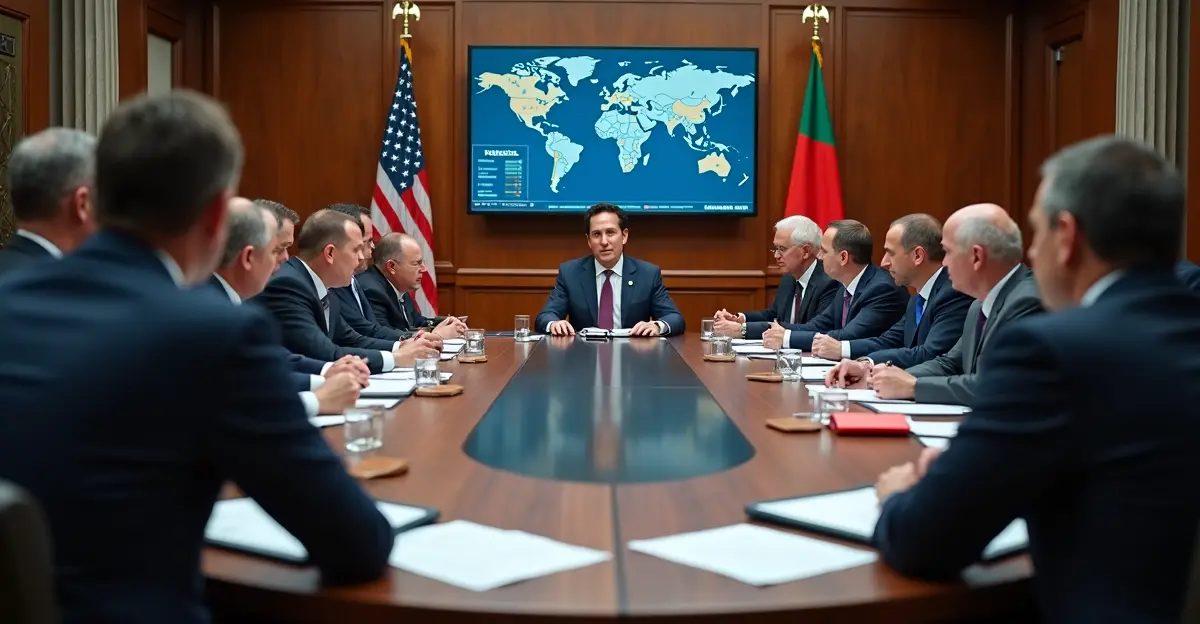
Announced during President Donald Trump's historic May 2026 visit to Beijing, the U.S.-China Board of Trade is a permanent bilateral institution designed to manage tariff reductions on non-strategic goods. According to the White House fact sheet, the deal establishes both a Board of Trade and a Board of Investment, with China committing to purchase at least $17 billion per year in U.S. agricultural products through 2028 and 200 Boeing aircraft. The tariff framework covers household appliances, textiles, footwear, toys, agricultural goods and fireworks—while semiconductors, new energy batteries and critical minerals remain excluded. USTR has advanced a reciprocal tariff reduction plan covering roughly $30 billion of Chinese imports; public comments closed in July 2026, and a final list is expected between August and September 2026. The US-China trade agreement 2026 thus creates a pressure valve for consumer goods without touching strategic sectors.
Why Tariff Decoupling Has Hit a Ceiling
Despite eight years of escalation, the effective tariff rate has plateaued. The blended effective US tariff on Chinese goods is around 33 percent, according to the PIIE tariff tracker, down from a brief 145 percent headline rate after the November 2025 truce. The reason is structural: China remains embedded in global supply chains for components, rare earths and intermediate goods that the U.S. cannot easily replace. As the China plus one strategy shows, low-margin assembly has shifted to Vietnam and India, but critical inputs still flow through China. This interdependence sets a natural ceiling on decoupling. According to CCA IM tariff analysis, combined tariff layers on Chinese goods range from 33% to 37.5%, but the weighted average is around 21.6%—reflecting carve-outs for non-strategic goods.
The Vietnam Problem: From China Plus One to Vietnam Plus One
Vietnam emerged as the most popular China Plus One destination, but U.S. scrutiny is now redirecting the playbook. On May 29, 2026, USTR Jamieson Greer announced a Section 301 investigation into Vietnam's intellectual property practices, following Vietnam's designation as a Priority Foreign Country. Greer said: IP infringement continues to impair U.S. innovators and creators, urging sustained, deterrent enforcement. This comes on top of USTR's March 11, 2026 investigations into structural excess capacity in manufacturing covering 16 economies, including Vietnam, Malaysia, Thailand, Cambodia and Mexico, as detailed in the USTR overcapacity notice.
The result is a 'Vietnam Plus One' pattern: companies already in Vietnam are hedging again, adding capacity in India, Indonesia or Mexico as U.S. rules-of-origin verification tightens around transshipment of Chinese content. Industry data shows northern Vietnam's Tier-1 industrial vacancy below 3 percent, pushing costs higher. The Vietnam tariffs Section 301 probe signals that Southeast Asian alternatives are no longer automatic safe harbors, accelerating a broader global supply chain realignment.
Sector Impact: Winners and Losers Under the New Tariff Architecture
| Sector | Tariff Status (mid-2026) | Corporate Response |
|---|---|---|
| Household appliances, textiles, toys | Eligible for $30B reciprocal cuts; replacement tariffs capped at 20% | Partial reshoring, tariff engineering |
| EVs, batteries, solar | Rates exceed 145% | Mexico and India diversification |
| Semiconductors & critical minerals | Excluded from tariff cuts; forced-labor and overcapacity probes | Friend-shoring, dual sourcing |
| Vietnam electronics & apparel | Facing IP and transshipment scrutiny | Vietnam Plus One hedging |
Expert Perspectives and Corporate Strategy
Trade analysts describe the moment as 'limited easing plus systemic decoupling.' USTR Greer, announcing the overcapacity probes on March 11, 2026, declared: The United States will no longer sacrifice its industrial base. Multinationals are now building 'China Plus One Plus One' supply chains, adding redundancy rather than fully exiting China. This strategic shift is captured in the 2026 tariff strategy playbooks now circulating among corporate boards.
FAQ
What is the average US tariff on Chinese goods in 2026?
The blended effective tariff is around 33 percent, according to the PIIE tracker, though sectors like EVs, batteries and solar exceed 145 percent.
What is the May 2026 US-China Board of Trade?
It is a permanent bilateral institution created during President Trump's May 2026 Beijing visit to manage reciprocal tariff cuts on roughly $30 billion in non-strategic goods, alongside a Board of Investment.
Why is Vietnam now under US trade scrutiny?
Vietnam faces a new Section 301 intellectual property investigation announced May 29, 2026, plus inclusion in the 16-economy overcapacity probe, amid U.S. concerns over transshipment of Chinese content.
How are multinational firms restructuring supply chains in 2026?
Firms are adopting a China Plus One Plus One model, hedging Vietnam exposure with additional capacity in India, Indonesia and Mexico rather than fully exiting China.
Will the US-China trade war fully decouple?
Unlikely in the near term. Interdependence in components, rare earths and intermediate goods sets a natural ceiling on tariff decoupling, even as enforcement broadens.
Conclusion: Future Outlook
Tariff decoupling has hit a ceiling not because political will has softened, but because economic reality imposes limits. The Board of Trade creates a pressure valve for consumer goods, while Section 301 probes extend enforcement to 16 economies. For corporate strategists, the 2026 playbook is no longer 'China or not China'—it is managing tariff exposure across a shifting matrix of rules, origins and enforcement. The next 12 months will reveal whether selective détente can coexist with systemic decoupling without fragmenting global trade architecture.




Follow Discussion