


 Deutsch
 English
 Español
 Français
 Nederlands
 Português


 Share
Share




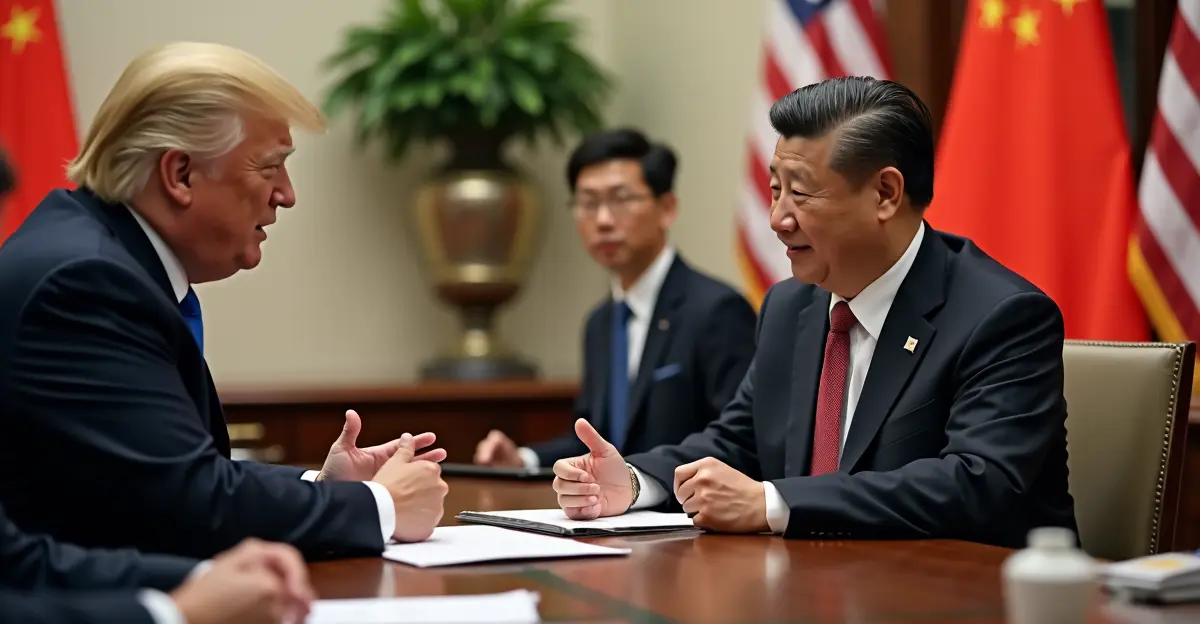
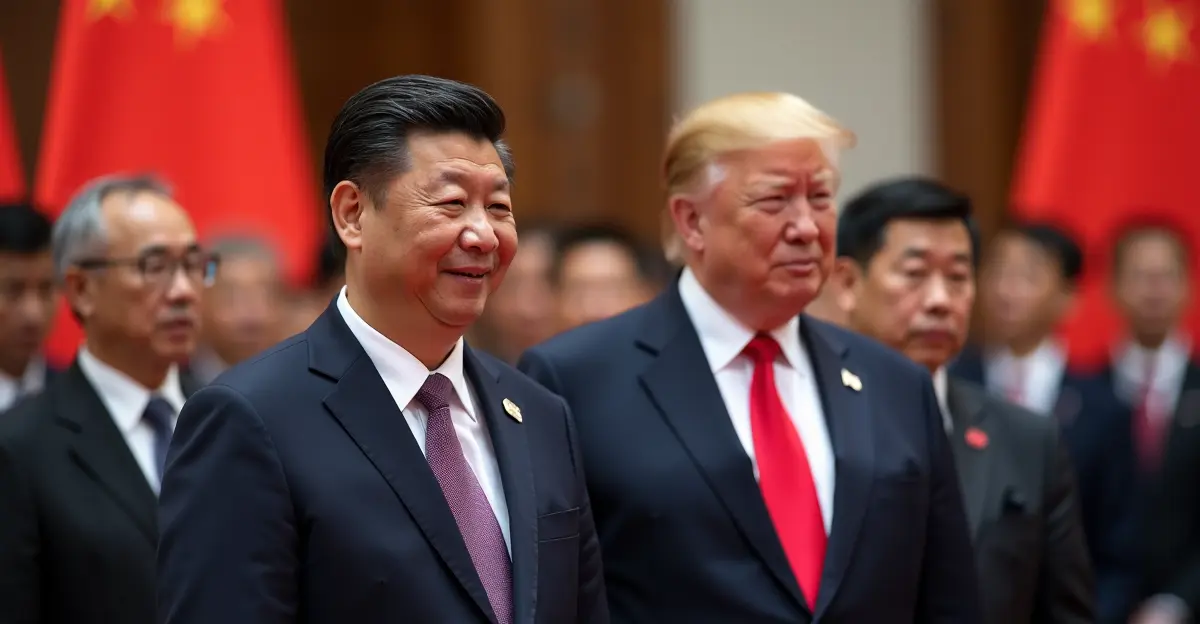
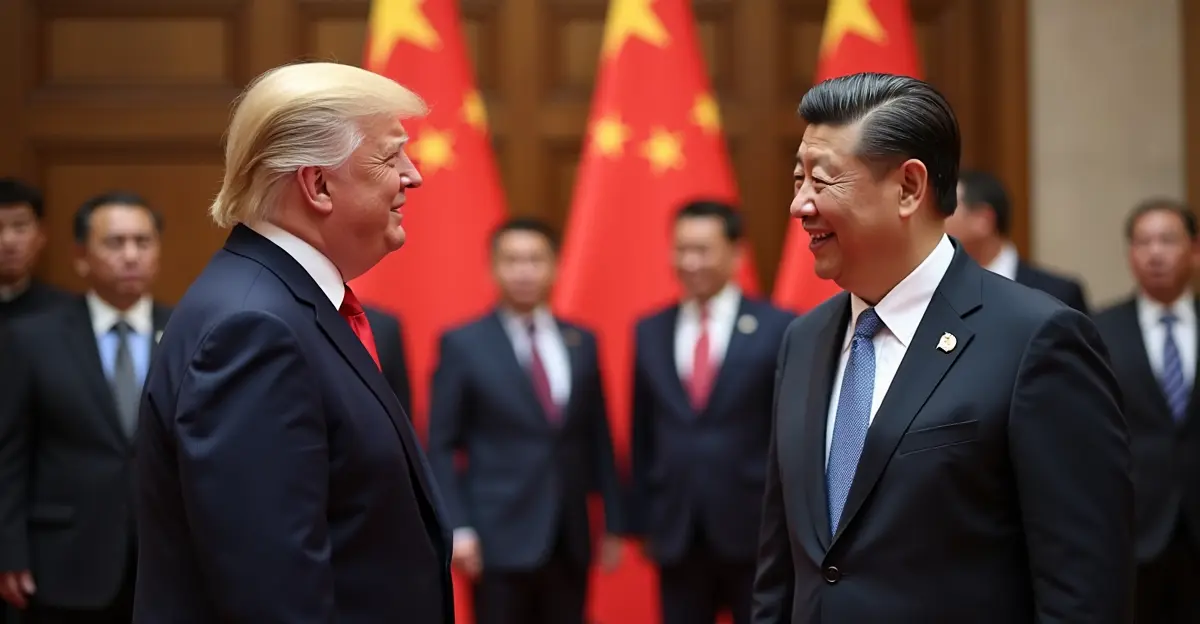
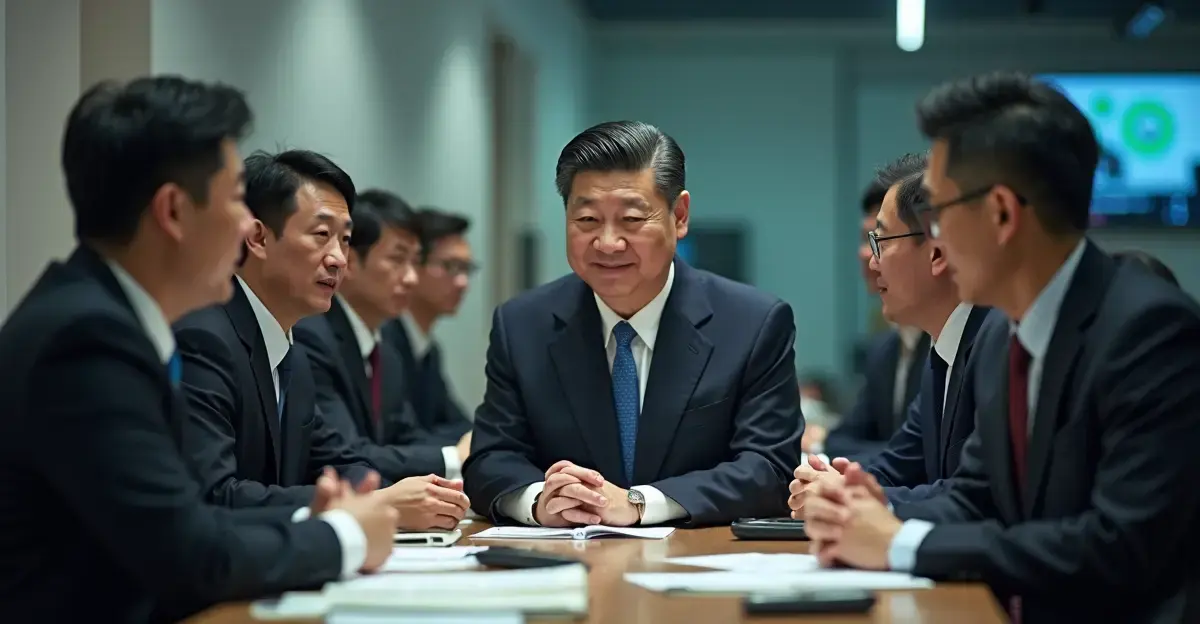
The May 14, 2026, summit between President Donald Trump and Chinese President Xi Jinping in Beijing produced a carefully choreographed display of diplomatic warmth, but beneath the handshakes and joint statements lies a fragile détente that analysts warn could unravel within months. The summit, held at the Great Hall of the People, yielded a trade truce under which China agreed to purchase $17 billion annually in U.S. agricultural goods and Boeing aircraft, while both sides established boards of trade to manage future tariff disputes. Yet the most consequential battlegrounds—rare earth processing monopolies, semiconductor export controls, and the Taiwan question—remain unresolved, raising the question of whether this represents genuine stabilization or a tactical pause before the next escalation.
Context: A Summit Under Pressure
The Trump-Xi meeting came at a moment of acute geopolitical strain. The ongoing Iran conflict has exerted upward pressure on energy markets, while the U.S. midterm elections loom in November 2026, creating domestic political incentives for both leaders to project strength. Trump arrived in Beijing calling Xi a 'great leader,' while Xi emphasized that the two nations 'should be partners and not rivals.' The US-China trade war had already reshaped global supply chains, and the summit was widely seen as a test of whether personal diplomacy could manage structural competition.
Preparatory negotiations in South Korea produced what both sides described as 'balanced and positive outcomes' on trade, agriculture, and tourism. Trump and Xi also agreed that the Strait of Hormuz must remain open for energy flows, with China expressing interest in purchasing more U.S. oil to reduce reliance on Middle Eastern crude. Both leaders affirmed that Iran can never have a nuclear weapon. However, Xi called Taiwan the 'most important issue' in bilateral relations, warning that mishandling could risk 'collision or conflict.'
The Unresolved Battlegrounds
Rare Earths: China's Strategic Stranglehold
Perhaps the most critical vulnerability exposed by the summit is China's near-total dominance of rare earth processing. While mining has begun to diversify globally, China controls over 90% of refining and separation capacity, particularly for heavy rare earths such as dysprosium and terbium—essential for EV motors, wind turbines, F-35 avionics, and missile guidance systems. A 2026 study from Concordia University confirmed that less than 5% of rare earths are currently recycled, despite over 90% technical recovery potential. China's tightened export controls in 2025-2026 triggered price spikes of up to sixfold outside China, with European license approval rates falling below 25%.
In response, the U.S. launched FORGE (Forum on Resource Geostrategic Engagement) and Project Vault—a $12 billion public-private initiative for a Strategic Critical Minerals Reserve. The U.S. also signed 21 bilateral critical minerals deals in five months. However, experts warn that rebuilding independent processing capacity outside China could take 20-30 years. The critical minerals supply chain remains the West's Achilles' heel, and the summit produced no concrete commitments from Beijing to ease export restrictions.
Semiconductors: The Export War Intensifies
The semiconductor battleground has shifted from containment to active bifurcation. On January 14, 2026, President Trump signed a Section 232 proclamation imposing a 25% tariff on advanced semiconductor imports, while the Bureau of Industry and Security (BIS) revised its licensing policy for chips exported to China. The new tiered system divides nations into Tier 1 allies (unrestricted access), Tier 2 Grey Zone countries (restricted with monitoring), and Tier 3 adversaries (banned). This escalation was triggered by the 'DeepSeek Shock' of January 2025, which proved Chinese firms could achieve AI breakthroughs using older, restricted chips through software optimization.
China has counter-struck by leveraging its 98% control of global gallium supply as a 'kill switch,' while smuggling networks—the so-called 'Ant Market'—continue moving chips through individual carriers across Southeast Asia. The 'H200 Compromise' allowed Nvidia to sell downgraded chips to China, but Beijing subsequently rejected them, signaling a preference for domestic alternatives. The US semiconductor export controls remain a central flashpoint, and the summit failed to produce a framework for technology decoupling.
Taiwan: The Red Line
Xi Jinping made clear that Taiwan is the 'most important issue' in bilateral relations, warning that mishandling could lead to conflict. Trump invited Xi to visit the White House in September, but no substantive progress was made on Taiwan. The summit communiqué reaffirmed the One-China policy but offered no new mechanisms for crisis management. Analysts at the Center for Strategic and International Studies (CSIS) noted that the Taiwan strait tensions remain a potential flashpoint that could derail any trade progress.
Impact and Implications
The fragile détente has immediate implications for investors, trade-dependent economies, and strategic planners. The $17 billion agricultural and aircraft deal provides a short-term boost for U.S. farmers and Boeing, but the unresolved structural issues mean that supply chain reconfiguration will continue. The IMF has warned that supply chain weaponization poses significant risks to global growth, and Western nations face a narrow 12-18 month window to make decisive investments in critical mineral processing before China's stranglehold becomes potentially irreversible.
For global supply chains, the summit signals that diversification away from China will accelerate, particularly in semiconductors and rare earths. The U.S. CHIPS Act and allied initiatives in Europe, Japan, and South Korea are beginning to bear fruit, but the timeline for meaningful capacity remains measured in years, not months. The global supply chain reconfiguration is likely to be the defining economic trend of the late 2020s.
Expert Perspectives
Scott Kennedy, a senior adviser at CSIS, described the summit as 'a managed stability exercise' that buys time but does not resolve fundamental tensions. 'The boards of trade are useful guardrails, but they don't address the core strategic competition in technology and critical minerals,' Kennedy said. Henrietta Levin, also at CSIS, argued that America has lost leverage over China, noting that Beijing's willingness to engage on trade is contingent on Washington accepting its core interests on Taiwan and technology.
From Beijing's perspective, the summit was a validation of China's strategic patience. The Chinese state media portrayed the meeting as a victory for 'mutual respect,' while downplaying the unresolved issues. However, the lack of progress on rare earths and semiconductors suggests that China is unwilling to cede its strategic advantages without significant concessions.
FAQ
What did the May 2026 Trump-Xi summit achieve?
The summit produced a trade truce with China agreeing to purchase $17 billion annually in U.S. agricultural goods and Boeing aircraft, and both sides established boards of trade to manage tariff disputes. However, no progress was made on rare earths, semiconductors, or Taiwan.
Why are rare earths a critical issue?
China controls over 90% of global rare earth refining capacity, essential for defense systems, EVs, and renewable energy. The West's inability to process rare earths independently creates a strategic vulnerability that the summit did not address.
What is the status of US-China semiconductor competition?
The U.S. has escalated export controls with a tiered licensing system and 25% tariffs on advanced chips, while China uses its gallium monopoly as leverage. The summit produced no agreement on technology decoupling.
How does the Taiwan issue affect trade?
Xi called Taiwan the 'most important issue,' warning mishandling could lead to conflict. The lack of crisis management mechanisms means Taiwan remains a potential flashpoint that could undo any trade progress.
What does the summit mean for global supply chains?
The fragile détente signals that supply chain diversification away from China will continue, particularly in semiconductors and critical minerals. Western nations have a narrow window to invest in alternative processing capacity.
Conclusion
The May 2026 Trump-Xi summit represents a tactical pause rather than a strategic breakthrough. The boards of trade and agricultural deals provide short-term stability, but the unresolved battlegrounds of rare earths, semiconductors, and Taiwan ensure that the G2 relationship remains fundamentally competitive. For investors and policymakers, the message is clear: prepare for continued volatility and accelerate efforts to build resilient supply chains. The next escalation may come sooner than the September White House meeting.

Follow Discussion