


 Deutsch
 English
 Español
 Français
 Nederlands
 Português


 Share
Share




Introduction: The $128 Billion Strategic Pivot
Global investment in critical mineral extraction surged past $128 billion in 2025, a 62% increase from 2023 levels, according to the International Energy Agency (IEA). Yet despite this unprecedented capital inflow, supply chains for lithium, cobalt, and rare earths remain dangerously concentrated. China controls roughly 85% of rare earth processing and 94% of permanent magnet production, while the Democratic Republic of Congo (DRC) supplies 73% of the world's cobalt. These acute vulnerabilities are reshaping global power dynamics as the US-China trade war intensifies and the European Union pushes forward with its Critical Raw Materials Act (CRMA). This article analyzes how 2026's strategic landscape is evolving and whether diversification efforts can meaningfully reduce dependency within this decade.
Context: The Concentration Crisis
The IEA's Global Critical Minerals Outlook 2025 reveals that geographic concentration of refining has actually increased, with the top three nations' market share rising from 82% in 2020 to 86% in 2024. China's dominance extends beyond rare earths: it controls 69% of mined rare earth supply, 91% of processed supply, and has imposed export restrictions on gallium, germanium, antimony, tungsten, and graphite. The DRC's cobalt export suspension in early 2025 sent shockwaves through global battery supply chains, while lithium prices — which had fallen over 80% since 2023 — are now forecast by S&P Global to rebound 55.4% year-on-year to $14,876 per tonne in 2026. The US-China trade war over critical minerals has escalated sharply, with the Peterson Institute for International Economics (PIIE) noting in a March 2026 working paper that 2025's tariffs and export restrictions nearly forced automakers worldwide to halt production.
The EU Critical Raw Materials Act: A Regulatory Game-Changer
The European Critical Raw Materials Act, which entered full force in 2024, sets ambitious 2030 benchmarks: the EU aims to extract 10%, process 40%, and recycle 25% of its annual consumption of strategic raw materials domestically, while ensuring no more than 65% dependency on any single country. According to Jones Day's May 2026 analysis, the CRMA is creating strategic opportunities for the mining sector by streamlining permitting processes, promoting investment in domestic projects, and incentivizing circular economy initiatives. However, implementation remains challenging. The EU's 2030 targets require a massive ramp-up in domestic mining capacity — a process that typically takes 10–15 years from discovery to production. The EU Critical Raw Materials Act implementation challenges are particularly acute for lithium, where Europe currently produces less than 1% of global supply despite holding significant reserves in Portugal, Germany, and the Czech Republic.
Streamlined Permitting and Strategic Projects
The CRMA designates certain projects as "Strategic Projects," which benefit from accelerated permitting timelines and improved access to finance. As of early 2026, the European Commission has approved 47 Strategic Projects across the bloc, including lithium mines in Portugal, rare earth processing facilities in Estonia, and cobalt refining operations in Finland. These projects are expected to contribute significantly toward the 2030 benchmarks, though industry experts caution that permitting timelines remain a bottleneck, with some projects facing 5–7 year delays due to environmental impact assessments and local opposition.
The US Response: FORGE and Project Vault
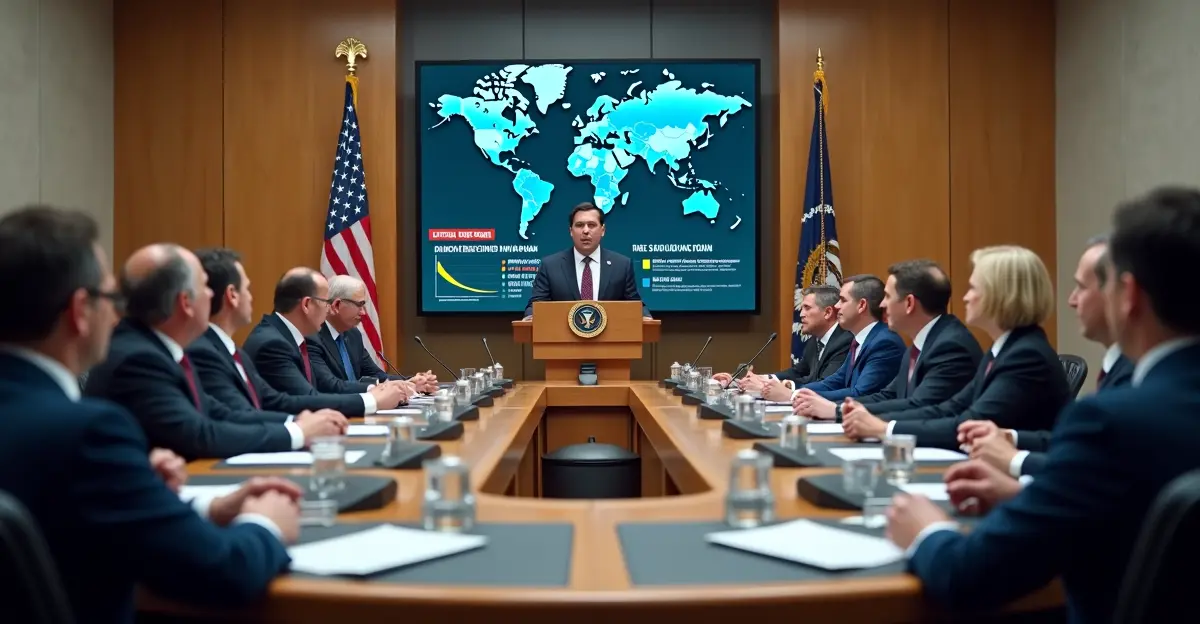
On February 4, 2026, the United States hosted the 2026 Critical Minerals Ministerial, gathering 54 countries and the European Commission. Secretary of State Marco Rubio announced FORGE (Forum on Resource Geostrategic Engagement) to succeed the Minerals Security Partnership, chaired by South Korea. The U.S. signed eleven new bilateral critical minerals frameworks with countries including Argentina, Morocco, the Philippines, the UAE, and the UK. Most notably, the U.S. is mobilizing over $30 billion in support for critical mineral projects, including Project Vault — a $10 billion EXIM-backed domestic strategic reserve initiative. These efforts aim to diversify supply chains and reduce dependence on concentrated sources, though the US critical minerals strategy 2026 faces headwinds from unpredictable tariff policies that have made some partner countries wary of over-reliance on Washington.
Australia-US Bilateral Frameworks
Australia has emerged as a key partner in Western diversification efforts, with its AUD 7 billion critical minerals strategy supporting new lithium, rare earth, and cobalt projects. The Australia-US bilateral framework, signed in 2025, includes joint investment in processing facilities and research into alternative extraction technologies. Australian company Lynas Rare Earths, the world's largest non-Chinese rare earth producer, is expanding its processing capacity in Kalgoorlie and has secured a $258 million grant from the U.S. Department of Defense to build a heavy rare earths processing facility in Texas.
Supply Chain Diversification: Progress and Pitfalls
Despite the flurry of policy initiatives and investment, meaningful diversification remains elusive. S&P Global's 2026 metals price outlook notes that while 150+ ex-China greenfield rare earth projects exist, they will not shift downstream magnet security in 2026. China's dominance in processing means that even when minerals are mined elsewhere, they often end up being processed in China. The IEA reports that investment momentum weakened in 2024, with real investment growth of just 2%, as falling prices and policy uncertainty deterred investors.
Technological Breakthroughs
Emerging technologies offer some hope. Albemarle's direct lithium extraction (DLE) technology achieves 90% recovery rates with 80% less water, potentially unlocking new lithium sources in the U.S. and Europe. Redwood Materials' battery recycling facility in Nevada now processes over 100,000 tonnes annually, recovering lithium, cobalt, and nickel for reuse. However, these technologies remain in early stages and are unlikely to significantly impact supply chains before 2030.
The Patchwork of Bilateral Deals
A Foreign Policy analysis from May 2026 highlights a growing trend: countries are signing bilateral deals that exclude both Beijing and Washington. Australia-Japan cooperation on critical minerals, Japan's deepening ties with Britain and France, Canada's deals with Australia and Greenland, and the India-Brazil mining pact signed in February 2026 all reflect a desire to avoid over-reliance on either superpower. Even G-7 members Japan, France, and Canada are reportedly working on an alternative to a U.S.-led critical minerals trade bloc. This critical minerals bilateral deals trend 2026 creates a complex patchwork of agreements that may enhance resilience but also risks fragmenting global supply chains.
Expert Perspectives
"Policy trumps geology," concludes S&P Global's 2026 outlook. "Export controls, trade tensions, and AI infrastructure demand create bifurcated outcomes rather than a broad commodity supercycle." The PIIE working paper by Chad P. Bown proposes a novel path for the US and China to "cooperate" on reducing their dependence on each other, drawing on the reciprocal negotiation model from the General Agreement on Tariffs and Trade (GATT). However, with the EU AI Act's full enforcement deadline in August 2026 driving demand for rare earths in advanced computing, and lithium prices surging over 300% above historical averages, the urgency of supply chain security has never been greater.
FAQ
What are critical minerals?
Critical minerals are raw materials essential for green energy technologies, digital infrastructure, and defense applications, including lithium, cobalt, rare earth elements, nickel, and graphite. They are deemed "critical" due to their economic importance and supply chain vulnerability.
Why is China's dominance in rare earths a problem?
China controls approximately 85% of rare earth processing and 94% of magnet production, giving it significant leverage over global supply chains. Export restrictions on gallium, germanium, and graphite in 2025 demonstrated how this concentration can disrupt industries worldwide.
What is the EU Critical Raw Materials Act?
The EU Critical Raw Materials Act (CRMA) is a regulatory framework that sets 2030 benchmarks for domestic extraction (10%), processing (40%), and recycling (25%) of strategic raw materials, while limiting dependency on any single country to 65%. It aims to secure Europe's supply for green and digital transitions.
Can Western countries reduce dependence on China by 2030?
Most analysts are skeptical. While investment and policy momentum are strong, the 10–15 year timeline for new mine development, combined with China's entrenched processing dominance, means meaningful diversification is unlikely before 2035. The IEA warns that copper faces a potential 30% supply shortfall by 2035.
How does the US-China trade war affect critical minerals?
Escalating tariffs and export restrictions have created supply chain disruptions, nearly halting global auto production in 2025. The trade war has spurred both countries to seek alternative partners, but it has also created uncertainty that deters investment in new projects.
Conclusion: A Decade of Strategic Realignment
The critical minerals tug-of-war in 2026 reflects a broader geopolitical realignment. While $128 billion in investment and ambitious policy frameworks like the EU CRMA and U.S. FORGE initiative signal serious intent, the structural realities of concentrated supply chains and long project timelines mean that dependency on China will persist for years. The patchwork of bilateral deals emerging outside the US-China axis may offer a path to greater resilience, but it also risks fragmentation. For Western clean energy ambitions, the next decade will be defined not by whether diversification occurs, but by how quickly and effectively it can be achieved.




Follow Discussion