


 Deutsch
 English
 Español
 Français
 Nederlands
 Português


 Share
Share




Energy Technology Supply Chain Vulnerabilities in the 2026 Global Transition
The International Energy Agency's landmark 2026 Energy Technology Perspectives report reveals critical vulnerabilities in six key clean energy supply chains that threaten global energy security and climate goals. Published in March 2026, the comprehensive analysis identifies concentrated manufacturing, geopolitical dependencies, and intensifying industrial policy competition as major risks to solar PV, wind turbines, electric vehicles, batteries, electrolysers, and heat pump technologies. With China controlling over 80% of solar manufacturing and similar dominance in battery components, the global energy transition faces unprecedented supply chain challenges that could derail decarbonization timelines.
What Are Energy Technology Supply Chain Vulnerabilities?
Energy technology supply chain vulnerabilities refer to weaknesses in the production, distribution, and sourcing networks for clean energy technologies that create risks of disruption, price volatility, and geopolitical leverage. The IEA's 2026 report identifies three primary vulnerability categories: geographic concentration of manufacturing, dependence on critical minerals, and policy-driven market fragmentation. These vulnerabilities have emerged as nations accelerate their clean energy transitions while competing for industrial dominance in strategic technologies.
Six Critical Technology Supply Chains at Risk
The IEA's analysis focuses on six technologies essential for achieving net-zero emissions by 2050, each facing distinct but interconnected vulnerabilities:
1. Solar Photovoltaics (PV)
China maintains overwhelming dominance with approximately 85% of global solar PV manufacturing capacity, including 95% of wafer production and 97% of anode materials. This concentration creates what the IEA calls "critical bottlenecks" where non-Chinese capacity covers less than one-quarter of global demand. The solar energy sector faces particular risks from potential disruptions in Xinjiang province, where forced labor concerns and geopolitical tensions have already prompted trade restrictions.
2. Wind Turbines
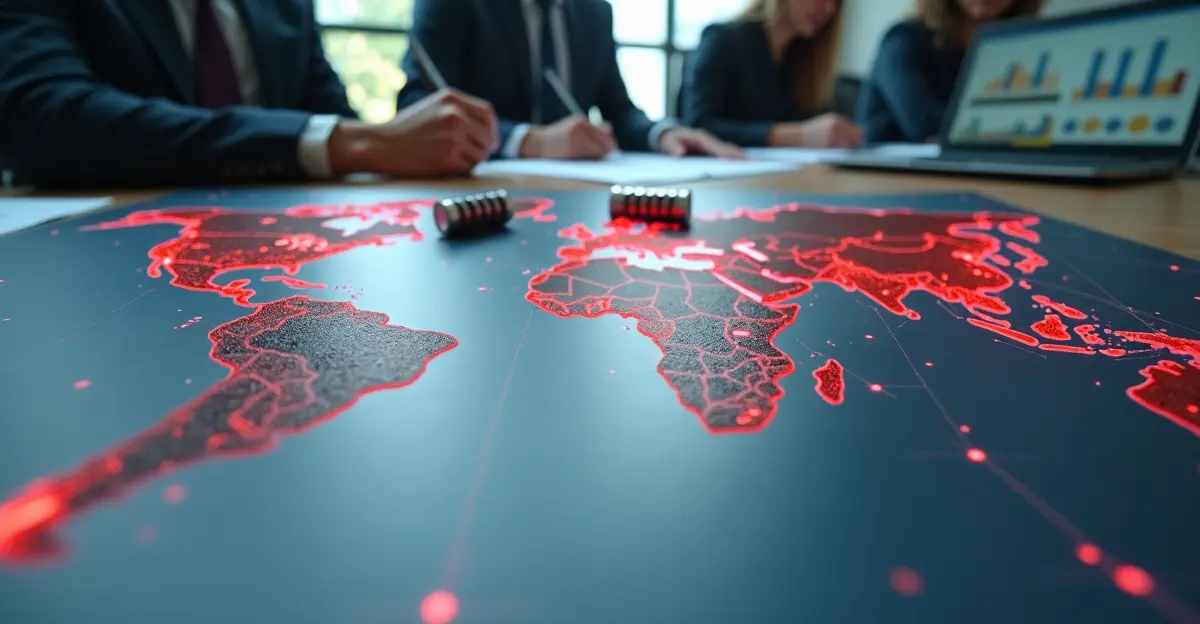
While more geographically distributed than solar, wind turbine supply chains show concerning concentration in specific components. European manufacturers dominate offshore wind technology, but depend heavily on Chinese rare earth elements for permanent magnet generators. The IEA warns that no major improvement in supply chain security is expected before 2030 based on current policies, leaving the renewable energy sector exposed to potential disruptions.
3. Electric Vehicles and Batteries
China controls approximately 80% of lithium-ion battery supply chain production, with similar dominance in battery component manufacturing. The EV revolution depends on critical minerals like lithium, cobalt, and nickel, where China processes over 70% of global supply. This creates what analysts call a "mineral dependency" that could constrain global EV adoption rates if supply disruptions occur.
4. Electrolysers
Green hydrogen production equipment faces emerging vulnerabilities as manufacturing concentrates in specific regions. While Europe leads in electrolyser technology development, production capacity is increasingly shifting to regions with lower manufacturing costs, creating potential bottlenecks similar to those seen in solar manufacturing.
5. Heat Pumps
Residential and commercial heating electrification depends on heat pump technologies where manufacturing shows early signs of geographic concentration. As demand surges in Europe and North America, supply chain vulnerabilities could emerge in compressor manufacturing and refrigerant production.
Geopolitical and Industrial Policy Competition
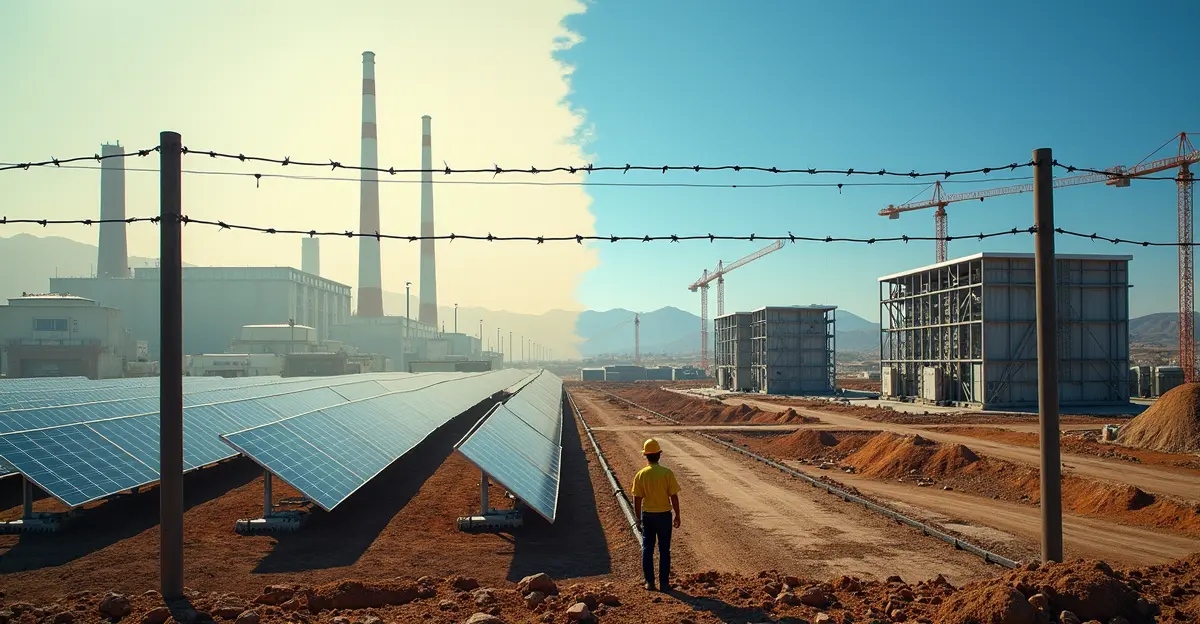
The IEA report highlights how industrial policy competition between major economies is reshaping global supply chains. The United States' Inflation Reduction Act has created a parallel manufacturing ecosystem focused on supply chain security and geopolitical alignment, while China maintains structural dominance through immense state-backed scale. This bifurcation creates two distinct policy-driven ecosystems by 2026, ending the era of a unified global supply chain.
"The clean energy transition has become a new arena for geopolitical competition," notes the IEA analysis. "Strategic dependencies on specific countries or regions create vulnerabilities that extend beyond economic considerations to national security concerns."
Impact on Global Energy Security
Supply chain vulnerabilities directly threaten energy security by creating potential choke points in clean technology deployment. The IEA's "N-1" assessment reveals that while non-Chinese capacity could theoretically meet most non-Chinese demand for final downstream stages, critical bottlenecks exist where alternative sources are insufficient. This creates systemic risks for nations pursuing aggressive decarbonization timelines.
The report emphasizes that building resilience requires international cooperation, diversification of sourcing, strategic stockpiling, and investment in domestic manufacturing capabilities. However, current trends suggest that no major improvement in supply chain security is expected before 2030 based on existing policies.
Expert Perspectives on Supply Chain Resilience
Energy analysts emphasize the need for balanced approaches to supply chain security. "Highly isolationist policies introduce significant cost inefficiencies that could slow the energy transition," according to research published in Nature Communications. "Open trade policies remain crucial for minimizing costs, even when considering security and environmental objectives."
The IEA recommends a multi-pronged approach including:
- Diversifying manufacturing locations and sourcing regions
- Investing in recycling and circular economy solutions
- Developing strategic partnerships with allied nations
- Supporting innovation in alternative materials and technologies
- Establishing emergency response mechanisms for supply disruptions
FAQ: Energy Technology Supply Chain Vulnerabilities
What are the most vulnerable clean energy supply chains?
The IEA identifies solar PV and lithium-ion batteries as having the highest vulnerability due to extreme geographic concentration in China, with 85% and 80% manufacturing dominance respectively.
How does supply chain vulnerability affect climate goals?
Supply chain disruptions could delay clean technology deployment, potentially slowing progress toward net-zero emissions targets and increasing transition costs by 15-25% according to some estimates.
What policies can reduce supply chain risks?
Effective policies include manufacturing diversification incentives, strategic mineral stockpiling, international cooperation frameworks, and investments in recycling infrastructure to reduce primary material dependencies.
When will supply chain security improve?
The IEA projects no major improvement before 2030 based on current policies, though accelerated investment and international cooperation could shorten this timeline.
How does geopolitical competition affect supply chains?
Industrial policy competition between major economies is creating parallel manufacturing ecosystems, potentially increasing costs while reducing single-point failure risks through diversification.
Future Outlook and Recommendations
The IEA's 2026 report serves as a critical warning about the fragility of clean energy supply chains at a pivotal moment in the global energy transition. As nations implement the Paris Agreement commitments, addressing these vulnerabilities must become a priority for policymakers, industry leaders, and international organizations. The report concludes that without coordinated action to build more resilient supply chains, the world risks trading fossil fuel dependencies for new technological dependencies that could prove equally challenging to manage.
Success will require balancing security concerns with economic efficiency, recognizing that overly protectionist approaches could slow the energy transition while insufficient attention to vulnerabilities could create new energy security risks. The path forward lies in strategic diversification, international cooperation, and sustained investment in manufacturing capacity across multiple regions.

Follow Discussion