


 Deutsch
 English
 Español
 Français
 Nederlands
 Português


 Share
Share




Quantum Computing's 2026 Inflection Point: Strategic Implications for Global Cybersecurity and Financial Systems
Multiple expert forecasts identify 2026 as the historic inflection point when quantum computers will first outperform classical computers on commercially relevant problems, creating immediate strategic urgency for quantum-resistant security protocols and redefining global technological competition. This quantum advantage milestone represents more than a technical achievement—it fundamentally reshapes national security architectures, global financial systems, and international power dynamics in ways that demand immediate attention from governments, financial institutions, and critical infrastructure operators worldwide.
What is Quantum Computing's 2026 Inflection Point?
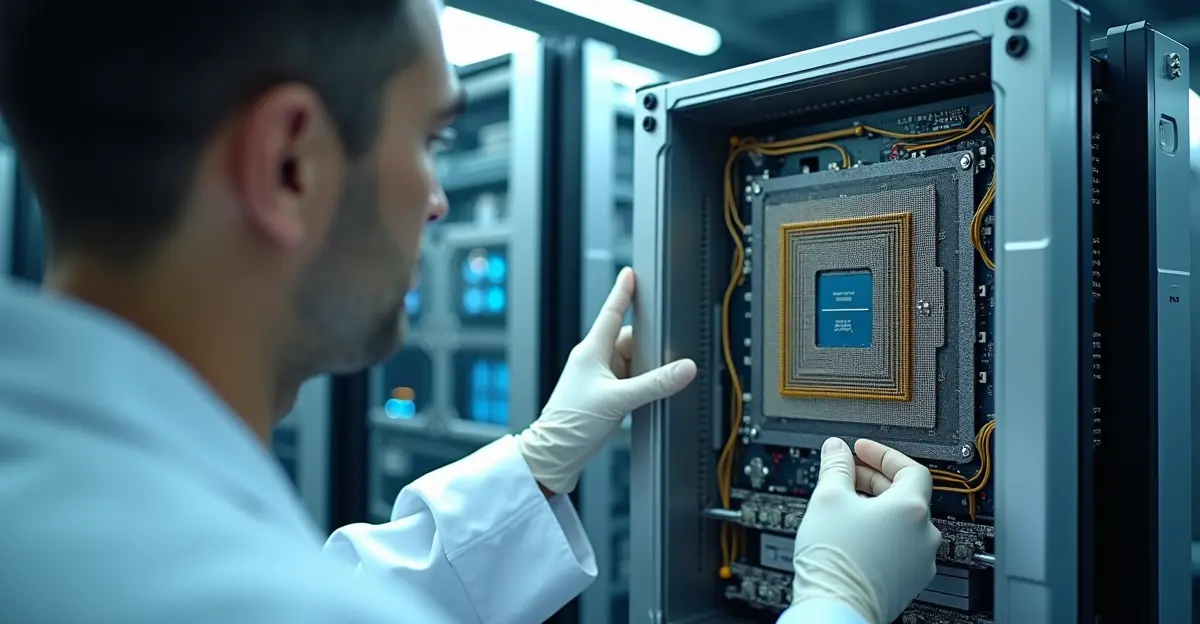
Quantum computing leverages quantum mechanical phenomena like superposition and entanglement to perform calculations exponentially faster than classical computers. The 2026 inflection point refers to when quantum systems will achieve practical supremacy—solving real-world problems that classical computers cannot handle efficiently. According to IBM's predictions, this breakthrough will transform three critical industries: drug discovery, materials science, and financial modeling. IBM's 120-qubit Nighthawk processor with 218 tunable couplers enables 30% greater circuit complexity than previous designs, bringing practical quantum advantage within reach.
The Quantum Cybersecurity Imperative
The most immediate threat from quantum computing involves cryptography. Current encryption standards like RSA and Diffie-Hellman, which protect everything from financial transactions to national security communications, become vulnerable to quantum attacks using Peter Shor's algorithm. The post-quantum cryptography standards developed by NIST provide the foundation for quantum-resistant security, but implementation requires years of planning and migration.
Post-Quantum Cryptography Migration Timeline
Organizations face a critical migration window with these key milestones:
- 2026-2027: Complete cryptographic asset inventory and risk assessment
- 2028-2030: Implement hybrid cryptographic solutions combining classical and quantum-resistant algorithms
- 2030-2035: Complete transition to NIST's FIPS 203, 204, and 205 standards
- 2035+: Deprecation of quantum-vulnerable algorithms across all systems
The US Post-Quantum Cryptography regulatory framework remains anchored by three pillars: the Quantum Computing Cybersecurity Preparedness Act, NSM-10's 2035 migration target, and NIST's finalized FIPS standards from August 2024. This framework creates a regulatory floor that organizations must meet to avoid catastrophic security breaches.
Geopolitical Implications of Quantum Supremacy
The race for quantum advantage has become central to US-China technological competition, with over $40 billion invested globally in quantum technologies. Different nations are approaching quantum development as a strategic priority with distinct focuses:
| Country/Region | Quantum Focus | Investment | Strategic Goals |
|---|---|---|---|
| United States | Research leadership & commercial applications | $17.3B (2026) | Maintain technological supremacy, secure critical infrastructure |
| China | Quantum communications & military applications | Undisclosed (estimated $15B+) | Technological independence, surveillance capabilities |
| European Union | Collaborative research & ethical frameworks | €7.5B (Quantum Flagship) | Digital sovereignty, standardized approaches |
| United Kingdom | Quantum computing & sensing | £2.5B (National Quantum Strategy) | Commercial leadership, security partnerships |
The emerging quantum divide between nations threatens to create permanent technological inequality, where quantum-capable states gain disproportionate economic and security advantages while quantum-vulnerable states face exclusion from global systems.
Financial System Vulnerabilities and Solutions
Global financial systems face unprecedented threats from quantum computing. The World Economic Forum warns of a potential two-tier financial system where wealthy nations and large corporations become quantum-safe while emerging markets lag behind, risking exclusion from global trade and banking. A study shows India's financial sector has limited quantum risk understanding with readiness averaging just 2.4/5.
Key Financial Sector Risks
- "Harvest Now, Decrypt Later" Attacks: Adversaries can archive encrypted financial data today for future decryption with quantum computers
- Transaction Integrity Threats: Quantum computers could forge digital signatures and manipulate financial transactions
- Market Manipulation Risks: Quantum-powered algorithms could exploit market inefficiencies at unprecedented scales
- Infrastructure Vulnerabilities: Legacy financial systems may lack cryptographic agility for rapid migration
The SEC submission on Post-Quantum Financial Infrastructure outlines a strategic roadmap for transitioning financial systems to quantum-resistant cryptography, emphasizing that 2026 represents a critical planning year for institutions worldwide.
Economic Implications and Industry Transformation
Beyond security threats, quantum computing offers transformative economic opportunities across multiple sectors:
Industry-Specific Quantum Applications
Pharmaceuticals: Quantum systems accelerate molecular simulations, potentially reducing drug development from over a decade to just a few years. Companies like Roche and Merck are already using quantum systems for drug discovery.
Materials Science: Quantum computing enables breakthroughs in superconductors, energy storage solutions, and advanced materials that could revolutionize industries from energy to manufacturing.
Financial Optimization: Quantum algorithms provide exponential speedups for portfolio optimization, risk analysis, and trading strategies, giving early adopters significant competitive advantages.
Logistics and Supply Chain: Quantum optimization can solve complex routing and scheduling problems that classical computers struggle with, potentially saving billions in operational costs.
The quantum computing market growth is projected to expand from $1.47 billion in 2026 to over $7 billion by 2030, with quantum machine learning as the fastest-growing segment. 59% of executives believe quantum-enabled AI will transform their industries by 2030.
Expert Perspectives on the 2026 Milestone
"The 2026 quantum inflection point represents both unprecedented opportunity and existential risk. Organizations that fail to prepare for post-quantum cryptography are essentially leaving their digital doors unlocked for future attackers." — Cybersecurity analyst commenting on migration timelines.
"We're witnessing the emergence of a quantum divide that could become permanent architecture in global finance. Without collective action, we risk creating inequality between nations and institutions that undermines the entire financial system." — World Economic Forum contributor on financial system risks.
"The geopolitical implications of quantum supremacy cannot be overstated. This isn't just about technological leadership—it's about which nations will control the foundational infrastructure of the digital age." — National security expert on quantum competition.
Frequently Asked Questions
What is quantum computing's 2026 inflection point?
The 2026 inflection point refers to when quantum computers are projected to first outperform classical computers on commercially relevant problems, marking the transition from experimental research to practical applications with real-world impact.
Why is quantum computing a threat to current encryption?
Quantum computers can run algorithms like Shor's algorithm that break current asymmetric encryption standards (RSA, ECC) that protect financial transactions, government communications, and digital identities, necessitating migration to quantum-resistant cryptography.
How long do organizations have to prepare for quantum threats?
Organizations should begin immediate preparation, with complete migration to quantum-resistant systems needed by 2030-2035. The "harvest now, decrypt later" threat means sensitive data encrypted today could be vulnerable to future quantum attacks.
What industries will benefit most from quantum computing?
Pharmaceuticals (drug discovery), materials science (advanced materials development), finance (portfolio optimization), and logistics (complex routing problems) will see the most immediate transformative benefits from quantum computing capabilities.
How can smaller institutions prepare for quantum computing?
Smaller institutions should begin with cryptographic asset inventory, prioritize systems with longest data shelf-life, implement cryptographic agility frameworks, and consider AI-driven automation tools to manage the migration process efficiently.
Conclusion: Strategic Imperatives for the Quantum Era
The 2026 quantum computing inflection point demands immediate strategic action across multiple fronts. Governments must accelerate national quantum strategies while ensuring equitable access to quantum-resistant technologies. Financial institutions need to implement migration roadmaps that address both security threats and competitive opportunities. Critical infrastructure operators must prioritize cryptographic agility and resilience. The quantum era represents both profound risk and unprecedented opportunity—organizations that act decisively in 2026 will shape the technological landscape for decades to come, while those that delay risk obsolescence in a quantum-powered world.





Follow Discussion