


 Deutsch
 English
 Español
 Français
 Nederlands
 Português


 Share
Share




The 2026 Quantum Computing Inflection Point: From Research Labs to Commercial Viability
Quantum computing has reached a pivotal commercial viability point in 2026, transitioning from theoretical research to practical applications across industries from chemicals and life sciences to finance and cybersecurity. This inflection point represents the most significant technological shift since the advent of classical computing, with proof-of-concept demonstrations in quantum chemistry and materials science now driving real-world business decisions. Organizations face urgent pressure to transition to post-quantum cryptography (PQC)-ready architectures as quantum decryption becomes a tangible planning risk, while hardware maturity across diverse qubit modalities enables unprecedented computational capabilities.
What is Quantum Computing?
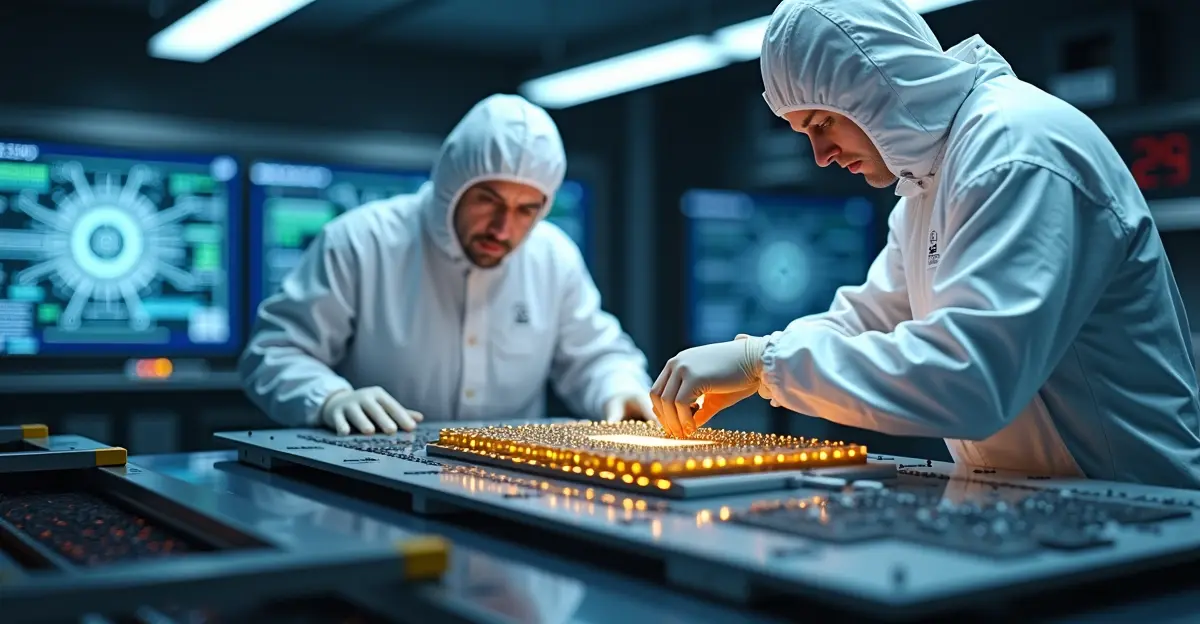
Quantum computing represents a fundamental shift from classical computing by leveraging quantum mechanical phenomena like superposition and entanglement. Unlike classical bits that exist as either 0 or 1, quantum bits (qubits) can exist in multiple states simultaneously, enabling exponential computational power for specific problem classes. The quantum computing hardware evolution has accelerated dramatically, with 2026 marking the year when practical applications become commercially viable rather than purely experimental.
Hardware Maturity: Diverse Qubit Modalities Compete
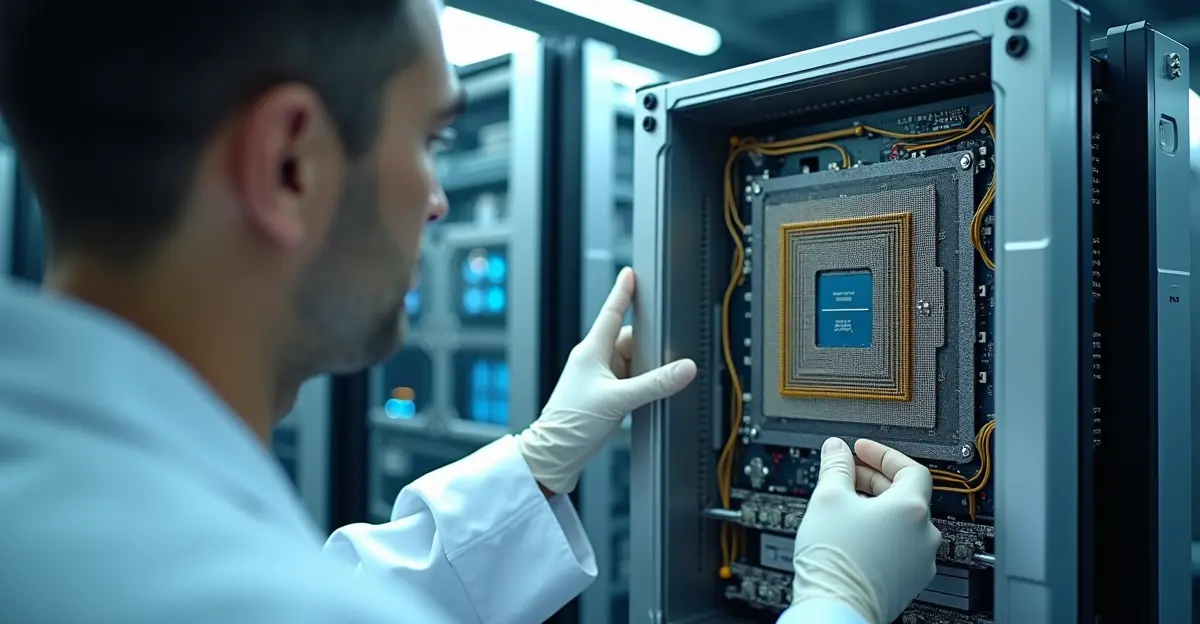
The quantum hardware landscape in 2026 features unprecedented diversity across competing qubit technologies. Superconducting qubits continue to dominate commercial deployments, while trapped-ion systems like IonQ's 6th-generation 256-qubit platform achieve world-record 99.99% gate fidelity. Photonic quantum computers and silicon spin qubits are gaining traction, particularly for specific applications requiring different physical properties.
Which Quantum Modalities Are Advancing vs. Abandoned?
Strategic consolidation is occurring across the quantum modality landscape. Topological qubits, once considered promising for their inherent error resistance, are being largely abandoned due to fabrication challenges. Meanwhile, neutral-atom platforms are advancing rapidly, with QuEra raising $230 million in 2026 for further development. The quantum hardware investment trends show clear preference for technologies demonstrating near-term commercial applications rather than long-term theoretical advantages.
Quantum-as-a-Service Democratization
The emergence of Quantum-as-a-Service (QaaS) platforms represents a critical democratization milestone in 2026. Cloud-based quantum access eliminates the need for organizations to invest in expensive hardware infrastructure, allowing researchers and businesses to experiment with quantum algorithms through subscription models. Major providers including IBM, Google, Microsoft, and Amazon now offer QaaS solutions, with pricing models evolving from experimental credits to enterprise-grade service level agreements.
Hybrid Classical-Quantum Architectures
Hybrid systems combining quantum processing units with classical high-performance computing have become the dominant architecture for practical applications. These systems leverage quantum processors for specific calculations benefiting from quantum properties while maintaining classical infrastructure for control, error correction, and conventional processing. The hybrid computing systems approach enables organizations to integrate quantum capabilities without replacing existing IT investments, significantly lowering adoption barriers.
Post-Quantum Cryptography: An Urgent Imperative
The cybersecurity implications of quantum computing have reached critical urgency in 2026. Recent research indicates quantum computers may need only 10,000 physical qubits to break current encryption standards protecting critical systems - a dramatic reduction from previous estimates. This acceleration has triggered a global race to adopt post-quantum cryptography (PQC), with the EU mandating PQC requirements by December 2026 and the U.S. leading through NIST's standardization process.
The 'Harvest Now, Decrypt Later' Threat
Financial systems face particular vulnerability from the 'harvest now, decrypt later' threat model, where adversaries intercept encrypted data today for future decryption once quantum capabilities mature. Blockchain security is also at risk, as quantum computers with 26,000 qubits could potentially crack cryptocurrency wallet encryption in about 10 days. Organizations must accelerate migration plans, as the transition represents the largest mandated cryptographic migration in history with market projections exceeding $15 billion by 2030.
Government Investments and Educational Ecosystems
National quantum strategies have expanded significantly in 2026, with the U.S. Government Accountability Office reporting approximately $200 million in annual federal quantum spending. However, critical gaps remain in workforce development and strategic coordination. The quantum sector faces a projected 600,000-job shortage within a decade, with universities producing only 250,000 graduates against an estimated need for 850,000 quantum professionals.
Investment Landscape Transformation
The 2026 quantum investment landscape represents a structural inflection point from fundamental research to industrialization. SPAC mergers are bringing quantum companies to public markets, with notable examples including Infleqtion's $550 million NYSE listing and IQM's $1.8 billion SPAC merger. Private funding continues aggressively, while government investment remains crucial, with the U.S. Department of Energy renewing five National Quantum Information Science Research Centers with $625 million.
Strategic Implications for Industries
Different industries face distinct quantum readiness challenges and opportunities in 2026. Pharmaceutical companies are leveraging quantum computing for drug discovery and molecular simulation, potentially reducing development timelines by years. Financial institutions are exploring quantum algorithms for portfolio optimization and risk analysis, while materials science applications promise breakthroughs in battery technology and sustainable materials.
Quantum Readiness Roadmap
Organizations evaluating quantum readiness should follow a structured approach: First, assess current encryption vulnerabilities and develop PQC migration plans. Second, identify specific business problems that could benefit from quantum advantage. Third, experiment with QaaS platforms to build internal expertise. Fourth, monitor hardware developments to time infrastructure investments appropriately. Fifth, participate in quantum workforce development programs to address talent shortages.
Expert Perspectives on the 2026 Inflection Point
Industry leaders emphasize the transformative nature of 2026's quantum developments. '2026 represents the year when quantum computing transitions from scientific curiosity to strategic business imperative,' notes Xanadu's CEO. 'Organizations that delay quantum readiness planning risk significant competitive disadvantage as practical applications emerge across multiple industries.' Booz Allen emphasizes the urgency of post-quantum cryptography adoption, warning that 'the cryptographic migration window is closing faster than most organizations realize.'
Frequently Asked Questions (FAQ)
What is quantum computing's commercial status in 2026?
Quantum computing has reached commercial viability in 2026, with proof-of-concept demonstrations in quantum chemistry and materials science driving real business applications across pharmaceuticals, finance, and cybersecurity.
How urgent is post-quantum cryptography adoption?
Extremely urgent. The 'harvest now, decrypt later' threat means encrypted data intercepted today could be decrypted once quantum capabilities mature, requiring immediate migration to PQC-ready architectures.
Which quantum hardware technologies are most promising?
Superconducting and trapped-ion qubits currently lead commercial deployments, while photonic and neutral-atom platforms show strong potential for specific applications. Topological qubits are being largely abandoned.
How can organizations start with quantum computing?
Begin with Quantum-as-a-Service platforms to experiment without hardware investment, identify specific business problems benefiting from quantum advantage, and develop PQC migration plans for cybersecurity.
What workforce challenges does quantum computing face?
The sector faces a projected 600,000-job shortage within a decade. Universities are expanding quantum curricula, but significant gaps remain in practical implementation skills and interdisciplinary expertise.
Future Outlook and Conclusion
The 2026 quantum computing inflection point represents more than technological advancement - it signals a fundamental shift in computational paradigms with profound implications for global security, economic competitiveness, and scientific discovery. Organizations that proactively develop quantum strategies will gain significant advantages, while those delaying face increasing risks from both competitive disruption and cybersecurity vulnerabilities. As hardware continues to mature and applications expand, quantum computing's transition from research labs to commercial viability marks the beginning of a new computational era with transformative potential across every sector of the global economy.




Follow Discussion