


 Deutsch
 English
 Español
 Français
 Nederlands
 Português


 Share
Share




The Dawn of Biotech Chips
In 2025, the fusion of biology and silicon is revolutionizing technology, giving rise to biotech chips that promise to redefine computing, medicine, and beyond. These innovative devices integrate biological components—like DNA, proteins, or cells—with traditional silicon-based electronics, creating hybrid systems that leverage the best of both worlds. According to a recent Nature Communications study, this convergence is part of a broader 'technovation' wave, driven by geopolitical rivalries and a trillion-dollar race for technological supremacy. 'We're seeing unprecedented opportunities where biointelligence meets silicon,' says a lead researcher from the paper, highlighting how biomolecules could serve as carriers for future hybrid semiconductors.
How Biotech Chips Work
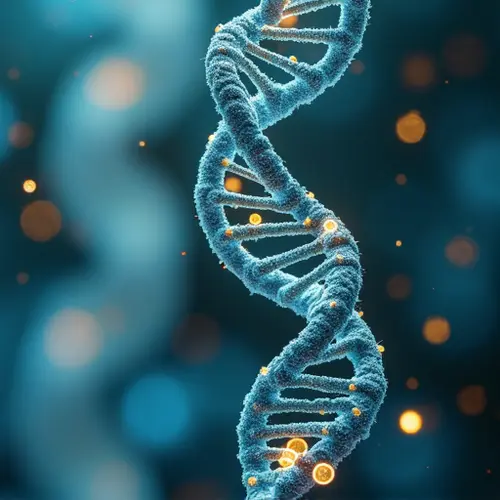
Biotech chips operate by embedding biological elements into microchips, enabling functions that pure electronics struggle with. For instance, DNA-based circuits can perform parallel processing at a massive scale—billions of molecules in a single droplet of liquid work simultaneously, as detailed in a Materials Today Nano study. This parallelism allows for ultra-fast data analysis, such as diagnosing multiple diseases from a tiny blood sample. 'The energy efficiency is a game-changer; biological systems evolved over billions of years to be highly optimized,' notes Ivan Bobrinetskiy, lead author of the study. These chips often use synthetic biology techniques to engineer cells or molecules that interact with electronic signals, creating interfaces where biological processes control computational tasks.
Applications in Medicine and Beyond
The medical field is a primary beneficiary, with biotech chips enabling advanced diagnostics and personalized treatments. Organs-on-chips—microdevices that mimic human organs—are being used to test drugs without animal trials, accelerating drug discovery. Startups like Vivodyne, which raised $40 million in Series A funding, are leveraging AI and lab-grown tissues for this purpose, as seen in top biotech startups of 2025. Beyond healthcare, these chips are paving the way for sustainable computing. Researchers from Macquarie University, in a Nature Communications paper, argue that biological computing could reduce the enormous energy costs of AI, with applications in environmental monitoring and biosecurity. 'This isn't just about faster chips; it's about creating systems that are in harmony with nature,' emphasizes an Australian scientist involved.
Challenges and Future Outlook
Despite the excitement, challenges remain. Integrating living materials with electronics poses stability issues, and ethical concerns around genetic modification need addressing. Regulatory hurdles are significant, as biotech chips blur lines between devices and biologics. However, investment is booming—biotech startups secured billions in 2025, with firms like Benchling reaching a $6.1 billion valuation. The field, often called 'semisynbio' (synthetic biology-semiconductor fusion), is expected to grow rapidly, with predictions of bio-hybrid AI processors surpassing traditional limits by 2030. As one expert puts it, 'We're at the cusp of a new era where biology becomes the next silicon.'


Follow Discussion