


 Deutsch
 English
 Español
 Français
 Nederlands
 Português


 Share
Share




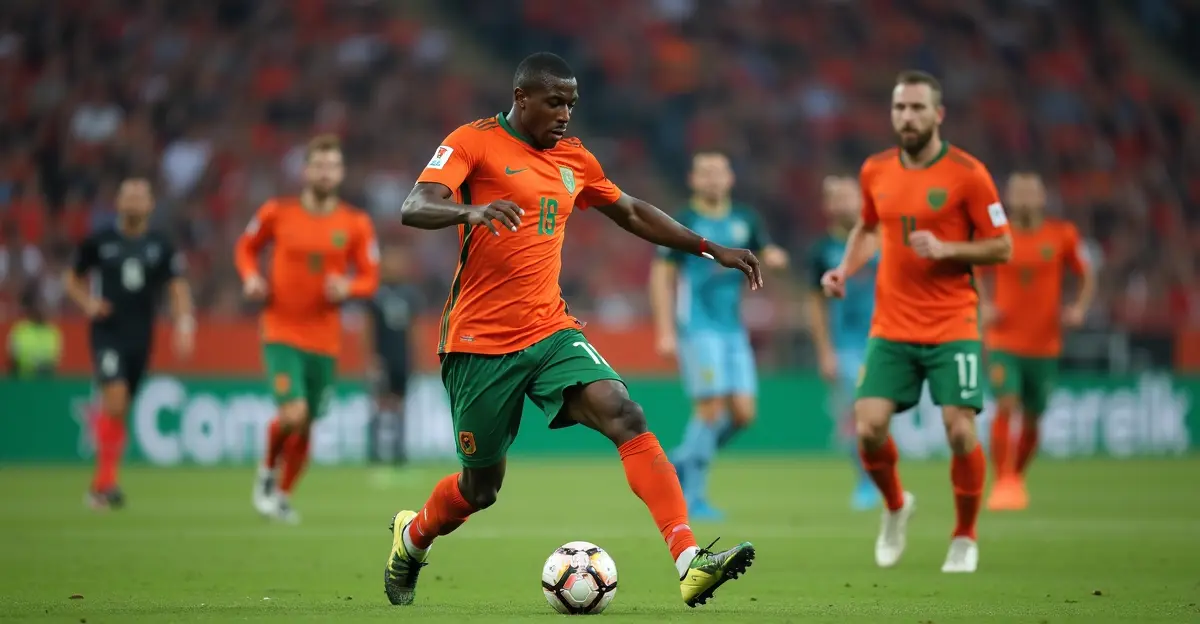
The Netherlands national football team's fluorescent orange World Cup 2026 kit, designed by Nike, has sparked widespread complaints from television viewers who say the intense 'Radiant Oranje' shade is causing broadcast issues. During the Netherlands' Group F opener against Japan in Arlington, Texas, which ended in a 2-2 draw, viewers took to social media to report that the bright jerseys were difficult to watch on screen, with some claiming the color made player numbers unreadable and even caused eye strain.
What Is Causing the Fluorescent Orange TV Issues?
The problem stems from the specific shade of orange used in the Netherlands' 2026 home kit. Nike and the KNVB described it as the brightest orange shirt ever produced for the national team. The color, officially named 'Radiant Oranje,' falls outside the standard Rec. 709 color gamut used in HD television broadcasting. Rec. 709, the industry-standard color space for HD video established by the International Telecommunication Union, covers approximately 35.9% of the visible color spectrum. Extremely saturated fluorescent colors like this year's Oranje kit can exceed the gamut's limits, causing televisions to struggle with accurate reproduction.
Providers VodafoneZiggo and KPN acknowledged the issue. A VodafoneZiggo spokesperson explained: 'Earlier shirts were more of a brownish orange, but now it is almost fluorescent orange. Those colors do not exist in nature, so televisions have difficulty transmitting them.' The spokesperson advised viewers to adjust color saturation and dynamic contrast settings on their TVs to mitigate the effect. A KPN spokesperson emphasized signal quality as a key factor, noting that during major events like the World Cup, providers may lower signal quality to accommodate more simultaneous viewers, which further impacts color accuracy.
Fan Reactions: 'Radioactive' and 'Eye-Sore'
Social media erupted during and after the Netherlands vs. Japan match. One fan posted: 'That orange color is unbearable on TV. Thanks Nike.' Another wrote: 'Orange color hurts the eyes. Not properly calibrated.' Some viewers expressed confusion about the team's identity: 'It looks red. We are not red! We are orange!' Others simply could not read the black numbers on the bright background: 'I can't even read the jersey number...'
International media also picked up the story. The New York Post described the kit as 'radioactive,' while The Sun reported fans joking that Nike had 'invented a new colour.' The kit features an all-orange design including shirt, shorts, and socks, with only black lettering and small accents as contrast — a bold interpretation of the traditional Oranje identity representing the Dutch royal House of Orange-Nassau.
Technical Explanation from Experts
Wout Funnekotter, editor-in-chief of Dutch technology platform Tweakers, confirmed the importance of signal quality. 'During major television events like the World Cup, providers can lower signal quality to allow more people to watch simultaneously without buffering. This reduces not only image sharpness but also color fidelity. The fact that we have such brightly colored shirts this year does not help.'
The issue highlights a broader challenge in broadcast technology: colors that appear vibrant in person or on high-end displays may not translate well to standard broadcast television, especially when compression algorithms prioritize bandwidth efficiency over color accuracy. The 2026 World Cup broadcasting technology continues to evolve, but legacy standards like Rec. 709 remain the baseline for most households.
Match Context: Netherlands 2-2 Japan
Beyond the kit controversy, the Netherlands' performance on the pitch also drew attention. Virgil van Dijk opened the scoring in the 51st minute, but Keito Nakamura equalized for Japan in the 57th minute. Crysencio Summerville restored the Dutch lead in the 64th minute, only for Daichi Kamada to score a dramatic header in the 89th minute, securing a 2-2 draw for Japan. The result extended the Netherlands' record group stage unbeaten streak to 17 games, but coach Ronald Koeman expressed frustration at failing to hold a lead twice.
The Netherlands 2026 World Cup campaign continues with matches against Sweden and other Group F opponents, but the conversation around the kit is likely to persist as long as the team wears the fluorescent orange on the global stage.
Impact and Implications for Future Kit Designs
The controversy raises questions about how kit manufacturers balance bold design with broadcast compatibility. As television technology advances toward wider color gamuts like Rec. 2020 (used in 4K and HDR broadcasts), such issues may diminish. However, for the millions of viewers watching on standard HD sets, the fluorescent orange remains a challenge. The KNVB and Nike have not announced any changes to the kit, but the impact of kit colors on TV broadcasts has become a talking point among broadcast engineers and sports marketers alike.
A VodafoneZiggo spokesperson noted that complaints were relatively few compared to the total viewership: 'If you put it against the number of viewers, the numbers are not very large.' However, they added with a touch of humor: 'As far as we are concerned, the orange could have been even brighter at the end — but that has less to do with the image and more with the game.'
Frequently Asked Questions
Why is the Netherlands' orange kit causing TV problems?
The fluorescent 'Radiant Oranje' shade is so saturated that it exceeds the standard Rec. 709 color gamut used in HD television broadcasting, causing televisions to struggle with accurate color reproduction. This results in a washed-out or overly intense appearance on screen.
Can viewers fix the issue on their TVs?
Yes. VodafoneZiggo recommends adjusting the color saturation and dynamic contrast settings on your television. Reducing saturation can help bring the orange into a more viewable range.
Did the kit affect the match result?
No. The Netherlands drew 2-2 with Japan due to on-field performance, not the kit. However, the kit became a major topic of discussion on social media during and after the match.
Will the Netherlands change their kit for future matches?
As of now, the KNVB and Nike have not announced any plans to modify the kit. The team is expected to continue wearing the fluorescent orange throughout the 2026 World Cup.
Is this the first time a kit has caused TV issues?
No. Similar issues have occurred with other extremely bright or fluorescent colors in sports, such as neon yellow or pink kits in various sports. The problem is well-known among broadcast engineers.
Follow Discussion