


 Deutsch
 English
 Español
 Français
 Nederlands
 Português


 Share
Share




What is the 2026 FIFA World Cup's environmental impact?
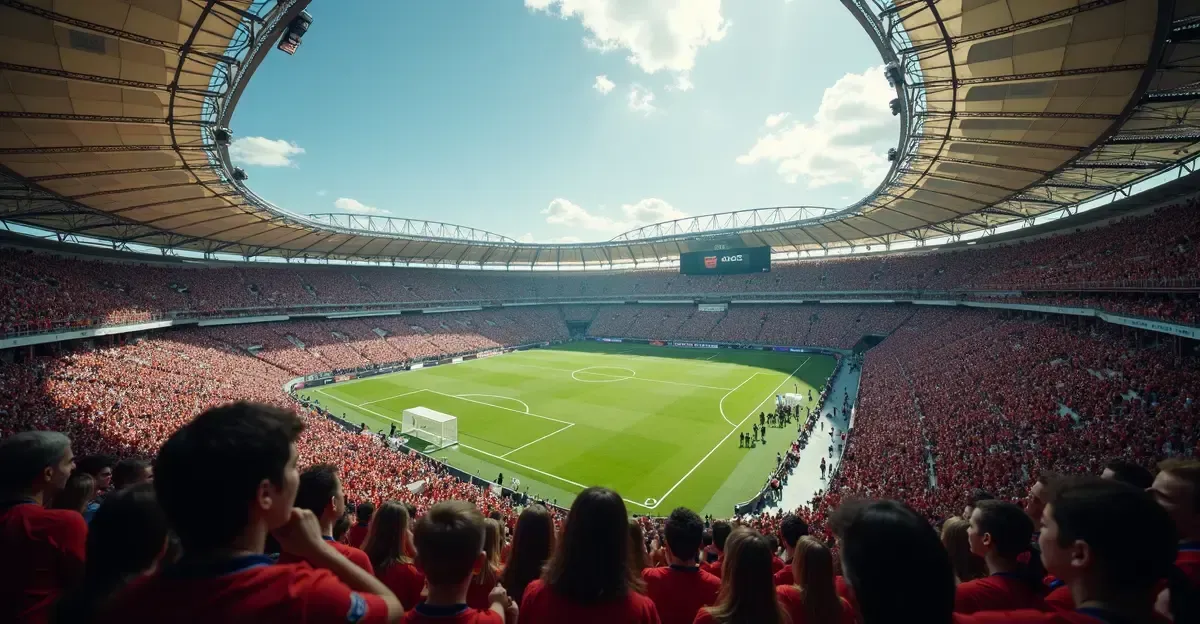
The 2026 FIFA World Cup, jointly hosted by the United States, Canada, and Mexico across 16 cities, is projected to be the most polluting tournament in history. Environmental experts estimate it will generate approximately 9 million tonnes of CO2 equivalent (CO2e) — nearly double the average of the past four World Cups. The primary driver is massive air travel required for 48 teams playing 104 matches across a continent, leading critics to label it a 'CO2 bomb.'
The tournament, which began on June 11, 2026, and runs until July 19, is the first to feature 48 teams and the first co-hosted by three nations. While FIFA promotes green initiatives like the 'Green Corridor' in Houston, experts argue these measures amount to greenwashing. The environmental impact of mega sporting events has come under increasing scrutiny as climate concerns grow.
Why is the 2026 World Cup so polluting?
Massive air travel footprint
Air travel accounts for an estimated 7.72 million tonnes of CO2e — roughly 85% of the tournament's total emissions. Fans traveling from overseas to follow their teams will log extraordinary distances. A fan from South Africa attending every match could travel up to 26,834 miles (43,170 km), generating 5.9 tonnes of CO2e. An England fan flying to all matches would produce about 3.5 tonnes of CO2e, equivalent to heating a UK home for 19 months.
Expansion to 48 teams and 104 matches
The tournament expanded from 32 to 48 teams, increasing matches from 64 to 104. This expansion, approved by FIFA in 2017, was driven by political and commercial considerations rather than environmental concerns, according to critics. The format also adds an extra round of 32, meaning teams reaching the semifinals play 8 matches instead of 7.
Energy-intensive cooling and logistics
Six stadiums face extreme heat stress risks, particularly in Dallas, Houston, Las Vegas, and Miami. Indoor stadiums require massive air conditioning, and the grass used in Houston's NRG Stadium was shipped 1,700 km from Denver in refrigerated trucks because it better withstands the air-conditioned environment. Dutch grow lights were flown in to maintain the turf during the tournament.
Critics point out these contradictions. FIFA consultant evaluating a Houston restaurant's sustainability was flown in from Phoenix, 1,600 km away. The FIFA sponsorship deal with Saudi oil company Aramco is estimated to cause an additional 30 million tonnes of CO2e through induced fossil fuel sales.
What is FIFA doing to address emissions?
FIFA has touted several sustainability measures, including the use of existing stadiums (no new venues were built in the US), a 'regional hosting model' to minimize team travel, public transport promotion, recycling programs, and a tree-planting initiative across North America. In Houston, the 'Green Corridor' — a 22-km route from the fan zone to the stadium — features solar-powered lights, self-watering plants, and shade structures built from recycled wind turbine blades. However, funding came from corporate sponsors and the city, not FIFA.
The organization also awards sustainability certificates to restaurants. Chef Aaron Bludorn of Houston's Navy Blue restaurant earned three stars for composting food waste, recycling cooking oil into biodiesel, and returning oyster shells to the sea to cultivate new reefs. Yet Bludorn noted his practices predated the World Cup.
Environmental scientist Jules Boykoff, a former professional soccer player and author of 'Red Card' about this World Cup, called FIFA's approach greenwashing. 'FIFA talks a lot about green but does little,' he said. 'A carbon dioxide bomb is about to go off over North America.'
Impact and implications
The 2026 World Cup's carbon footprint is nearly double that of Qatar 2022, which itself was criticized for emissions from new stadium construction. This tournament's emissions are primarily from air travel, which is harder to mitigate. The future of FIFA tournament sustainability looks bleak: the 2030 World Cup will be played across three continents (South America, Europe, and Africa) in six countries, and the 2034 tournament is slated for Saudi Arabia, the world's largest oil exporter.
Climate activists have protested against FIFA's sponsorship by Saudi state oil company Aramco, worth an estimated $400 million. On June 21, 2026, coordinated demonstrations took place in multiple host cities. Elizabeth Carlson of the Houston local organizing committee said: 'The most important thing is transparency.' She added that the true environmental balance sheet will only be known after the tournament ends.
Boykoff proposes concrete solutions: stop expanding the number of teams and matches, sell fewer tickets to fans who must travel long distances, and impose requirements on how fans reach stadiums. Without such changes, he argues, the World Cup will continue to be a climate disaster.
Frequently Asked Questions
How much CO2 will the 2026 World Cup produce?
Estimates range from 9.02 million tonnes of CO2e, with air travel accounting for 7.72 million tonnes. This is nearly double the average of the previous four World Cups.
Which World Cup was the most polluting before 2026?
The 2022 World Cup in Qatar was previously the most polluting, with an estimated 4.5 million tonnes of CO2e, mainly from new stadium construction. The 2026 tournament surpasses it by a factor of two.
What is FIFA doing to reduce its carbon footprint?
FIFA claims to use existing stadiums, promote public transport, and plant trees. However, critics say these measures are inadequate and that FIFA's sponsorship by oil company Aramco contradicts its climate pledges.
Will future World Cups be even worse?
Yes. The 2030 World Cup will be held across six countries on three continents, and the 2034 tournament is planned for Saudi Arabia, suggesting emissions will continue to rise.
What can fans do to reduce their impact?
Fans can choose to attend fewer matches, use ground transport where possible, offset their emissions through reputable programs, and support teams and sponsors that prioritize sustainability.




Follow Discussion